
Haddad defends research for oil exploration in the equatorial margin
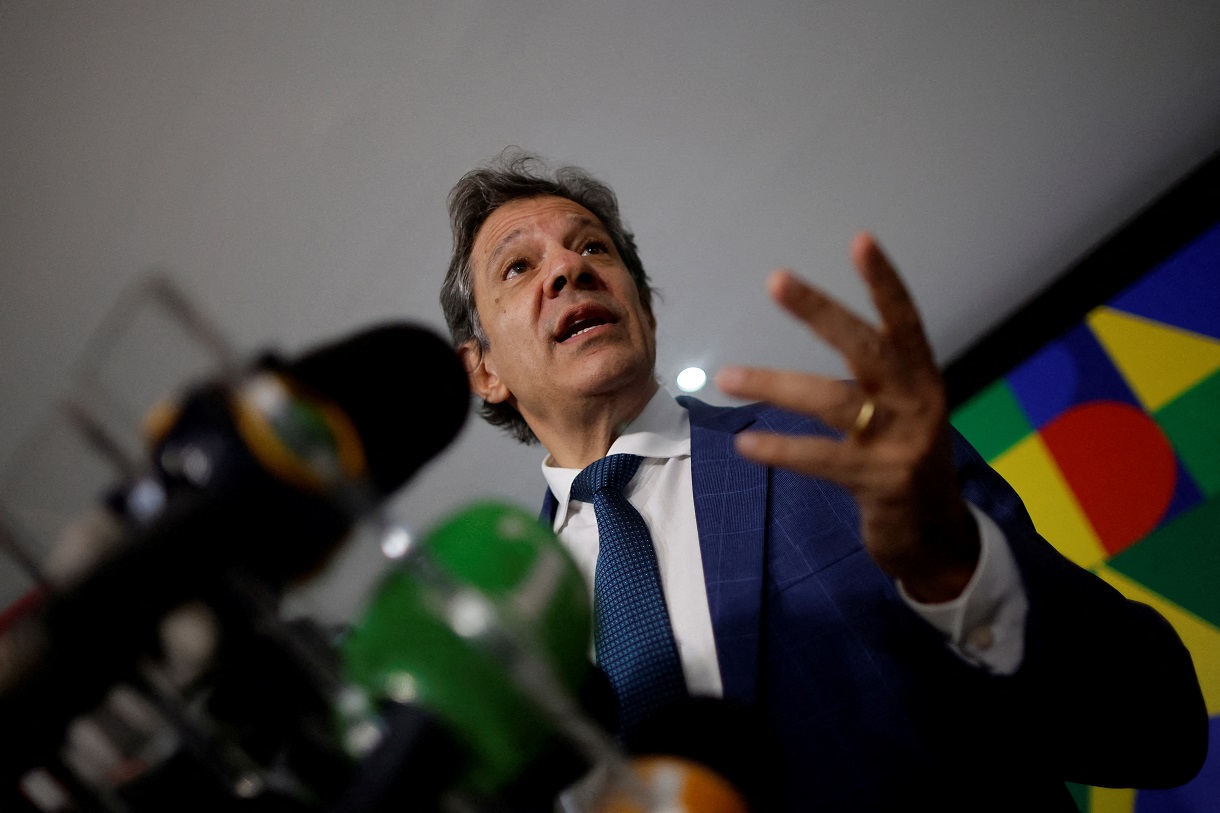
Finance Minister Fernando Haddad defended block research on the equatorial margin in the Amazon region, but stressed that the country and humanity need to “dispense with oil”, in an interview with Cities and Soluções program, by GloboNewswhich airs this Saturday.
“Knowing what is in the equatorial margin is important, I am in favor of research. But the oil that may eventually be there cannot be a pretext to delay our transition (energetic),” said the minister.
In May 2023, Ibama rejected the license request to the FZA-M-59 block. Petrobras had presented Belém (PA) as a basis for attending a possible emergency, such as leaks, 870 kilometers away from the block. This was the central point for rejection of the request, after proceeding in all instances of the Institute.
I want to profit from the bag
In a request for reconsideration, Petrobras presented the proposal to build an advanced basis for fauna in Oiapoque (AP) and a mobile reception unit in Vila Velha do Cassiporé, district of Oiapoque municipality. This structure is for service in case of any accident with oil leakage, for example.
A conclusive IBAMA assessment is expected to before the United Nations Conference on 2025 Climate Change (COP-30) in November in Belém, for the expectation of the government wing that advocates the research. Ibama, however, has no closed position on the expected date.
“If they invented a way of emitting oil without emission (carbon), it would be great. But there is no such technology. You burned oil, go to the atmosphere. So we have to do without it, and this is investing in alternative sources, what Brazil has been doing.
The recurring argument of the Minister of Mines and Energy, Alexandre Silveira, is that Brazil needs the resources of oil exploration to finance the energy transition, as well as the generation of employment and income. In addition, the secretary of oil, natural gas and biofuels, Pietro Mendes, evaluated earlier this month that eventual interruption in oil production in Brazil would mean an increase in carbon emissions.
His argument starts from the premise that demand for fossil fuel will not be automatically reduced and that Brazilian production has a lower emission compared to other countries.