
Foreign Agent Law in El Salvador Mira in a media NGO
by Silvia Higuera, from Latam Journalism Review / Knight Center for journalism in the Americas
The main association that monitors the aggressions to journalists in El Salvador has become the newest victim of the controversial Foreign Agents’ Law of the country.
THE El Salvador Journalists Association (APES) announced on October 1 that it goes to exile as a result of the law that requires organizations who receive foreign funds if they register in the government and impose heavy fines for those who do not comply with the determination.
APES said it will change its legal status to another country in the region, whose name they prefer to keep confidential for now.
“We are leaving legally so that we can continue to be useful to colleagues in there,” Sergio Arauz, president of Apes, told Latam Journalism Review (LJR).
The Law of the Foreign Agent in El Salvador
The recent announcement occurred after APES informing about the closing its operations in El Salvador due to the obligation to register in the registration of foreign agents (RAEX).
The organization said that during the last 90 days it suspended, settled and ended all projects funded abroad.
It is about Fourth NGO to close its operations In the country after the law approved, according to the Associated Press. This adds to the 43 journalists who had exiled until June this year, according to a recent report from APES.
In its more than 80 years of existence, APES has managed to defend journalism in an increasingly “hostile” country, as LJR Angelica Carcamo, former president of Apes and current executive director of the Central American Journalists (CPR).
With his departure, she said, journalists who are on the field will be more exposed and with few protective mechanisms.
“Although it is true that APES will try to continue doing your work, it will be a challenge because it is not the same thing to work in your country as a trade union organization as it is the same state that is chasing you.
“(It will be a challenge) Trying to maintain the channels of communication with their people because that is precisely what they want: to prevent the organization from continuing to do their work to finish weakening the little that is left of independent journalism in El Salvador.”
A controversial law
The Law of Foreign Agents of El Salvador was approved by the country’s Legislative Assembly on May 20, 2025.
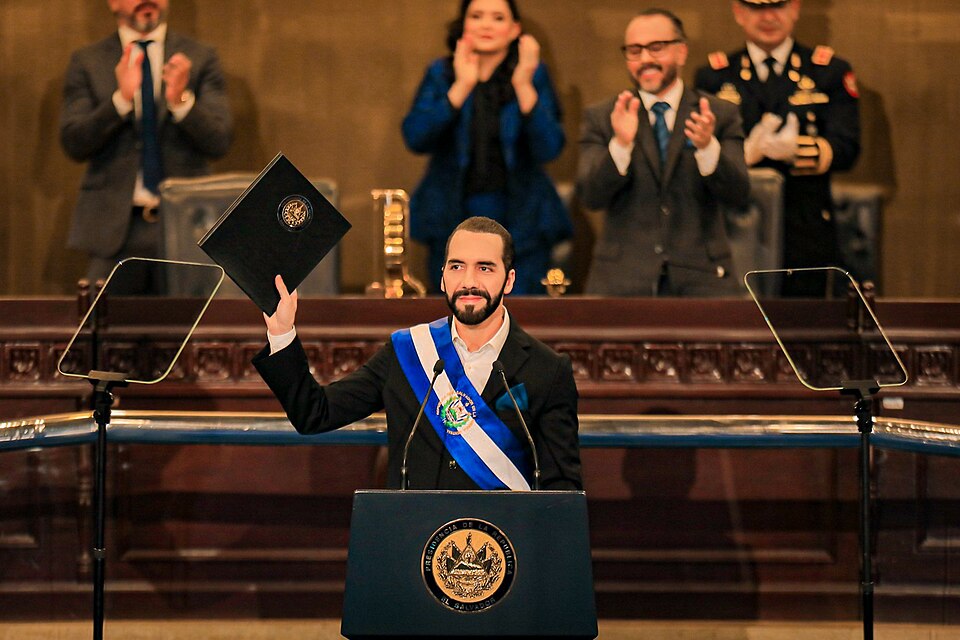
Since the bill was sent to the Legislature by President Nayib Bukele, the law has lit alerts from different national and international organizations because they considered that the goal was to criminalize civic space.
The law requires all national or foreign individuals or legal entities that receive funds from abroad to apply to RAEX.
There should be informing the projects, activities and objectives, which should be authorized by the government. It also establishes a 30% tax on all resources received, including donations, payments or other items.
Registered foreign agents are also prohibited from participating in “activities for political or other purposes” in order to “disturb public order” or “threaten the social and political stability of the country”.
Those who do not register can receive fines between $ 100,000 and $ 250,000, as well as the cancellation of their legal status, and may even face administrative or criminal proceedings.
“We believe that if we submit to the rules of the Law of Foreign Agents, we would die or would be forced to remain silent and silent. And in this sense, our work was not going to be what is needed in these times to defend our colleagues and the union,” said Arauz.
Read too | New Law in El Salvador follows Russia model to repress press and NGOs that receive foreign aid
Law to promote transparency or silence dissonant voices?
Both Bukele and the Assembly defended the law as a attempt to strengthen “transparency”.
However, entities such as the Inter -American Commission on Human Rights (IACHR), Human Rights Watch and Amnesty International, among others, have commented against the law.
“There is no doubt that the law of foreign agents seeks to silence those who denounce corruption, human rights violations And the secret negotiations between the gang leaders and the Bukele government, ”said Juanita Goebertus, director of the Human Rights Watch division of the Americas in a statement.
The ICD mentioned, for example, the high taxes that can “make financial sustainability” of organizations and communication vehicles unfeasibleand the discretion on who would be exempt from these measures.
Read too | With ‘Li da Gagaça’, Bukele intensifies repression and launches the press of El Salvador in deep crisis
Defense of journalists and the right to freedom of expression
About to turn 90 years of existence, APES is one of the oldest press associations in Latin America. Founded in 1936 with the purpose of “defending journalists and the right to freedom of expression,” this is the first time it will have to perform its duties outside El Salvador.
The “brain and heart” of APES, said Arauz, is the record of aggression and violations of freedom of expression in the country. This is done through a monitoring center and an open telephone (also available on social networks) where journalists report violations to their rights.
According to these records, 2024 became the year with the largest number of aggressions (789 in total) since 2018, when the Monitoring Center for aggression against journalists was created.
However, Arauz said the reports in 2025 increased. In just three months, APES’s legal assistance clinic recorded almost the same amount of forced displacements it had recorded throughout its existence.
Arauz said this monitoring will continue from exile.
NGO provides legal assistance in serious cases
APES also has a legal assistance clinic that legally follows “serious cases,” said Arauz. These include arbitrary arrests, police search, confiscation of work equipment, among others.
Legal follow -up could also be given to a vehicle or journalist who wants to legally “shield” some journalistic matter.
The training area “unfortunately, the one that was suspended more abruptly,” said Arauz, due to the fact that he received the highest foreign financing.
As part of the training, APES connected El Salvador’s communication vehicles with specialized mentors that guided complex reports. Over the past two years they have been able to produce at least 300 journalistic articles, said Arauz.
APES also offers its journalists in digital security and psycho -emotional support.
“(Exile) is a difficult decision, clearly, but what good is it legally without being able to help in El Salvador?” Said Arauz.
“We fight for our survival not only for the right to exist. (…) It is a mandatory option to remain alive, keep our heads above water and float to survive, that is, save ourselves to save others.”
Given this scenario, Arauz’s call to the international community is to continue with cooperation and financing to organizations such as APES and vehicles that had to go to exile.
Exile and ‘Climb of May’
APES is only the latest organization to announce your exile. After Ruth Eleonora López PrisonHead of the Unit to Combat Corruption and Justice of the Non -Government Organization Cristosal, on May 18, This organization also went to exile.
López is still detained, while his family and legal representatives said they failed to communicate with her. On September 22, The IACHR granted precautionary measures to López.
At least three other activists were arrested in May, and this month the number of exiled journalists reached 40. This is part of the so -called “May climbing”, an expression used to describe government persecution to people and organizations, especially human rights and journalists advocates.
Recently The Focostv vehicle announced the change of operations to Costa Ricaas well as the investigative vehicle El Faro did years ago.
“The forced exile of any association of journalists in any country in the world should alarm the international community, including democratic governments, because its departure highlights the current absence of democratic institutions in El Salvador,” said Carkamo.
“We are facing a government that has entered the democratic way but which quickly walks to the consolidation of a dictatorship.”
This article was originally published in Latam Journalism Review, a Knight Center project for journalism in the Americas, and is republished here under Creative Commons license.
