War in Gaza: In 2 years, the most lethal conflict for journalists
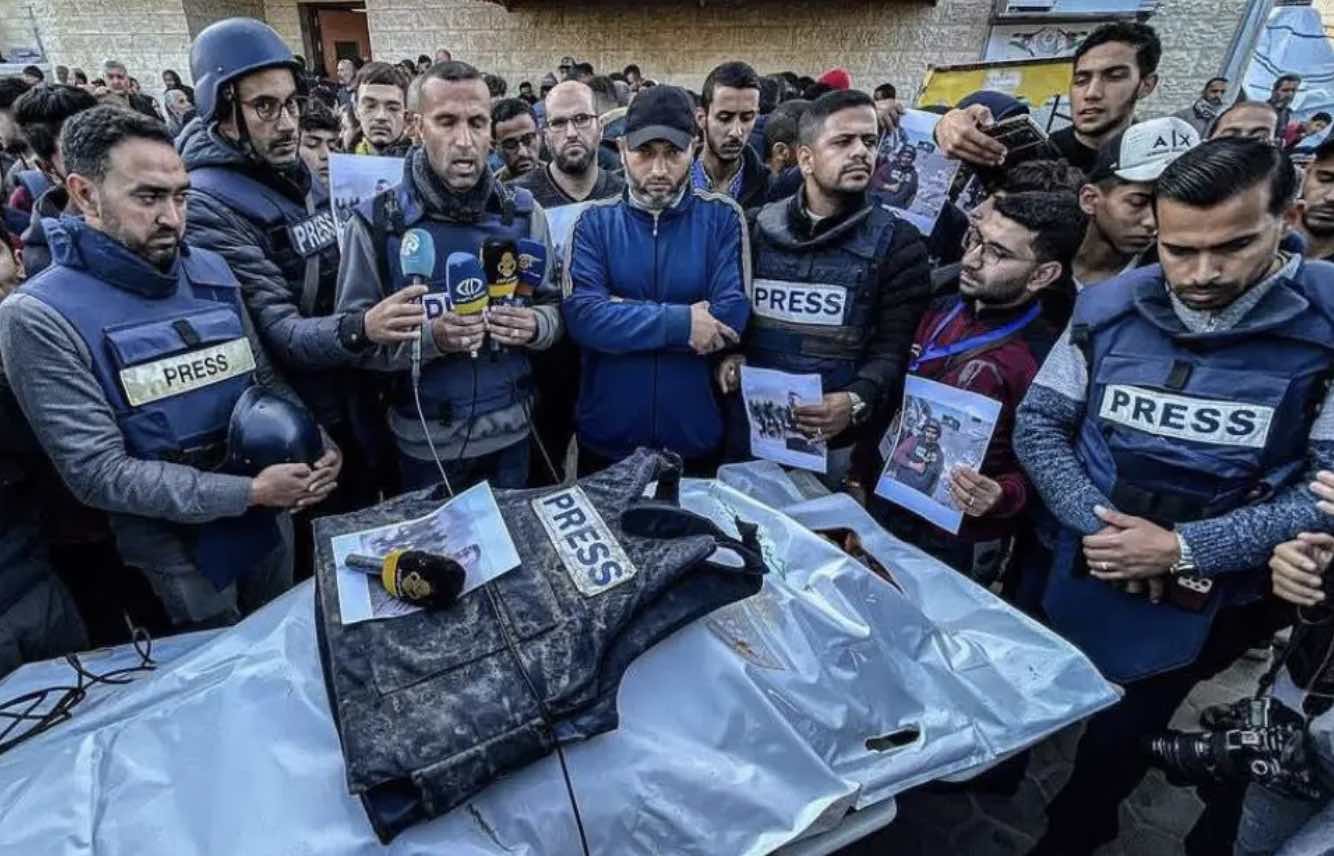
At least 210 press professionals, mostly Palestinians, lost their lives in coverage or hit in their homes
The War in Gaza, which began after the massive attack of the Hamas group to Israel on October 7, 2023, turns two years as “the most lethal conflict for journalists in modern times,” according to the Reporters Without Border Press Freedom Organization (RSF).
Since the beginning of the war, more than 210 journalists have been killed, mostly Palestinians, while covering the bombing, raids and air attacks at Enclave, according to RSF.
Faced with the escalation of violence, the Committee for the Protection of Journalists (CPJ) has reinforced its global campaign “Journalist is Not A Target”, which denounces deliberate attacks against press professionals and reaffirms that journalists are civilians and kill them is a crime of war.
At least 40 journalists killed in Gaza this year
The committee states that more journalists were killed in 2024 than any other year since it started collecting data, with almost two thirds of the victims being Palestinians killed by Israel.
Of the 55 deaths of CPJ confirmed press professionals in 2025, 40 occurred in the region comprising Israel and the busy territories.
The NGO also denounces that 90 journalists have been arrested by Israel, and 35 remain detained, many under administrative detention, without formal accusation
Press Deliberate Attacks
The RSF has also intensified its legal action: since the beginning of the war, the organization has already submitted five formal complaints to the International Criminal Court in The Hague, denouncing war crimes against journalists.
The documents point out evidence of deliberate attacks by Israeli forces, with targets clearly identified as a press, in violation of international conventions that protect media professionals in conflict zones.
At least 56 of them were intentionally targets of the Israeli army or killed while exercising their profession, according to reporters without borders.
Some of these attacks were confirmed by Israel, justifying them on the grounds that journalists would actually be members of the Hamas Group, which press freedom groups deny.
Read too | RSF fits a fifth complaint to the Court of Hague for war crimes against the press in Gaza
Mourning against journalists’ deaths
Anticipating the symbolic date, more than 200 press vehicles from 50 countries participated, on September 1, in a global editorial protest coordinated by RSF, Avaaz and the International Journalists Federation (FIJ).
Newspapers published black covers, broadcasters interrupted the programming with joint messages, and digital portals erased their homepages in solidarity with the dead professionals.

“At the pace when journalists are being killed in Gaza by the Israeli army, there will soon be no one to keep you informed,” warned Thibaut Bruttin, director of RSF, during the protest.
Informative blackout ‘in the conflict zone
The situation is more complex by an unprecedented blockade of the access of international journalists to Gaza by Israel.
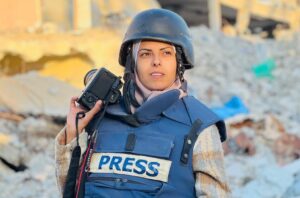
Coverage has been done exclusively by local professionals, often working without adequate protection and suffering the effects of the humanitarian crisis that makes it difficult to access food.
Several joint appeals to allow the entry of correspondents and international teams to Gaza, signed by journalists, vehicles and entities, were ignored.
In specific cases, some were allowed to make images as part of Israel’s army trains, without freedom to report freely.
Read too | Watch: In video portraying the impact of journalism on wars, agencies demand from Israel entry of the press in Gaza
In August, journalists died in two attacks on hospitals in Gaza
The most serious episodes against journalists took place in August, in two distinct days, both in hospitals.
In the first, an Israeli attack hit a press tent at the entrance of Al-Shifa Hospital in the city of Gaza, killing six Palestinian journalists.
Among them was Anas al-Sharif, correspondent of the station, described by the RSF as “the voice of suffering imposed by Israel to the Palestinians of Gaza.”
A few days later, in 2 a new attack directly hit the interior of the Nasser Hospital during the rescue of injuries from an earlier bombing in an Israeli army operation that left more than 20 dead.
Five journalists from international agencies that accompanied the work of medical teams were killed on site, including Reuters professionals, NBC, Associated Press (AP) and Al Jazeera.
The UN classified the episode as a “serious violation of international humanitarian law” and reiterated the request for protection to press professionals in conflict zones.
Read too | Israeli attack on hospital in Gaza leaves 20 dead, including journalists from Reuters, AP and Al Jazeera
Press in Flotilha intercepted by Israel
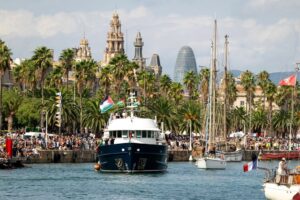
As part of the efforts to break the informative blockade, an international flotilla with activists and journalists tried to reach Gaza by sea in late September.
Twenty journalists were on board, representing vehicles from Europe, Latin America and the Middle East.
The vessel was intercepted by the Israeli Navy in international waters, and all professionals were captured and taken to interrogation in Ashdod.
Press organizations and human rights condemned the action as another attempt to prevent independent coverage of war.
Read too | Journalists from Rai and El País are among inmates of the intercepted Flotilha towards Gaza; NGOs require liberation