
How China’s dominance over rare earths threatens Europe’s military buildup
European governments are rushing to rearm their military forces in the face of a more aggressive Russia and an increasingly isolationist America. But this effort faces a formidable obstacle: restrictions imposed by China on critical minerals.
China dominates the market for rare earth metals and permanent magnets — essential in the production of missiles, jets, drones and a wide range of military equipment. Beijing has used this bargaining power in its trade wars with Washington and Brussels, tightening or loosening controls on rare earths exports in negotiations over tariffs and other trade barriers.
Also read: Step by step, how China took control of the world’s critical minerals
Take your business to the next level with the country’s top entrepreneurs!
This scenario triggered a series of actions in Europe. Ursula von der Leyen, president of the European Commission, the executive arm of the European Union, said the bloc should “seek its independence” over critical minerals.
Meanwhile, European trade officials have been frantically engaging with their Chinese counterparts to try to secure the bloc’s supplies.
On Wednesday, the 5th, ambassadors from the 27 EU countries were informed that China appeared willing to negotiate so-called general licenses to speed up exports of rare earths to Europe.
But there was no guarantee that such a solution would come quickly — or that it would last. The bloc is focused on finding alternative sources of supply, two diplomats familiar with the discussions said, speaking on condition of anonymity to discuss internal deliberations.
In the short term, the aim of the negotiations is to “give more security to European industry”, said Olof Gill, spokesman for the European Commission. “The dialogue continues.”
Still, the ups and downs have made clear to European leaders how much their rearmament depends on an increasingly untrustworthy relationship with China.
“Everything depends on it,” said Joris Teer, a researcher at the European Union Institute for Security Studies. Without the flow of critical minerals, “there is no rearmament.”
Following former President Donald Trump’s announcement of the tariffs in April, Beijing quickly responded by limiting the export of seven rare earth elements and magnets around the world.
Last month, he threatened to expand that list, before Trump and Xi Jinping, China’s top leader, agreed at a summit last week to delay that escalation for a year.
But April’s restrictions remain in place for European buyers — and for all the EU’s talk about diversification, Beijing is keeping Brussels in a delicate position.
Around 98% of the EU’s imports of essential rare earths come from China, making the bloc even more dependent than the United States, which imports around 80% of these materials from the Asian country. Although rare earths exist throughout the world, their extraction and refining are extremely complex processes.
The European Union has tried to reduce this dependence and approved, in 2024, a law to create a domestic critical minerals industry. Still, replacing Chinese mining and refining capacity is neither quick nor simple.
Analysts at consultancy SFA Oxford recently estimated that a “complete diversification” from China would take 8 to 12 years, considering the time needed to develop mines, build refineries, expand production and integrate everything into the NATO supply chain.
And when it comes to the defense industry, Europe doesn’t have that kind of time.
European countries are rushing to increase military spending and develop key capabilities by 2030.
To this end, the European Union loosened budgetary rules and launched a loan program worth 150 billion euros (R$926 billion) to boost investments in defense.
Lack of access to critical minerals could derail this initiative, alter the geopolitical balance and shape Europe’s future.
“Autonomy in defense begins with autonomy in materials,” said Daniel Fiott, head of the Defense and State Policy program at the Free University of Brussels.
Since October last year, Chinese rare earth exporters have been required to inform authorities about the use of shipments in Western supply chains.
These rules gave China a detailed view of the types and quantities of minerals that companies around the world need. The April decision to restrict access caused shortages and sent prices soaring for metals such as dysprosium — used to make heat-resistant magnets.
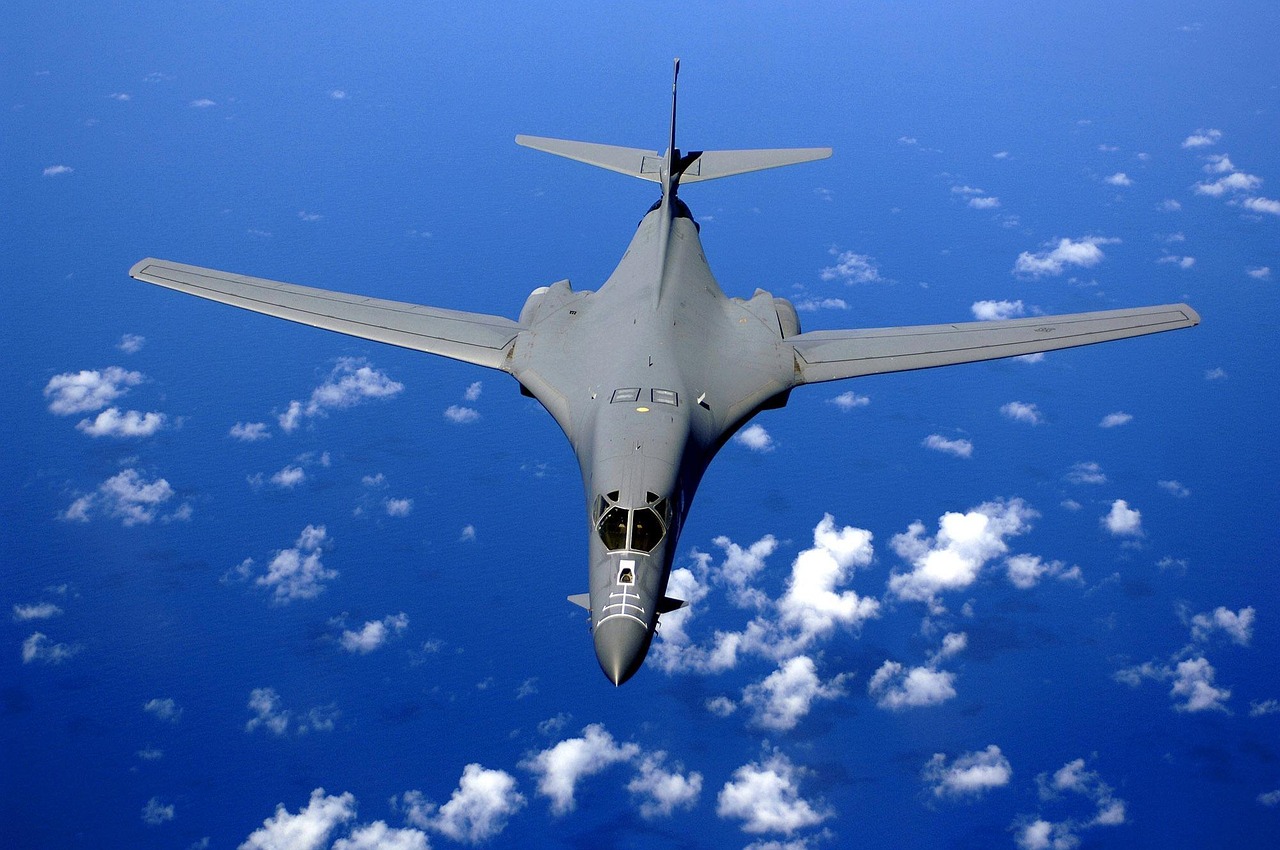
Rare earth minerals are key to F-35 fighter jets, drones, submarines, Tomahawk missiles, radar systems and other military technology produced in the United States or the European Union — and which Europe plans to stockpile as part of its rearmament plans.
“China’s ultimate goal is to slow down the advance of the United States and Europe in an interconnected way,” said Benedetta Girardi, an analyst at the Center for Strategic Studies in The Hague. “If it affects the security sector of one, it also affects the other.”
Maros Sefcovic, the European Union’s trade chief, noted that since Beijing began requiring licenses for rare earth exports, only about half of the 2,000 requests made by European entities have been “properly processed.”
Even though China has backtracked on its latest threat of stricter controls, the mere fact that it has considered broad restrictions already serves as a warning.
“I remain concerned,” said Gracelin Baskaran, director of the Critical Minerals Security Program at the Center for Strategic and International Studies. “Even a pause in restrictions leaves us in a precarious situation.”
She highlighted that Europe, the United States and allies are not yet in a position to quickly replace the dysprosium used in drone engines, for example.
The world also has no real alternative to Chinese supplies of samarium, a mineral essential for magnets that withstand high temperatures in advanced military equipment.
Even as the risks of Chinese dominance become increasingly clear, Europe is finding it difficult to transform concern into action.
The United States is moving forward quickly: The Department of Defense bought a $400 million stake in the company MP Materials, and this week announced hundreds of millions of dollars in loans and potential stakes in the companies Vulcan Elements and ReElement Technologies, which seek to produce magnets from recycled rare earths.
In Europe, companies in the sector still doubt whether the bloc’s incentives — such as joint purchases, access to financing and expediting licenses — will be sufficient in time.
Therefore, diplomacy seems to be the main, and perhaps only, hope in the short term.
“The Chinese are trying to pull the rug out from under Europe’s entire rearmament initiative,” Teer said. “It’s not something a defense official or anyone in industry would want to say out loud.”