
Is a large State always inefficient? US entrepreneur and professor says no
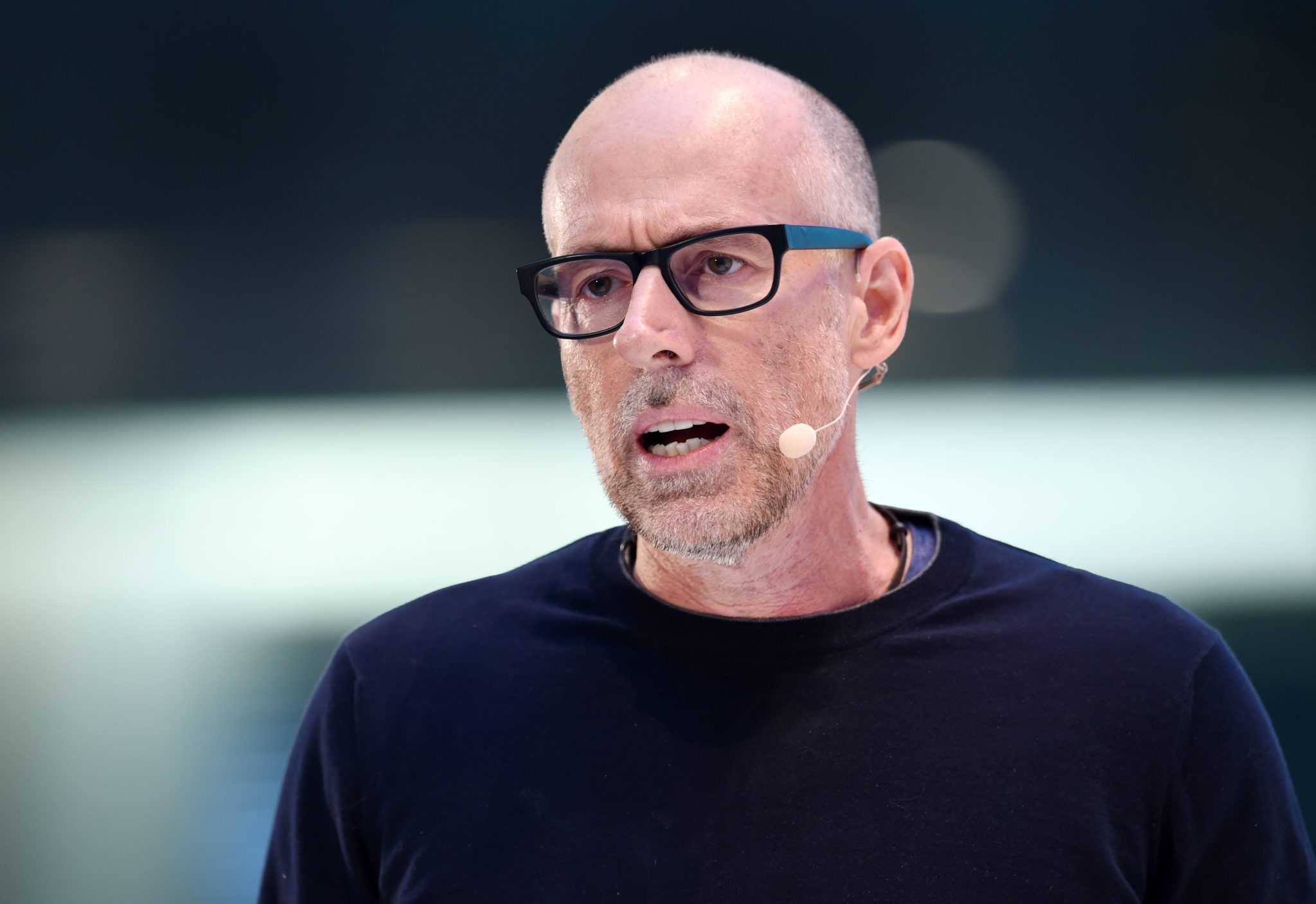
Many Americans have strong opinions about the so-called “big state.” For some, the term has become synonymous with inefficiency, waste and authoritarianism. Critics say public spending and bureaucratic bloat are obstacles to economic growth and individual success. But, according to Scott Galloway, serial entrepreneur and Marketing professor at New York University (NYU), this vision doesn’t tell the full story. In fact, he says that some of the most successful people in the world owe their prosperity to “the big state” — including himself.
In a wide-ranging conversation with Vice’s Shane Smith, published in October, Galloway said he would never have achieved success if UCLA (University of California at Los Angeles) hadn’t given him a chance. When he applied to university as a teenager, he was rejected. He had a 3.1 average and scored 1,130 out of 1,600 on the SAT.
Also read: Supreme Court allows Trump administration to withhold $4 billion in food aid
Take your business to the next level with the country’s top entrepreneurs!
“UCLA’s admission rate was 74 percent. When I applied, I was one of the 26 percent who didn’t get in,” Galloway told Smith. “I came home and broke down. I was really shaken. I always thought I was smart. I was always told I was smart, and I wanted to do something bigger.”
With her mother’s encouragement, Galloway appealed the decision and met with an admissions officer. What happened next completely changed his perspective on life.
“It literally inspired me to spiral upward,” he said. “I’m a product of the great state. Everyone loves to talk bad about the government. But the taxpayers of California and the coordinators at the University of California saved my ass.”
Attending UCLA changed the course of his life. Galloway worked at Morgan Stanley, earned an MBA at the University of California at Berkeley and founded the company L2, sold to Gartner for US$155 million in 2017. And he was able to give back to the university that opened its doors to him.
“This is a boast, but I will say it: Three years ago, I donated $12 million back to UCLA,” Galloway said. “So guess what? Betting on ordinary people pays off.”
Galloway stated that American universities today follow a very different philosophy than that of his youth. This year, according to him, Vanderbilt University’s admission rate will be below 4%, lower than Harvard’s, even with fewer applicants competing for places.
“When I grew up, America valued ordinary young people,” he said, noting that the University of California system was virtually free for qualified students, funded by state taxpayers and created to democratize opportunity.
Today, higher education operates, according to Galloway, like “a hedge fund offering classes.” Universities, even with billion-dollar endowments, are restricting admissions rather than expanding access, creating an artificial shortage that drives up costs.
The economic consequences go far beyond college campuses. Young adults face unprecedented barriers to traditional milestones of stability. House prices have soared; Student debt follows young people like a shadow—even after personal bankruptcy—and today, Galloway noted, one in five 30-year-old men still lives with their parents.
“Unfortunately, now in the United States, the best indicator of your child’s success is how much money you have,” he said. “And there is something wrong with that.”
According to Galloway, public resources are fundamental to generating opportunities, innovation, economic growth and social mobility. But the current system is optimized for exclusivity, concentrating wealth and fueling resentment.
For him, the real question facing the United States is not whether it can afford to bet on ordinary people — but whether it can afford not to.