
At the end, president of COP30 promises to reverse the absence of fossils
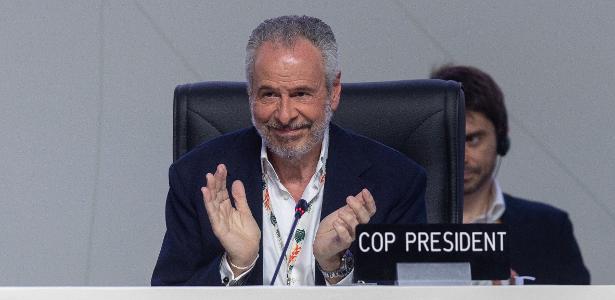
The words fossil fuels do not appear in the text. The expected roadmap for exiting fossil fuels did not make it into the final text. The Brazilian proposal split the negotiations and ended up being removed from the table. The presidency decided to transform it into its own initiative throughout the year, as the Brazilian mandate only ends at the beginning of COP31.
I, as president of COP30, will create two maps: (one) how to reverse deforestation and the other, (how) transition away from fossil fuels in a fair and equitable way. This will be science-led and it will be inclusive. In the spirit of a joint effort, we will have high-level meetings, bringing together consumer organizations, workers, people from academia, civil society, and we will report back.
André Corrêa do Lago, at the closing plenary of COP30
The Minister of the Environment, Marina Silva, highlighted that the road map, like the NDCs, is specific to each country. “A road map presupposes axes, bases. And this is the work that will be done with inputs and perspectives from different regions and countries”, he said, in a press conference after the plenary, indicating especially in poor and developing countries.
In the same interview, the ambassador admitted that he already expected a reaction against the road map, despite the enthusiasm of President Lula (PT). “As a diplomat, I had a more conservative version, in the sense that we imagined that it would be very difficult to reach a consensus on this story (of the road map), considering that, since we approved (including) fossil fuels in Dubai (in 2023), there is great resistance to continuing the discussion on the topic”, he pondered.
For him, this debate is a “political” issue. “The energy issue is so geopolitically charged and so economically important that you don’t have, within the United Nations, a raw energy organization, other than nuclear, because it has the non-proliferation dimension”, he pondered.
The ambassador points out that it is about inventing a new way of looking at the global economy. “We are going to gather the greatest possible intelligence on fossil energy and organize it so that, in the short period of 11 and a half months, we can produce a substantive, neutral, balanced and impartial document”, said Corrêa do Lago.
