
Senate approves anti-faction bill; text returns to the Chamber
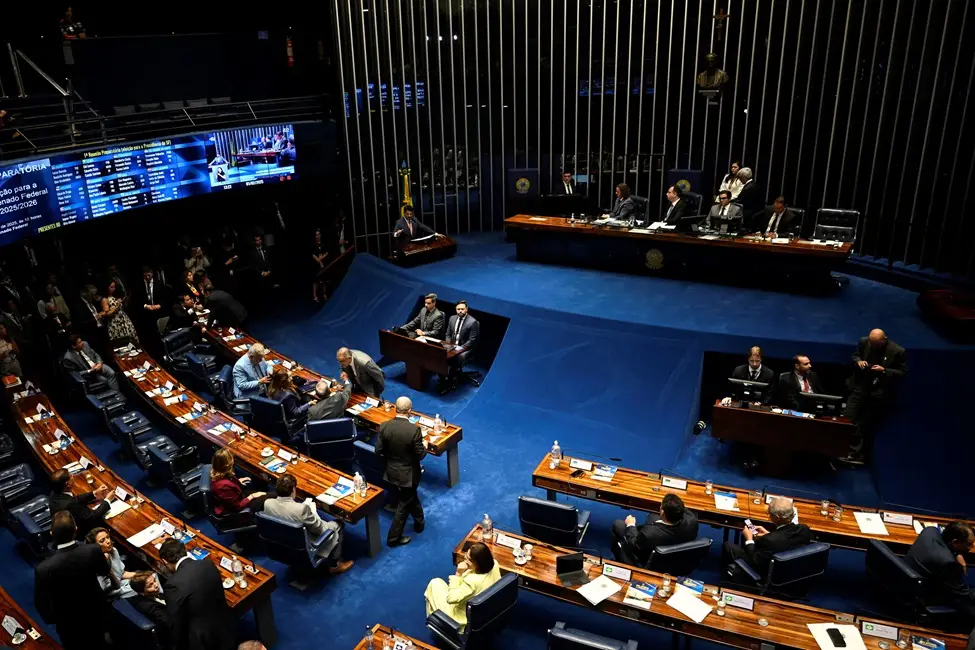
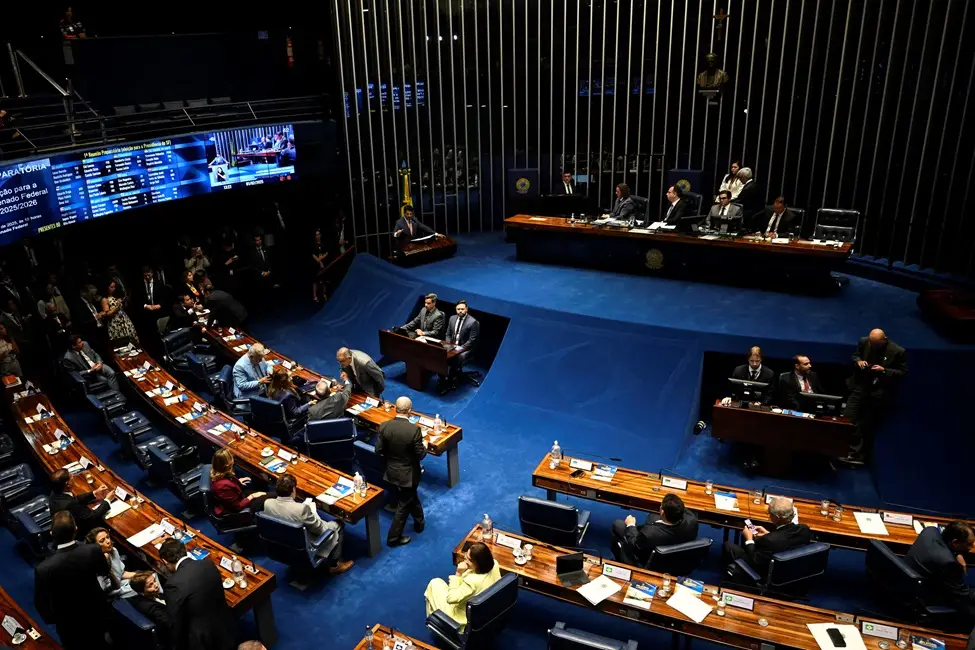
The Senate approved the anti-faction bill on Wednesday night, the 10th. As changes were made, the text returns for a new analysis by the Chamber. The basic text was approved by 64 unanimous votes, in a union between Lula government base and opposition parties.
The text toughens penalties for criminal organizations, creates new sources of financing to combat crime and strengthens actions against money laundering.
Senate rapporteur points out “probability” of pro-amnesty amendments in the Dosimetry PL
Esperidião Amin states that amendments on amnesty may be presented
Why impeachment requests against STF ministers never advance in the Senate
Dozens of complaints have already been filed by Rodrigo Pacheco and Davi Alcolumbre
The senators rejected a statement presented by the Liberal Party (PL) to equate some actions by criminal factions with terrorism crimes.
The proposal authored by the federal government was approved in the Chamber of Deputies under protests from Palácio do Planalto, after the rapporteur in that House, Guilherme Derrite (PP-SP) changed the wording. Now PT members have supported the changes made under the report of senator Alessandro Vieira (MDB-SE).
This Wednesday morning, the House’s Constitution and Justice Committee (CCJ) approved the text.
The project uses the Economic Intervention Contribution on fixed-odd betting (Cide-Bets) as a source of revenue, to be passed on to the National Public Security Fund (FNSP). The estimate is that up to R$30 billion per year will be used to combat organized crime. At least 60% of the annual resources raised by Cide-Bets must be allocated to decentralized execution in State actions. Gaeco is one of the beneficiaries of this transfer. The Executive Branch has six months to propose the restructuring of national public security funds.
Creation of the National Bank of Criminal Organizations
The initiative establishes the National Bank of Criminal Organizations (BNOC), which gathers information on members and financiers of organized crime in Brazil. The Financial Activities Control Council (Coaf) will have access to this bank. The text encourages cooperation through interoperable state banks. States need to participate in these banks if they want to receive transfers from the Unified Public Security System (Susp).
See the crimes provided for in the bill and the punishment
Crime of criminal organization – Participating in, financing or promoting a criminal organization carries a penalty of three to eight years in prison, and a fine, to five to ten years in prison, and a fine. Now, anyone who tries to hinder the investigation or procedural instruction is subject to the same punishment. There are also the aggravating factors of a double penalty increase for those who command the organization and a two-thirds increase in the penalty depending on the organization’s means of committing crimes.
Criminal faction – The project creates the crime of promoting, financing or being part of a criminal faction, which is punishable by 15 to 30 years in prison and a fine. The penalty for leaders is doubled and there are other aggravating factors that can increase the penalty by two thirds. This crime is not subject to amnesty or bail. A criminal faction is defined as a “criminal organization that operates through control of territories or has interstate operations using violence, coercion, threats or other intimidating means”.
Private militia – This crime, which currently carries a sentence of four to eight years in prison, now goes to 15 to 30 years in prison, as it is equivalent to a criminal faction, according to the text presented by Vieira.
Favoring a criminal faction – Favoring a criminal faction is punishable by 8 to 15 years in prison and a fine.
Reception carried out by a criminal organization – The penalty is six to ten years in prison and a fine.
Recruitment of a child or adolescent – In this case, the penalty is five to ten years in prison, in addition to the penalty corresponding to the violence or the result and the penalty for criminal organization crimes. If there is still serious bodily injury to the minor, the penalty is 8 to 15 years in prison.
Aggravating factors for crimes committed by members of a criminal faction or private militia – There are increased penalties for crimes committed by members of a criminal faction or private militia. These are:
homicide (penalty of 20 to 40 years in prison); bodily injury (increase in sentence from three months to one year in prison by 2/3); bodily injury followed by death (penalty of 20 to 40 years in prison); threat (penalty of one to three years in prison); kidnapping or false imprisonment (penalty of 12 to 20 years in prison); theft (penalty of four to ten years in prison and a fine); robbery (increase in sentence from four to ten years in prison by three times); robbery (penalty of 20 to 40 years in prison and fine); extortion (increase in sentence from four to ten years in prison by three times); extortion through kidnapping (increased sentence from 8 to 15 years in prison, by 2/3) and embezzlement (penalty from 4 to 12 years in prison, and a fine).
Trafficking crimes – All trafficking crimes provided for in the Anti-Drug Law have a double penalty if committed by a criminal faction or private militia.
Crime of money laundering or concealment of assets – The penalty, from three to ten years in prison, and a fine, is increased to five to 15 years in prison, and a fine. The penalty increases to 10 to 30 years in prison if the crime is committed by a member of a criminal faction or private militia, or for their benefit.
Illegal trade in firearms – A paragraph was inserted to punish 8 to 16 years in prison, and a fine, if there is irregular or clandestine activity consisting of the manufacture of an automatic firearm or semi-automatic long gun for restricted use with a high offensive potential. Possessing materials for clandestine manufacturing is punishable by four to eight years in prison and a fine.
International firearms trafficking – All crimes relating to international arms trafficking carry penalties of 8 to 16 years in prison (with possible aggravating factors), and a fine, doubled if the firearm is an automatic firearm or a semi-automatic long weapon comparable to a rifle, machine gun, submachine gun, carbine or semi-automatic shotgun, including a pistol adapted to fire in automatic mode.
Fraudulent management of a financial institution – This crime, which currently carries a penalty of 3 to 12 years in prison and a fine, has two aggravating factors. If the management is temporary, the penalty increases to two to eight years in prison, and a fine, with the possibility of an increase of 1/3 to 2/3 of the sentence if the crimes were committed repeatedly by a criminal organization.