
Dosimetry PL: the project’s path after the veto announced by Lula
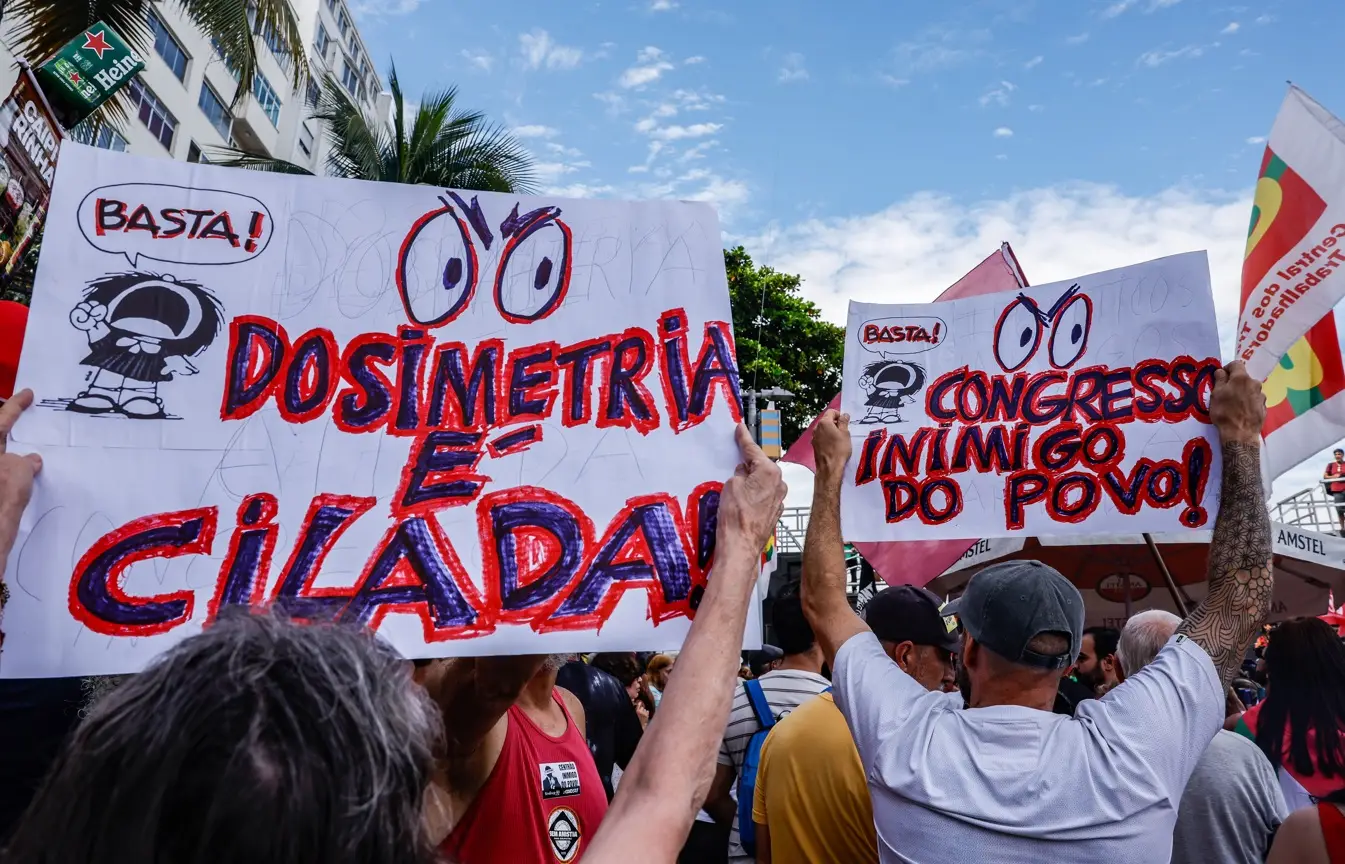
With the declaration by President Luiz Inácio Lula da Silva (PT), this Thursday, the 18th, that he will veto the Dosimetry bill when the text reaches the Palácio do Planalto, the political and institutional roadmap that should follow the presidential veto is already beginning to be designed.
Lula will have up to 15 working days to analyze the text approved by the Senate on Wednesday, 17th. As he has already publicly anticipated his decision, the expectation in Congress is that the veto will be formalized without delay.
Lula denies agreement with Congress and says he will veto Dosimetry PL
President states that the government was not informed about political articulation, criticizes changes before the end of the STF trials and indicates a veto to the project approved by the Senate

Gleisi says Jaques Wagner ‘made a mistake’ in the dosimetry agreement
Project that reduces Bolsonaro’s sentence was approved by the Senate this Wednesday
From there, the project returns to the National Congress. Deputies and senators begin to analyze the presidential veto in a joint session, being able to maintain or overturn it. If the veto is rejected, the text is promulgated and becomes valid as law. If maintained, the proposal is archived.
To override a presidential veto, at least 257 votes are needed in the Chamber of Deputies and 41 votes in the Federal Senate.
There is still a third possible way. Just as happened with the Proposed Amendment to the Constitution (PEC) of the Temporal Framework, the Dosimetry PL can be judicialized and end up in the Federal Supreme Court (STF). In this scenario, the case is distributed to a reporting minister and begins to be analyzed by the Court – a process that, in practice, can drag on for years, maintaining the application of the approved rule until there is a definitive decision.
The leader of the PT in the Chamber, deputy Lindbergh Farias (PT-RJ), and the leader of the Brazilian Socialist Party (PSB), Pedro Campos (PSB-PE), stated that they will file a writ of mandamus with the STF against the Dosimetry PL. According to them, there were procedural irregularities during the approval of the proposal in the Senate.
The deputies cite the use of a “writing amendment” to change the section that deals with regime progression. They argue that, as there was a change in content – and not just in form –, the project should have returned to the Chamber of Deputies for new analysis, which did not happen.
Behind the scenes, and also publicly, the project’s rapporteur in the Chamber, deputy Paulinho da Força (Solidariedade-SP), admits to having consulted ministers of the Federal Supreme Court during the drafting of the text, in an attempt to reduce the risk of judicialization and guarantee the legal viability of the proposal.
What is Dosimetry PL
The Dosimetry bill changes the way in which penalties for crimes against the Democratic Rule of Law will be calculated. According to the text, when the attempt to abolish the Democratic State and the crime of a coup d’état are committed within the same context, there is no longer a combination of penalties. In this situation, only the most severe punishment will prevail.
The proposal’s central axis is the review of criminal dosimetry, with changes in the minimum and maximum levels foreseen for each criminal type and in the general methodology for calculating sentences. The text also shortens the deadlines for the progression of the sentence, facilitating the transition from the closed regime to the semi-open or open regime.
Among the potential beneficiaries of Dosimestria’s PL are former president Jair Bolsonaro (PL) and members of the military nucleus of the previous government, such as former Navy commander Almir Garnier, former Minister of Defense Paulo Sérgio Nogueira, former Minister of the Civil House Walter Braga Netto and General Augusto Heleno, former head of the Institutional Security Office (GSI).
