
Election-2026 will be a dispute between inheritance and political trajectory, says political scientist
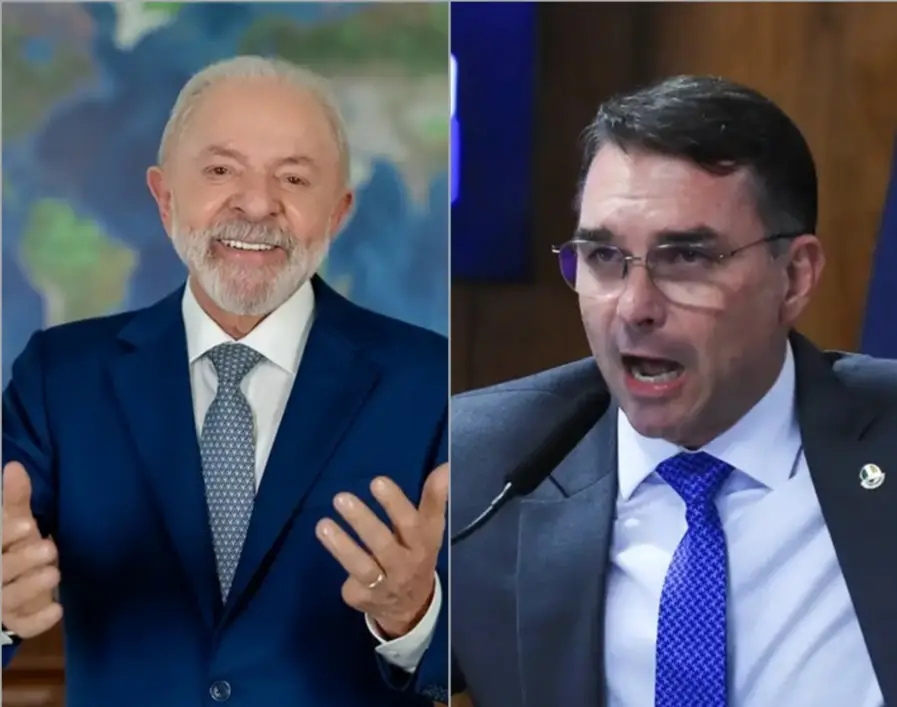
The elections for the Presidency of the Republic in 2026 tend to repeat the polarized scenario between left and right seen in the last eight years, but the lack of consensus in the conservative camp could favor Lula’s re-election, according to political scientist and professor at UFRJ, Jorge Chaloub.
Jair Bolsonaro, who had the greatest popularity and voting intention against Lula, has been ineligible since June 2023 — and the arrest ordered on November 25th was the last straw in his chance of running for office. Without his name on the ballot, Bolsonaro had no choice but to nominate his son, Flávio Bolsonaro, as the surname’s representative.
With Flávio running for Planalto, Carlos Bolsonaro maintains his candidacy for the Senate for SC
Carlos could run for office in the State of Rio de Janeiro, where he was a city councilor for 24 years, without facing direct competition from his brother
Bolsonaro’s politics have always been distinct from other parliamentary trajectories and markedly familiar, giving prominence to his surname and living heritage in his children and, to a lesser extent, in his wife, Michelle Bolsonaro.
For Jorge Chaloub, the strategy inaugurated by Bolsonaro was a risky bet and may not materialize: historically, the transfer of votes in Brazil tends not to elect “replacement” candidates.
“In 2018, Lula made an effort to transfer his vote to Haddad, which, despite the defeat, was an impressive feat given the numbers,” says the political scientist. “It’s difficult to build a presidential candidate, someone who has a lot of votes in a presidential career. This demands popularity, knowledge of voters, national ties, people willing to campaign for you. Will this be the case with Flávio?”
Chaloub also points out that other allies of Jair, such as Tarcísio de Freitas, can “co-opt the votes” even without a direct clash with the candidate chosen by the former president, due to pure ideological alignment.
The latest Pulse Brasil Latam survey, by the AtlasIntel institute in partnership with Bloomberg, released in December, indicates that Flávio has not yet managed, at least for now, to capture all the electoral capital of his father, Jair Bolsonaro.
In the direct confrontation with President Lula, the senator appears with 41% of voting intentions, against 53% for the PT member. The difference of 12 percentage points is greater than that observed in the scenario in which Lula faces Jair Bolsonaro, in which the former president scores 46%, reducing the PT member’s advantage to four points.
The result suggests that part of the Bolsonarist electorate has not yet automatically migrated to the senator, even after the explicit nomination of Jair Bolsonaro, who is ineligible, was arrested last month and is not expected to run in the 2026 election.
The distance also remains when Flávio is compared to other names on the right. Against the governor of São Paulo, Tarcísio de Freitas (Republicans), Lula has 49% against 45%, a difference of four points.
Outside the Bolsonaro clan, it is precisely the governor of São Paulo who emerges as a figure who can inherit this electorate. Tarcísio differentiates himself by presenting a more technical rhetoric compared to Bolsonarism, but manages to maintain a radicalized base with his aggressive stance on issues such as public security, gender and sexuality issues and pro-amnesty positioning.
“Tarcísio has always tried to be a moderate candidate. And the broader right-wing camp looks favorably on his name. He flirts well with an ultra-right strategy that alternates between movements of radicalization and moderation. We see this a lot in the MBL, which sometimes promotes public lynching of artists in universities, and sometimes is sitting at the table, in a suit, negotiating in the Chamber”, he explains.
Chaloub draws attention to the risk that Tarcísio’s candidacy could bring to Bolsonarism in the long term. In his view, even if he is defeated at the polls, a candidacy by Tarcísio that reaches the second round could elevate him as the new leader of the right in the eyes of the electorate.
“Tarcísio almost won against Lula, just as Bolsonaro almost won in 2022. In this scenario, the right-wing camp will have a new leadership”, he points out. “Bolsonaro continues to be relevant, but he loses space… And when he loses this space, no matter how much Tarcísio claims to be a defender of the same flags, you can never guarantee this type of loyalty in the face of political calculation.”
