
Trump’s economy is the least conservative in many years, says expert
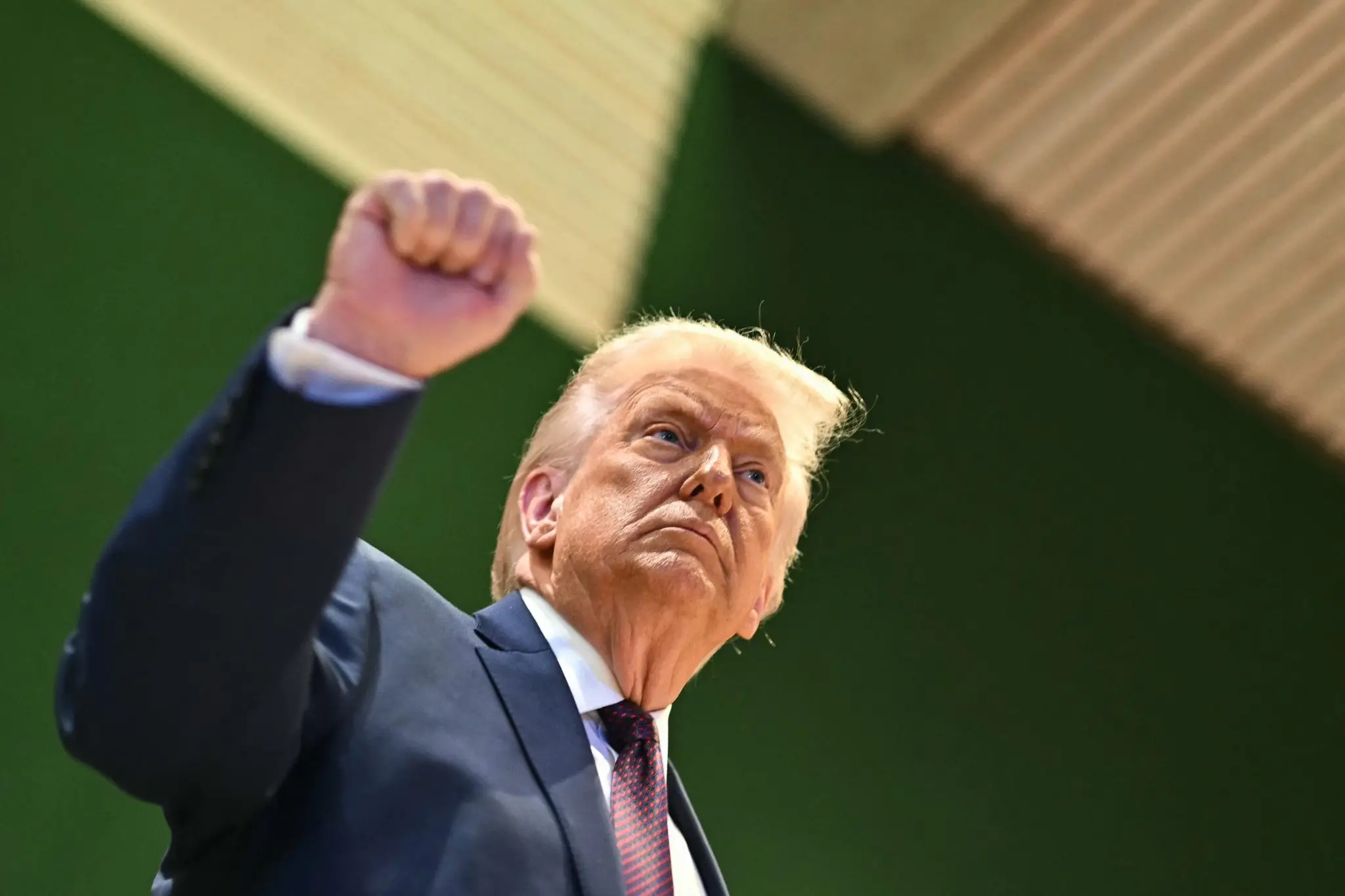
In 2024, Donald Trump based his re-election campaign rhetoric on deregulation and tax cuts to free the private sector from regulations considered excessive and stimulate economic activity. In practice, the Trump 2.0 economy has looked less like this small-c conservative ideal and more like the protectionist, mercantilist status quo of the early 20th century.
“This is the most interventionist government in my lifetime,” Justin Wolfers, an economist at the University of Michigan, told the progressive network MeidasTouch. “It’s the least conservative government of my life.”
Also read: Trump’s tariffs really hurt — but only when he actually imposes them
Wolfers — who has already been named by the IMF as one of 25 young economists in the world who “shape the way we think about the global economy” — said Trump’s erosion of the independence of federal institutions and his propensity to insert himself into private sector decisions are reorienting the economy away from a productive and predictable path. The result, Wolfers warned, could be a generation of missed opportunities and wasted growth.
Wolfers has previously compared Trump’s economy, especially his tariff regime, to the United Kingdom’s departure from the European Union. “Brexit is an excellent case study for my friends here in the United States,” he told CNN last year.
Wolfers criticized Brexit’s isolationist effect on the United Kingdom, which resulted in years of stagnant growth and higher unemployment. “That’s basically the roadmap that America is going to have to follow as well,” he said, amid escalating U.S. trade war rhetoric last spring aimed at the United Kingdom and Europe. (In fact, Wolfers has compared Trump’s election to Brexit since 2016, although even then he warned that the former would likely be worse.)
This matters, of course, because economic evidence has largely confirmed that the UK economy has been permanently deformed by Brexit, becoming smaller, less trade-integrated and less invested than it would have been otherwise.
Data consistently show moderate but persistent negative effects on GDP, trade, investment and labor supply.
Recent research using “what if” comparisons suggests that UK GDP per person is around 6% to 8% below what it would be without Brexit by around 2024–25.
Why Trump’s economy is more radical than conservative
While Trump has delivered on promises to cut regulations and cut taxes for businesses and wealthy Americans, Wolfers noted that other policies are less compatible with the economies of recent Republican presidents.
The Trump administration has approached some companies by exploiting state regulatory power, occasionally interfering in antitrust cases or casting doubt on mergers that require federal approval, as regulators have done to discourage companies from adopting diversity, equity and inclusion (DEI) policies.
The Trump administration has also taken a more active role in the private sector by purchasing equity or controlling stakes in several companies.
Last year, the government committed more than $10 billion in taxpayer funds to this type of operation, with most of it going toward securing a 9.9% stake in chip giant Intel.
The administration has also shown interest in mining, nuclear power generation and steelmaking. Over the weekend, reports also emerged of government plans to inject US$1.6 billion into USA Rare Earth, a major mineral supplier.
For many economists, what is most troubling is that Trump has repeatedly subverted the independence of federal institutions, notably by firing the head of the Bureau of Labor Statistics following an unfavorable employment report (with, admittedly, quite large revisions that cast doubt on the previous reading of a strong economy) and by repeatedly harassing and threatening to remove Federal Reserve Chairman Jerome Powell.
Trump tried to fire Federal Reserve Director Lisa Cook, a case now under review by the Supreme Court, and his Justice Department opened an investigation into alleged mortgage fraud involving Cook, which she vehemently disputes.
The unease in US markets is just a hint of the chaos that could result if Trump goes ahead with undermining central bank independence.
Prominent CEOs, including Jamie Dimon (JPMorgan), have warned of the risks faced by countries that follow this path, with Turkey as a notorious example of what can go wrong when the Executive fires bankers who tell him things he doesn’t want to hear.
Wolfers said this behavior is incompatible with the U.S. role as one of the richest nations in the world.
As confidence in the economy falls and economic data becomes less reliable, he added, the consequences could reverberate long into the future, risking prematurely wiping out years of potential growth.
“Don’t think about next quarter. Don’t think about next year or about a possible recession. Ask the much deeper question: What are the foundations of prosperity?” Wolfers said. “A decade from now, there will be some companies that were never founded.”
In addition to threats to market stability, other economists and scientists have warned that some Trump policies, including tariffs, cuts in federal research funding and stricter immigration requirements, are creating long-term risks that could undermine innovation in the United States.
An analysis by economists at UC Davis found that tariffs imposed in the late 19th and early 20th centuries — a period Trump hailed as a golden age of economics — reduced domestic productivity by 25% to 35% for every 10% increase in tariffs.
Kent Jones, professor emeritus at Babson College, noted that tariffs were used to finance the federal government until 1913.
It was in that year that Congress passed the law from which the modern income tax derives, ushering in the end of an era of exorbitant wealth inequality, a key moment in what historians call the Progressive Era.
The era that Wolfers accuses Trump of resurrecting, of course, is the Gilded Age, which came immediately before this period.
“Whatever the next Google or next-generation OpenAI is, it might not get invented or it might not happen on our home turf,” Wolfers said. “We will never see this absence, but our children will. Our children will feel this as a set of missed opportunities.”