Oracle billionaire’s next bet is to rethink healthy and productive aging
“I’m going to live forever”, sang Irene Cara in the film Fame. “I’m going to learn to fly.” Both are physical impossibilities, but that’s pop music. If Irene had sung something a little less catchy, like “I’m going to live to be 80, or maybe 100,” she would have been on the right track — albeit with less ambition.
Fame, with its avalanche of tights and primary colors, was launched in 1980, when the average life expectancy was 73 years in Europe and 74 years in the USA. By 2030, those numbers will have risen to 86 and 81 (Europe today is considerably healthier than the US). Across the West, more people are getting older. More than a simple social reality, this is quickly becoming a central issue for business leaders as well.
Also read: Aging well, spending poorly: financial disparity grows between generations in the country
Seeing what lies ahead is an essential skill for any senior executive, as Rita McGrath argued in her seminal 2019 book, aptly titled “Seeing Around Corners”. “Many of us experience inflection points as a single moment in time when everything changes irreversibly,” wrote the Columbia Business School professor.
“(But) when you look at the true nature of inflection points, you see a different story. It’s similar to the way Hemingway’s character Mike Campbell in The Sun Also Rises responds when asked how he went bankrupt. ‘Gradually,’ he says. ‘And then suddenly.'”
Artificial intelligence has reached its “suddenly” moment — and dangerously quickly, according to those who fear bubbles.
Climate change and sustainability have been in the “gradual” phase for decades, to the frustration of environmentalists. “Longevity” — the challenge of aging populations — is also in the “gradual” phase. But it can progress to “suddenly” much faster than many imagine.
More than a fifth of the European Union’s population is aged 65 or over. In the US, the proportion is one in six people, or about 61 million — a number that is expected to jump to more than 80 million by 2050. The number of people who will celebrate their 100th birthday in America is about to double.
In the EU, the proportion of working-age adults aged 15 to 64 is expected to fall from 64% of the total population in 2022 to 54% in 2100.
By 2023, the EU’s total fertility rate has fallen to 1.38 children per woman, the lowest level recorded since 1961, when comparable data collection began — well below the 2.1 needed to keep the population stable without immigration.
Populations are shrinking in Portugal, Spain, Germany, Italy and Poland, according to the World Population Review. Without immigration, this downward trend will become even more pronounced.
How are we preparing for a world in which birth rates fall, workforces age, and “old age” liabilities like pensions and intensive health care put a strain on resources?
The “cost” of old age today is too high, while the “opportunity” is little explored. If we can stay healthier for longer, retrain and rethink what retirement means, it is entirely possible for millions of people to work until they are 80.
Andrew Scott, an economics professor and longevity expert, is the principal scientist at tech billionaire Larry Ellison’s Oxford institute. Ellison, who once said “death never made sense to me”, put generative biology at the heart of the institute’s work, investing hundreds of millions of pounds of his own money into research. He is right to do so.
“A child born today has a 50% chance of living to age 90,” Scott said.
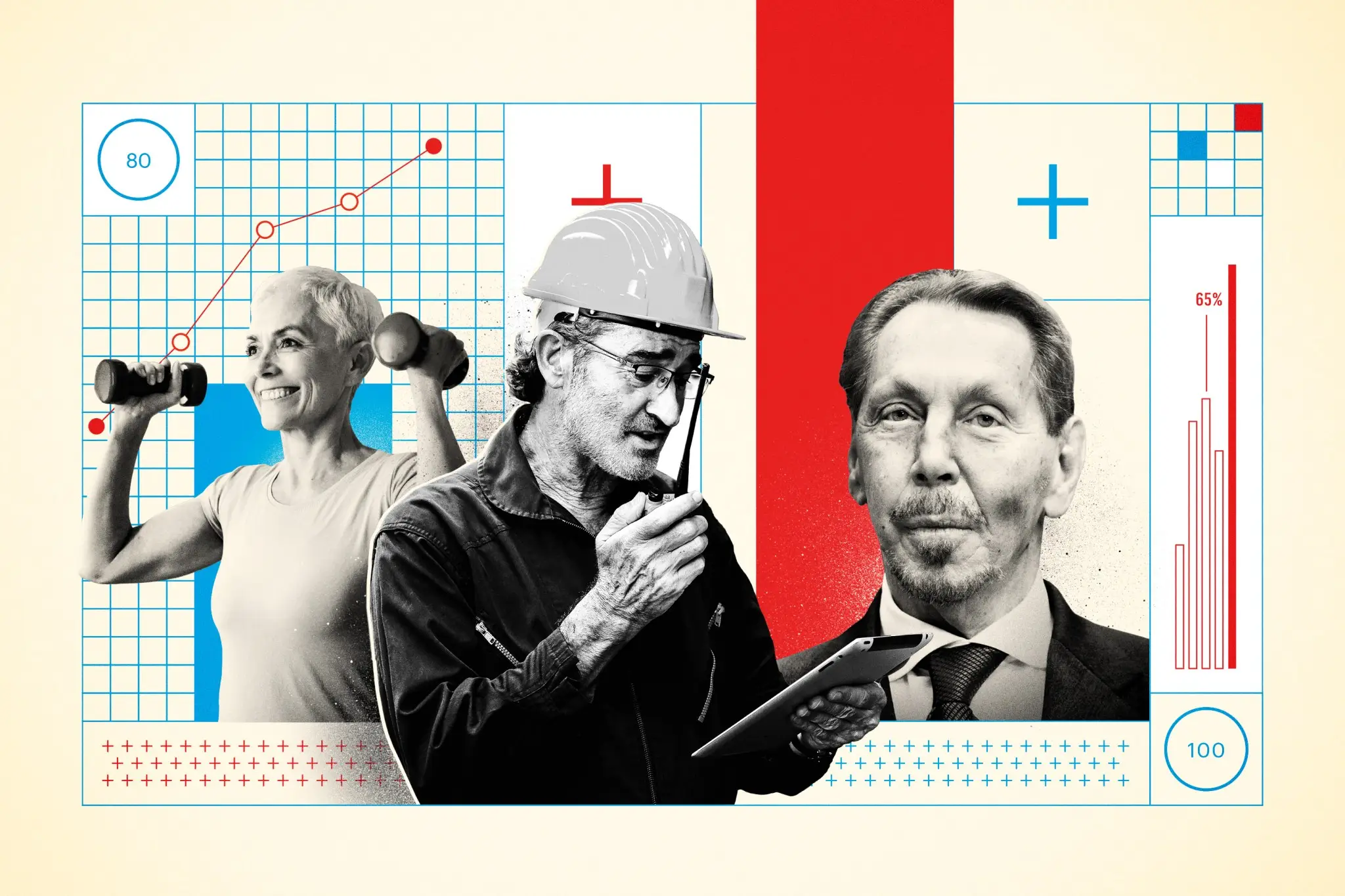
“Virtually all job growth in the future will come from people over 50. For example, in the UK, by age 50 about 80% of people are working; by age 65, that number drops to 30%. If we could just halve that rate of decline, we would see a 4% increase in GDP. That’s as close to a free lunch for growth as I can see.”
Sir Jonathan Symonds, chairman of pharmaceutical giant GSK, argues that our “healthspan” — living well — is as important as our lifespan — living long.
At an event I chaired with business leaders and policymakers, organized by consultancy Oliver Wyman in London last autumn, it was revealed that more than 80% of the average individual’s health expenditure occurs in the last decade of life.
If we could identify markers of future health problems and act early, aging would not be dominated by the language of heaviness and decrepitude, argues Symonds.
In recognizing health across the lifespan and the broader concept of well-being as a social and economic good, the question “how long will I live?” It starts to matter both at 18 and at 80 years of age.
All those young people sweating in spinning classes deserve applause. Free gym memberships offered by employers are more than a superficial benefit.
Research gathered by Oliver Wyman for Fortune reveals that wellness rituals are on the rise, especially among the wealthiest. Asked whether their general well-being was likely to improve over the next 12 months, 65% of high-income groups responded yes.
If you have time, resources, supportive family and friends, and local infrastructure, you’re likely to be healthier than those who don’t. Lower income groups often end up filling out the form with “none of the alternatives”.
“The longevity economy is the next frontier of growth, but the K-shape of healthcare is widening into two separate worlds,” said Rupal Kantaria, partner at the Oliver Wyman Forum.
“High-income consumers invest in personalized prevention and longevity. At the base, illness and debt accumulate. The middle becomes squeezed — too rich for safety nets, too pressured to move forward.”
Aging populations demand new responses from governments and businesses — from workforce planning and preventive healthcare to new models of society and the built environment, and more positive lifestyles.
Like AI and climate change, demographics is a “total effect” phenomenon, forcing us to change the way we think about every role we play and every strategic plan we execute.
This is a conversation that needs to involve all age groups — from teenagers contemplating a 60-year working life to those over 60 who want to live a healthy and productive final three decades. We may not live forever, but most of us will live for a very, very long time.