
What if your degree becomes obsolete in 18 months? Microsoft AI leader issues warning
For the second half of the 20th century (what the founder of , Henry Luce, called the “American Century”), getting an MBA or a degree in Law was practically a passport to a great office job and the American Dream. The 21st century brings another question: what happens when these office jobs start to be automated?
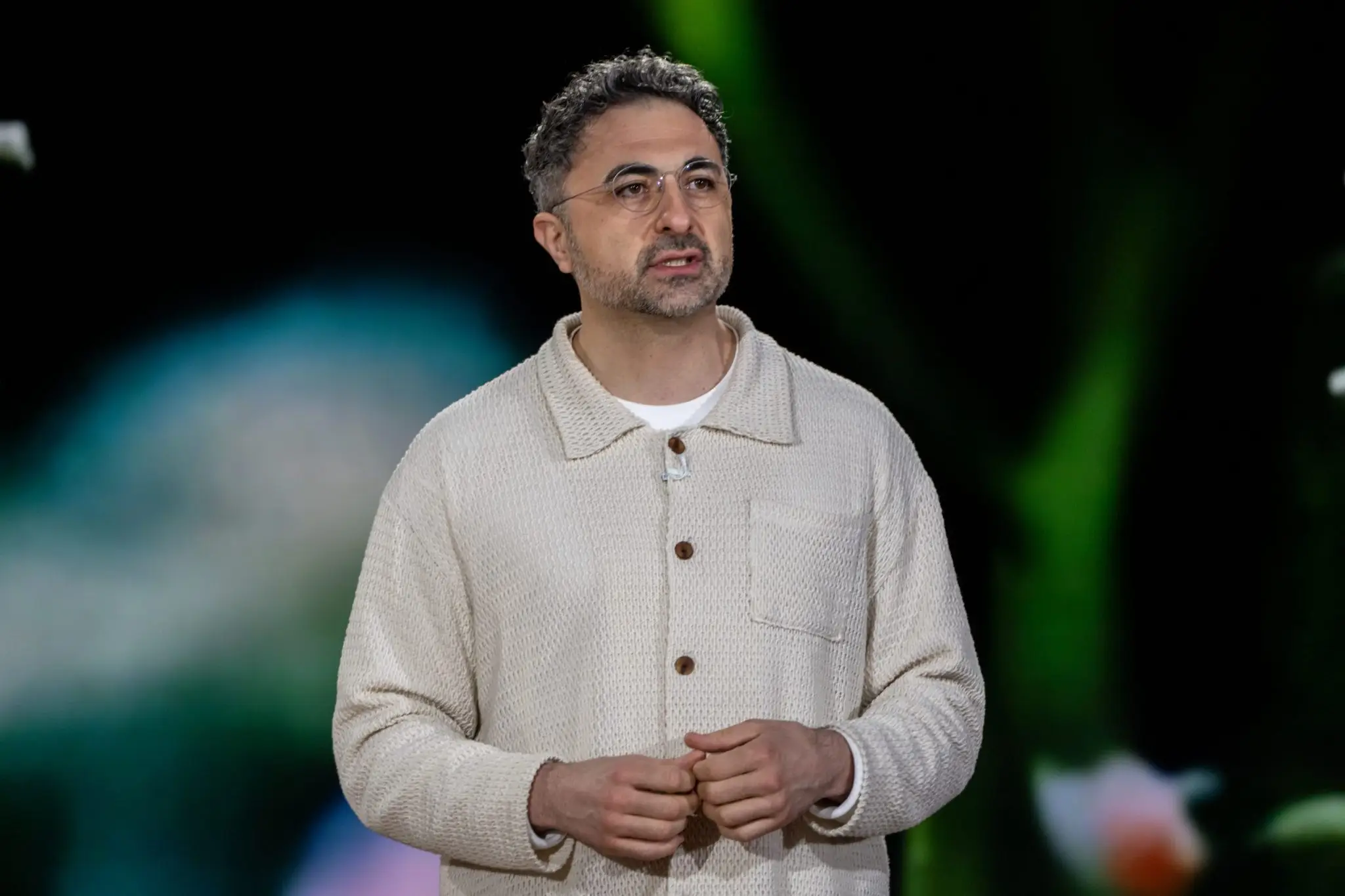
In a recent interview with , the CEO of Microsoft AI, Mustafa Suleyman, made yet another prediction in line with those that have been repeated by industry leaders: white-collar work would be on the verge of a radical transformation because of artificial intelligence. According to him, in 18 months Law graduates, MBAs — and many professionals with fewer formal credentials — could run out of space.
Less risk, preserved return potential: discover the new phase of XP robots
Changes include statistical filters, capacity control and combination of uncorrelated strategies to reduce volatility
Bitcoin will gain from AI ‘deflationary chaos’, says ‘innovation guru’ Cathie Wood
Ark Invest executive says exponential technologies can bring down prices, destabilize traditional finance and favor bitcoin as a decentralized alternative
Suleyman spoke of “human-level performance in most, if not all professional tasks,” performed by AI. Most work that involves “sitting in front of a computer” would be fully automated within a year and a half, he said, citing accounting, law, marketing and even project management as vulnerable areas. The alert is in line with the essay that went viral this week, a version of which was published in , by researcher Matt Shumer, which compares the current moment to February 2020, just before the pandemic hit the USA — but predicts an even more dramatic impact.
For Suleyman, the exponential growth in computing power is a clear sign that AI can replace large numbers of professionals. As computing power increases, he argues, models will be able to program better than most human developers. Shumer and OpenAI CEO Sam Altman recently wrote about their own apprehension—and even sadness—at seeing their life’s work quickly threatened with obsolescence.
If Suleyman’s speech sounds repetitive, it’s because it’s very reminiscent of the tone of early 2025, when several CEOs made similarly apocalyptic predictions. Anthropic CEO Dario Amodei warned in May that AI could wipe out half of entry-level white-collar jobs. Ford CEO Jim Farley said the technology would cut the number of white-collar jobs in the US in half.
In the magazine, journalist Josh Tyrangiel argued that the country is not prepared for the imminent disruption of AI in the job market, comparing the recent silence of executives to the moment when “the shark’s fin appears on the surface”.
This warning gained strength again after SpaceX CEO Elon Musk said in Davos last month that he believes that so-called artificial general intelligence — a system capable of equaling or surpassing human intelligence — could emerge as early as this year.
The reality, for now, of AI in office work
While experts debate when — and whether — AI will truly shake up white-collar work, the concrete impact has so far been limited. A 2025 Thomson Reuters report showed that lawyers, accountants and auditors have been testing the technology in specific tasks, such as document review and routine analysis. Productivity gains exist, but they are modest, far from a scenario of mass layoffs.
In some cases, the effect was contrary to what was promised: loss of productivity. A recent study by the independent institute Model Evaluation and Threat Research, on the impact of AI on the work of software developers, concluded that the use of technology made tasks take, on average, 20% longer.
The most visible economic gains are concentrated in the technology sector itself, which suggests that “AI disruption” has barely reached the real economy. A recent study by Apollo Global Management chief economist Torsten Slok showed that tech giants’ profit margins grew more than 20% in the fourth quarter of 2025, while the broader Bloomberg 500 index barely budged. Days earlier, Slok had already pointed out that “investors do not believe that AI will generate greater profits outside the technology sector”, based on Wall Street projections for the S&P 500.
Still, there are early signs of labor replacement. In 2025, around 55 thousand layoffs were linked, in some way, to AI, according to consultancy Challenger, Gray and Christmas. Microsoft, for example, cut 15,000 jobs last year — without directly citing AI as a reason. In a statement released in July, following the cuts, CEO Satya Nadella said the company needed to “reimagine our mission for a new era.”
Despite relatively small reductions in employment, the financial market reacts intensely to the potential of technology. Last week, software stocks suffered a strong wave of selling due to fear of automation — the episode was dubbed by analysts as “SaaSpocalypse”, in reference to the software as a service (SaaS) sector. The correction came after Anthropic and OpenAI announced the launch of “agent” AI systems for enterprises, capable of performing many of the functions now performed by SaaS companies.
Suleyman’s vision for Microsoft
Suleyman does not hide his enthusiasm about the potential of the technology. For him, organizations will be able to adapt AI systems to practically any function, increasing productivity across the service economy. “Creating a new model will be like creating a podcast or writing a blog,” he said. “It will be possible to design tailored AI for every institution, organization and person on the planet.”
He states that his central mission at the helm of Microsoft AI is to achieve “superintelligence”. The objective is to make the company more self-sufficient in AI, reducing dependence on OpenAI and prioritizing the development of its own models, considered strategic.
“This is, after all, the most important technology of our time,” said Suleyman. “We need to develop our own baseline models, at the absolute frontier of what is possible.”
