
With factory closed in the USA, Ford bets on megabatteries to change the game
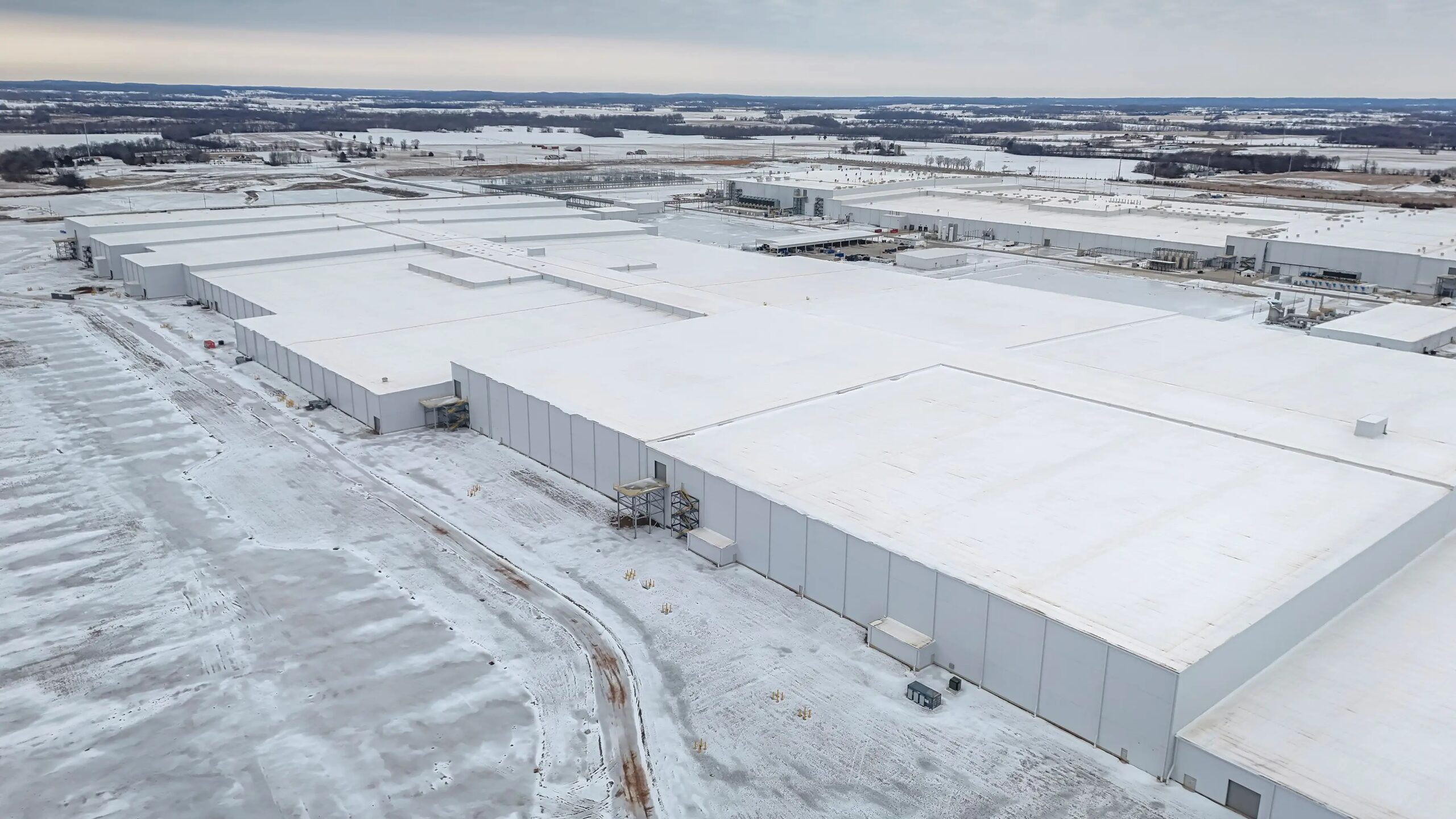
GLENDALE, Ky. — In the auto industry, there are few things more lethal to profits than idle factories. That’s what Ford Motor faced after closing 743,000 square feet of new but little-used industrial space in rural Kentucky in December.
The plant in Glendale, an hour’s drive south of Louisville, briefly produced batteries for electric vehicles, which didn’t sell as well as Ford had hoped. Now the automaker plans to make large batteries, some the size of shipping containers, used by power utilities, data centers and other companies to manage fluctuations in electricity supply and protect against blackouts.
Also read: Ford announces US$19.5 billion in restructuring charges in the electric car sector
Converting the factory could help Ford avoid the costs of running an idle plant and take advantage of growing demand for storage batteries.
“I’m confident they can compete,” Kentucky Gov. Andy Beshear, a Democrat, said in an interview. “The demand is huge.”
Ford, which plans to resume production next year, said in a statement that it will utilize “more than a century of manufacturing experience and advanced battery technology.”
But it’s a risky move for a company that primarily makes cars. Ford has little experience producing batteries and faces experienced competitors including Tesla, LG Energy Solution and SK On, the South Korean company that built the factory with Ford.
Ford and SK On dissolved the joint venture in December, four months after vehicle battery production began, and Ford took full control.
The vast factory buildings along Interstate 65, with walls as white as the snow that recently covered the surrounding fields, are a testament to the challenges of the auto industry.
President Donald Trump’s tariffs have disrupted supply chains. Republicans in Congress repealed Biden administration policies that helped consumers pay for electric vehicles and allocated resources for companies to build battery factories like the one in Kentucky.
The Trump administration is trying to dismantle clean air rules, freeing Ford and other automakers to sell more full-size pickup trucks and gasoline-powered SUVs, which tend to be the most profitable. This leaves the American market out of step with the rest of the world, which is rapidly moving towards electric vehicles.
The Glendale plant produced batteries for the F-150 Lightning, an electric pickup truck whose production Ford halted in October, shortly after federal tax credits of up to $7,500 for the purchase of electric vehicles ended.
The change of direction towards electric vehicles has been costly. In December, Ford announced it would cut its results by $19.5 billion to reflect the loss in value of its investments, including $6 billion related to the Kentucky plant and joint venture with SK On.
Now, Ford will invest another US$2 billion to install new machines and make other changes to the factory.
General Motors and Stellantis also posted multibillion-dollar losses, part of a broad pullback driven partly by Trump’s pro-fossil fuel policies.
But the White House has been less hostile to battery storage than to solar and wind energy. Large batteries can be used for any source of electricity, not just renewables. And federal financial incentives for manufacturing battery storage systems remain in effect.
There is a role for batteries “in improving our ability to handle spikes in demand,” Energy Secretary Chris Wright said during a briefing to discuss the government’s response to winter storms.
Some industry analysts and executives said Ford could succeed. Demand is strong from data centers, which require constant and uninterrupted energy, and from utilities that need batteries to meet consumption peaks. Batteries can also be a critical source of power during storms and other emergencies.
“We would take a hard look at a major manufacturer like Ford entering this space,” said Lauren Glickman, vice president of policy and communications at Encore Renewable Energy, a Vermont company that develops solar and battery projects.
Many businesses, and even some homeowners, are using batteries: charging them when energy is cheap and using the stored energy when electricity is expensive.
Ford has the advantage of being large and having been in business since the early 20th century, and this can give customers confidence that it will be able to service its products.
“I wouldn’t bet against their ability to do that,” said Ardes Johnson, a former Tesla executive and current chief executive of NeoVolta, a California company that supplies batteries to homes and businesses.
Decades ago, Ford owned several businesses, including rubber plantations and iron and coal mines. More recently, it has focused primarily on cars and trucks.
But some experts say automakers need to be more entrepreneurial because car sales are stagnant and margins are thin.
“If you take a step back and look at the automotive market as a whole, it’s not really growing,” said Lenny LaRocca, who leads the automotive industry practice at consulting firm KPMG. “So what else can you do to boost profit?”
In fact, Ford may have arrived late. Tesla has been making storage batteries for years and is expanding. Other companies are also investing in this business.
“There is a gap between the demand for battery storage in the United States and the amount that can be manufactured here,” said Allison Weis, global head of storage at energy-focused research firm Wood Mackenzie. But she said there could be oversupply by the end of the decade.
Workers’ representatives are angry that Ford has not promised to rehire the 1,600 people who lost their jobs when the plant closed, although the company has said it will consider their applications for 2,100 new positions. Ford also disputes the results of an election in August in which workers voted to join the United Auto Workers (UAW).
But union officials credit Ford for finding another use for the complex.
“The fact that they’re trying to make sure the building stays occupied, I applaud,” said Laura Dickerson, vice president of the UAW and director of the union’s Ford chapter. “What I would applaud even more is if they kept it busy with unionized workers,” he added.