
PSD expands state bases for elections, but faces regional conflicts
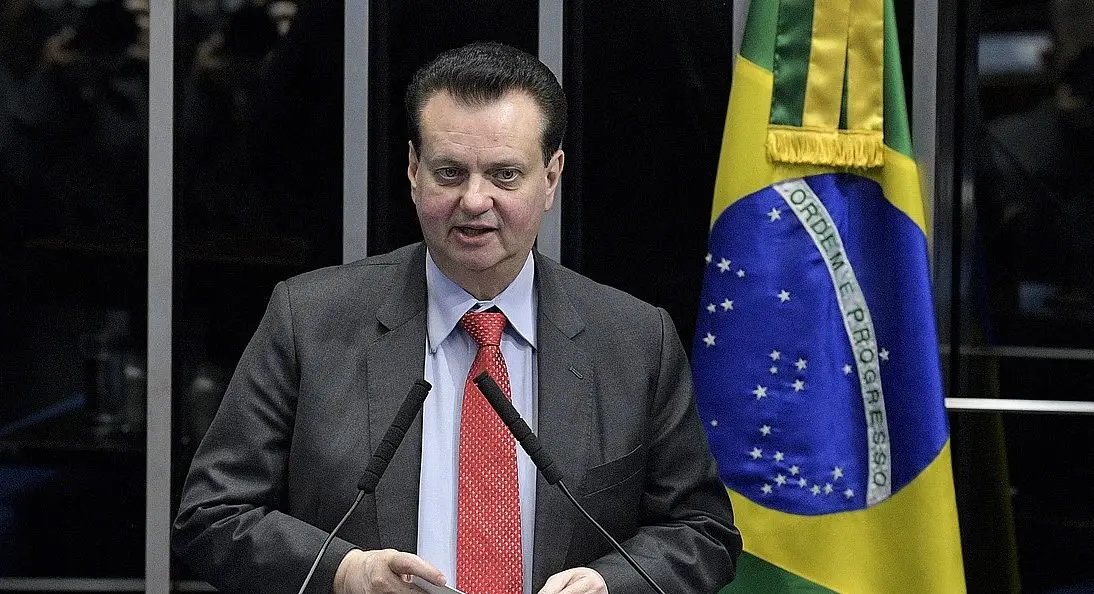
With the intention of launching a candidacy for the Presidency, the PSD has accelerated the reorganization of its structure in the states as a way of preparing the electoral terrain for 2026. The strategy includes the affiliation of new names to strengthen regional articulations and the attempt to reduce tensions that could compromise the support of a national project. The movement, led by the leadership led by Gilberto Kassab, takes place under the understanding that the state musculature will be decisive both for its own candidacy and for eventual composition in the second round.
In recent weeks, the offensive gained a new chapter in São Paulo. Kassab announced the PSD affiliation of seven of the 11 deputies of the PSDB-Cidadania federation in the São Paulo Legislative Assembly. The agreement was made in a meeting in the leader’s apartment and reinforces the strategy of expanding presence in key states before the presidential decision.
PT accuses PEC of Security of emptying the Union’s role and fragmenting the fight against crime
PT bench claims that Mendonça Filho’s replacement reduces the Union’s coordinating role, fragments security policies and paves the way for reducing the age of criminal responsibility
The reading within the party is that the advance on PSDB cadres in São Paulo has symbolic weight. In addition to expanding the state bench, the movement strengthened the PSD’s ability to influence the country’s largest electoral college. It also signals that the party intends to occupy spaces left by traditional parties in the political center, expanding the negotiating margin for 2026.

This advance over names from other acronyms was already occurring in relation to governors. The most recent were Marcos Rocha, from Rondônia, and Ronaldo Caiado, from Goiás, who left União Brasil for the PSD. Previously, Kassab had already attracted Raquel Lyra, from Pernambuco, and Eduardo Leite, from Rio Grande do Sul, who had been elected by the PSDB, to the party.
Alongside Ratinho Jr., governor of Paraná, Leite and Caiado are the names that Kassab considers as options for the dispute for Planalto. Internally, the party works with a deadline of mid-April to define which of them will represent the party, shortening the period of uncertainty and putting pressure on local negotiations that depend on this positioning.
Tension in Goiás
In Goiás, where Ronaldo Caiado’s affiliation with the PSD altered the party’s internal balance, the governor seeks to separate the state arrangement from the presidential dispute. According to him, party change does not interfere with local composition nor impose automatic alignments.
— Here in Goiás we are going to preserve the composition of the state. It does not interfere with the national position. In Bahia, the local PSD supports Lula. Deputies are not obliged. I have a great relationship with União Brasil. My national decision does not change the state framework. That was clear — Caiado told GLOBO.
The governor maintains that the majority structure for 2026 was being built in Goiás, regardless of who the PSD chooses for Planalto. The current vice-governor, Daniel Vilela (MDB), is the name of the government, and the initial design provided for two seats in the Senate for the first lady, Gracinha Caiado, and for federal deputy Gustavo Gayer (PL).
Gracinha recently took command of União Brasil in the state, a move that reinforces the influence of the governor’s group in local succession and expands control over the assembly of the ticket.
The scenario changed last week, when the PL launched Wilder Morais as a pre-candidate for state government. The decision made the agreement that provided for Gayer’s presence on the Caiado-aligned ticket unfeasible and reopened negotiations on the occupation of Senate seats. With the previous understanding undone, there is still no definition of who will be able to occupy the space that would be allocated to the PL, and the name of senator Vanderlan Cardoso (PSD), who maintains his intention to run for re-election, has once again been considered in internal discussions.
With the new scenario, the impasse began to directly involve Vanderlan, who maintains his intention to run for re-election and awaits a definition of his place on the ticket. Caiado states that he will talk to the senator about the situation.
Regarding the possibility of the PSD claiming vice on the state ticket, the governor avoided anticipating the definition and said that this decision will be taken closer to the party conventions, which take place in June. Caiado also emphasized that his movement in the PSD is linked to the national debate and not to a personal imposition.
Vanderlan himself recognizes that the new political arrangement in Goiás could redefine his space within the party. The senator stated that he is awaiting a meeting with the party leadership to discuss the electoral design in the state and even evaluate his stay in the PSD, as he intends to run for re-election. According to him, Caiado’s rapprochement with the PL could reduce the space available to the party on the majority ticket.
— Depending on how this conversation goes in Goiás, I may not even remain in the party, because I am a candidate for re-election. Caiado prefers an alliance with the PL, which would already have a seat in the Senate, and we ended up running out of space in this process — he said.
Despite local uncertainties, the senator assessed that, on a national level, the PSD was strengthened by the presence of three competitive names in the presidential race and jokingly reported a conversation with the president of the Senate, Rodrigo Pacheco, about the possibility of bringing together leaders who would lose space with the internal reorganization.
Regional autonomy and dilemmas
The affiliation of local leaders from other parties with the PSD has also generated dilemmas. The party began to house politicians with diverse ideological profiles and often incompatible regional alliances. In some states, for example, it remains close to the federal government, the PT; in others, it dialogues with opposition camps. This heterogeneity, historically responsible for the PSD’s capillarity, now becomes a challenge for the construction of a cohesive presidential candidacy.
The impact of these tensions appears clearly in Acre. Senator Sérgio Petecão stated that the definition of alliances has been postponed and also depends on the national decision on the name that will compete for the Planalto. According to him, the local scenario is marked by the scarcity of candidates with structure and the weight of administrative machines.
— It’s difficult here, because there are few candidates with structure, and whoever is tied to the machine, whether from city hall or the government, always has an advantage. Furthermore, we have difficulty forming an alliance with the PL, which tries to convey to the population that only they are right-wing, which does not correspond to reality. I don’t believe that Kassab will push anything; the tendency is to give each state freedom to decide its path — said Petecão
In Mato Grosso do Sul, the PSD adopts a different strategy, focused on preserving the space already occupied in the power structure. Senator Nelsinho Trad stated that the priority is the re-election of governor Eduardo Riedel (PP) and the maintenance of the party’s positions on the majority ticket.
— The PSD here has a senator, vice-governor, several mayors, vice-presidents, councilors and a state deputy. We are aligned for the re-election of Governor Eduardo Riedel, and the project is focused on maintaining the two majority seats, both vice and Senate – he stated.
In Congress, parliamentarians defend that the presidential choice be accompanied by a clear strategy to preserve state benches and alliances. The assessment is that a hasty decision could cause regional losses that would be difficult to recover.
Behind the scenes, allies of Ratinho Jr., Caiado and Eduardo Leite intensified their efforts to consolidate their pre-candidacies. Although they avoid direct confrontation, the three groups compete for support within the party structure and observe the behavior of state bases.
The PSD’s expectation is that, by April, the national scenario will be sufficiently defined to allow a choice that minimizes disruptions. Until then, the priority will continue to be expanding presence in the states, reducing local conflicts and preserving the flexibility that transformed the party into a relevant player on the electoral board.