
Analysis: Without an immediate threat, Trump is betting on pushing Iran’s government into the abyss
WASHINGTON — With the widespread attack on Iran early this Saturday morning (28) and the call for the Iranian people to overthrow their own government, President Donald Trump embarked on the “war of choice” par excellence.
He wasn’t pushed by an immediate threat. There was no race to the bomb. Iran is now further away from the ability to build a nuclear weapon than it has been in recent years, largely thanks to the success of the president’s previous attack on Iranian nuclear enrichment facilities in June.
As the US bombs Tehran, Iranians say they feel abandoned by the government
More than a dozen Iranians said in interviews that the government offered little guidance both in the days leading up to the attacks and as the bombs fell.
Everything you need to know about the US and Israeli attacks on Iran
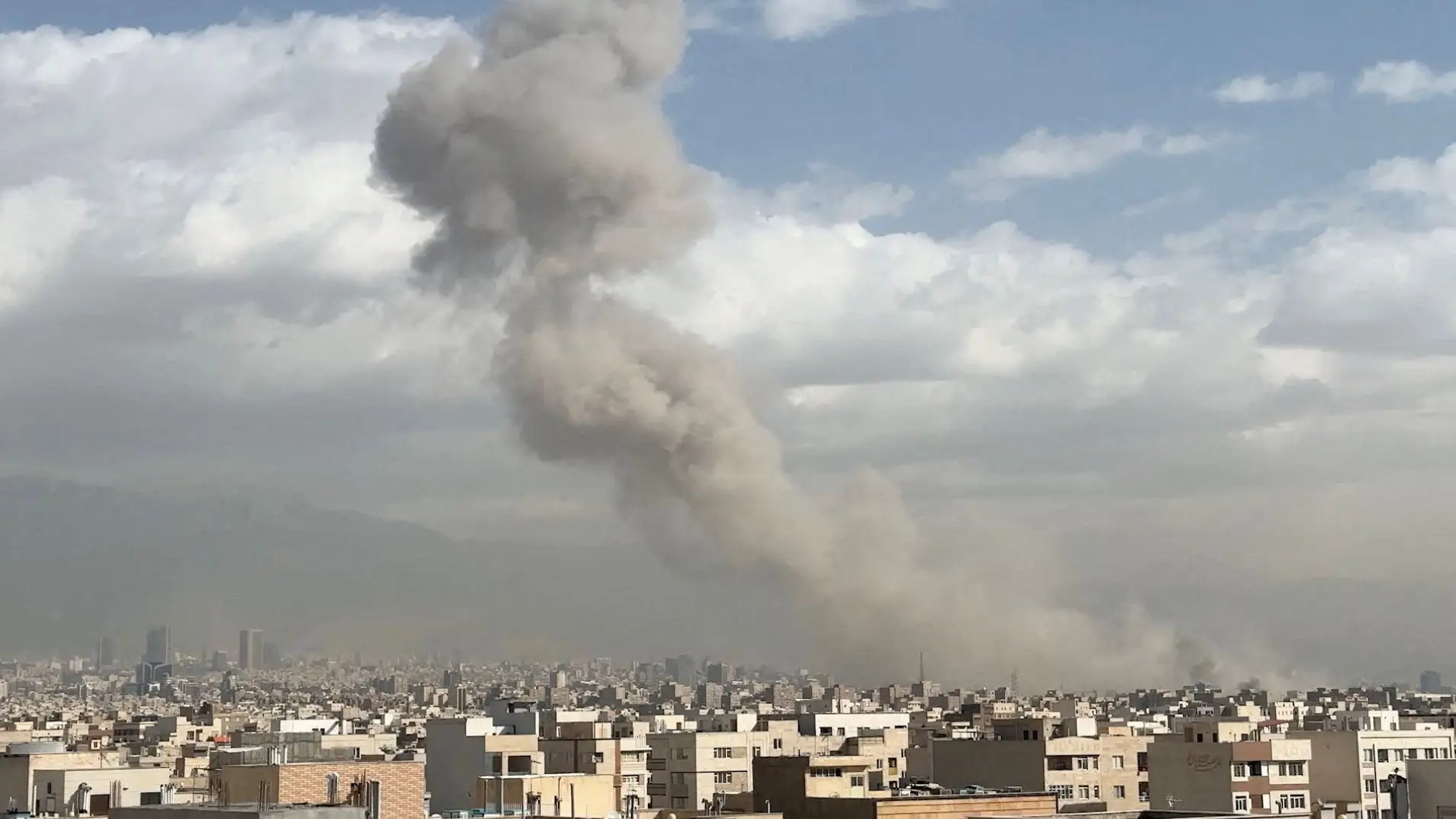
The United States, with support from Israel, launched attacks on major cities in Iran, while President Donald Trump called on Iranians to overthrow the government
Although Trump claimed that Tehran ultimately intended to reach the United States with its missile arsenal, even the Defense Intelligence Agency (DIA) itself concluded last year that it would take a decade for Iran to overcome the technological and production obstacles to assemble a significant arsenal.

Everything you need to know to protect your wallet
There were also no signs of an imminent Iranian attack on the United States, its allies or American bases in the region. Instead, Trump targeted the Islamic Republic largely because he apparently sensed a rare moment of government weakness — and an opportunity for the U.S. to oust Ayatollah Ali Khamenei and the Revolutionary Guards after 47 years of sporadic clashes, which he described at length in an eight-minute video.
But unlike previous presidents who have put American troops at risk — and, in the age of terrorism and cyberattacks, possibly civilians as well — Trump did not spend months building a case for war. He never presented evidence of an imminent threat nor explained why a nuclear program he said he had “obliterated” eight months earlier would now be on the verge of resurfacing.
His recorded video, released in the middle of the night as missiles began exploding in Tehran, laid out a list of long-standing grievances against Iran, including its brutal use of terror. But he did not answer the question of why, in the set of threats facing the United States — which includes a North Korea already armed with nuclear weapons and expanding arsenals combined with the territorial ambitions of Russia and China — a weakened Iran would have become the number one target.
By choosing this moment and this form of attack, a president who came into office promising to put an end to reckless military interventions — and wars aimed at promoting regime change — takes an enormous risk. There are few, if any, historical examples of overthrowing the government of a large country — in this case, with about 90 million people — with air power alone.
If Trump and Israeli Prime Minister Benjamin Netanyahu — who has been encouraging him to start this war since December and participated in it from the start — have a plan to achieve this goal, they have not yet revealed it, not even to their closest allies.
Senior officials from three of those allies, from Europe to the Persian Gulf, said in interviews in recent days that in their conversations with senior Trump aides they heard little enthusiasm for such strikes and no plausible legal justification for attacking Iran now. The reports were made on condition of anonymity to describe private discussions. But this experience helps explain why the United Kingdom, Washington’s main ally, banned the use of Diego Garcia and bomber bases on its territory to launch American fighter planes and bombers.
“It’s not as if Iran poses any different threat to our interests than it did 47 years ago,” said Richard N. Haass, former president of the Council on Foreign Relations and author of the 2009 book “War of Necessity, War of Choice,” a study of the two conflicts in Iraq in 1991 and 2003. The first, he concluded, had limited and achievable goals: liberating Kuwait after the invasion of Iraq. Saddam Hussein. Once Iraq was expelled from Kuwaiti territory, George HW Bush decided not to overthrow Saddam.
Trump’s decision on Saturday is more like George W. Bush’s choice to rid the world of Saddam and his government because of the long-standing threat he posed to international peace.
“Just like the second Iraq war, there was no need to attack Iran; there was an opportunity,” Haass said. “This is a classic preemptive strike, to prevent Iran from gaining a capability in the future. What is missing is the ‘why now?’, as there were other options: diplomatic agreements under military pressure, economic embargoes, interception of Iranian ships.”
In international law, the difference between a war of necessity and a war of choice is enormous. A preemptive strike — when a country sees an offensive being prepared across the river or sea and attacks first — is considered legitimate.
A “preventive” attack, in the sense of anticipating a distant threat, in which a power hits a weaker state before it actually represents an imminent danger, is seen as illegal. An example would be Russia’s decision to invade Ukraine, which the United States and much of the world classified as a serious violation of the international order.
Trump’s response is that he didn’t need a trigger. He reeled off more than four decades of deadly actions by Iran — from the 1979 hostage crisis, which lasted 444 days, to attacks on American bases and ships. “We will not tolerate this any longer,” Trump said in a video posted to his social media account. Even the name given by the Pentagon to the mission, Operation Epic Fury, seems to reflect the accumulation of complaints.
The international legal implications are unlikely to influence Trump’s view of the attack. “I don’t need international law,” he told four New York Times reporters in an interview in January. “I’m not looking to hurt people.” He added that while he felt his government should respect principles of international law, he made clear that it would be up to him to decide when those principles apply to the United States.
“It depends on what your definition of international law is,” he said.
It may also depend on the definition of “war”. In his statement, Trump called the action a war, warning the country of the possibility of facing casualties. But he made no effort to ask Congress for authorization to use military force, much less a formal declaration of war.
He certainly wouldn’t be the first president to launch a major military operation without formal approval from Congress. But, in Trump’s case, he even ruled out the need to seek this endorsement.
When historians look back at this moment, they will likely ask two questions: Why did Trump act now and why was Iran targeted?
In the end, Trump’s adventure — his seventh attack on a foreign country since assuming the presidency — can be judged in light of an old warning from Churchill.
Long before he became Britain’s wartime prime minister, Winston Churchill wrote about his youth as a journalist and occasional participant in conflict. “Never, ever, ever believe that any war will be easy and peaceful, or that anyone who embarks on this strange journey will be able to measure the tides and hurricanes they will encounter,” he wrote in “My Youth” (“My Early Life”).
“The statesman who gives in to war fever needs to understand that, once the signal is given, he ceases to be the master of politics and becomes a slave to unpredictable and uncontrollable events.”
