
How the CIA Tracked Iran’s Leaders—and Paved the Way for Israel’s Attack
WASHINGTON — Just before the United States and Israel were ready to launch an attack on Iran, the CIA managed to locate perhaps the most important target: Ayatollah Ali Khamenei, the country’s supreme leader.
The CIA had been tracking Khamenei for months, gaining increasing confidence about his whereabouts and movement patterns, according to people familiar with the operation. Then the agency learned that a meeting of senior Iranian officials would take place on Saturday morning at a leadership complex in the heart of Tehran. Most crucially, the CIA learned that the supreme leader would be on site.
Trump says Iran’s new leadership wants to negotiate: “I’ll talk to them”
US President praises attacks on Tehran, says 48 Iranian leaders were killed and that military offensive is “ahead of schedule”

Iran crisis leads Wall Street to “safe haven first, questions later” strategy
Managers see greater demand for Treasuries, gold and Swiss francs, monitor risk in Hormuz and warn of impact of oil shock on inflation, interest rates and emerging markets
The United States and Israel decided to adjust the timing of their attack, in part to take advantage of new intelligence, according to officials with knowledge of the decisions.

Everything you need to know to protect your wallet
The information opened a window of opportunity for both countries to achieve a critical and early victory: the elimination of senior Iranian leaders and the death of Khamenei.
The surprisingly quick removal of Iran’s supreme leader reflected the close coordination and intelligence sharing between the United States and Israel in the run-up to the attack, as well as the depth of intelligence the two countries had developed on the Iranian leadership, especially after last year’s 12-day war. The operation also highlighted the failure of Iranian leaders to take adequate precautions to avoid exposing themselves at a time when both Israel and the US were sending clear signals that they were preparing for war.
The CIA passed its intelligence, which offered “high fidelity” on Khamenei’s position, to Israel, according to people briefed on the matter.
These people and others who shared details about the operation spoke on condition of anonymity to discuss sensitive military and intelligence plans.
Israel, using US intelligence and its own, would carry out an operation it had been planning for months: the targeted assassination of Iran’s top leaders.
The US and Israeli governments, which originally planned to launch the attack at night under cover of darkness, decided to adjust the timing to take advantage of information about the meeting at the government complex in Tehran on Saturday morning.
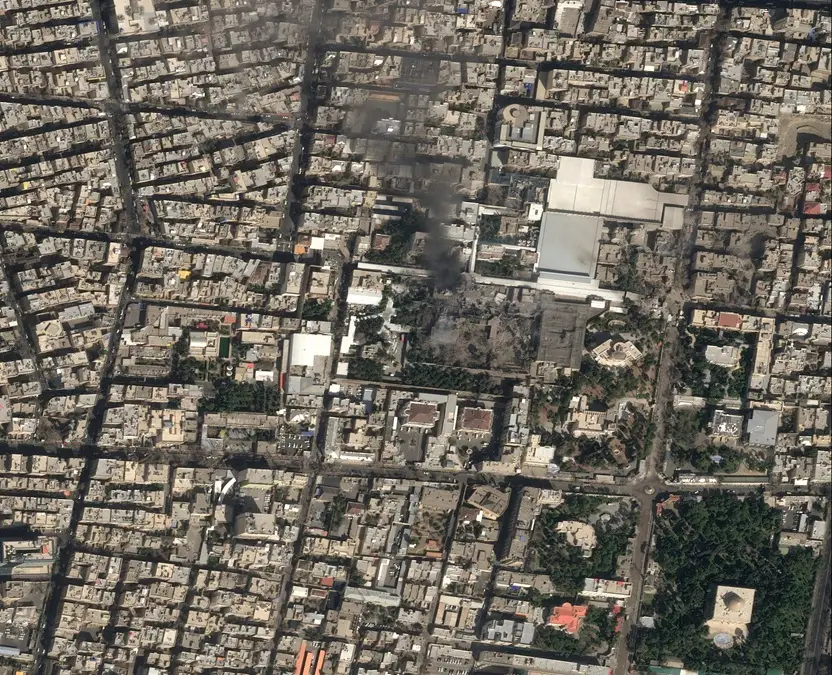
The leaders would meet at a location where the offices of the Iranian Presidency, Supreme Leader and Iran’s National Security Council are located.
Israel had determined that the meeting would include senior Iranian defense officials, including Mohammad Pakpour, commander in chief of the Revolutionary Guard; Aziz Nasirzadeh, Minister of Defense; Admiral Ali Shamkhani, head of the Military Council; Seyyed Majid Mousavi, commander of the Revolutionary Guards Aerospace Force; Mohammad Shirazi, Deputy Minister of Intelligence; between others.
The operation began at around 6 am in Israel, when fighter jets took off from their bases. The attack required relatively few aircraft, but they were armed with long-range, high-precision munitions.
Two hours and five minutes after the jets took off, at around 9:40 a.m. in Tehran, the long-range missiles hit the complex. At the time of the attack, senior Iranian national security officials were in one of the buildings in the complex. Khamenei was in another building nearby.
“This morning’s attacks were carried out simultaneously at several locations in Tehran, in one of which high-ranking figures from Iran’s political and security apparatus gathered,” an Israeli defense official wrote in a message reviewed by T
The official said that despite Iranian preparations for war, Israel managed to achieve “tactical surprise” with its attack on the compound.
The White House and CIA declined to comment.
On Sunday, Iran’s state news agency IRNA confirmed the deaths of two senior military commanders who Israel said it killed on Saturday: Shamkhani and Pakpour.
People familiar with the operation described it as the result of good intelligence and months of preparation.
Last June, with planning already underway to attack Iranian nuclear targets, President Donald Trump claimed that the United States knew where Khamenei was hiding and could have killed him.
That intelligence, a former U.S. official said, was based on the same network that the United States relied on on Saturday.
But since then, the information the U.S. has been able to gather has only improved, according to this former official and others briefed on the intelligence. During that 12-day war, the United States learned even more about how the supreme leader and the Revolutionary Guard communicated and moved under pressure, the former officer said. The US used this knowledge to enhance its ability to track Khamenei and predict his movements.
The United States and Israel had also obtained details about the location of key Iranian intelligence officials. In subsequent attacks following the bombing of the leadership compound on Saturday, locations where these intelligence chiefs were staying were targeted, according to people familiar with the operation.
Iran’s top intelligence official escaped, but the top brass of Iran’s intelligence agencies were decimated, according to people briefed on the operation.