
External scenario complicates interest rate cut plan and leaves new Fed chief under pressure
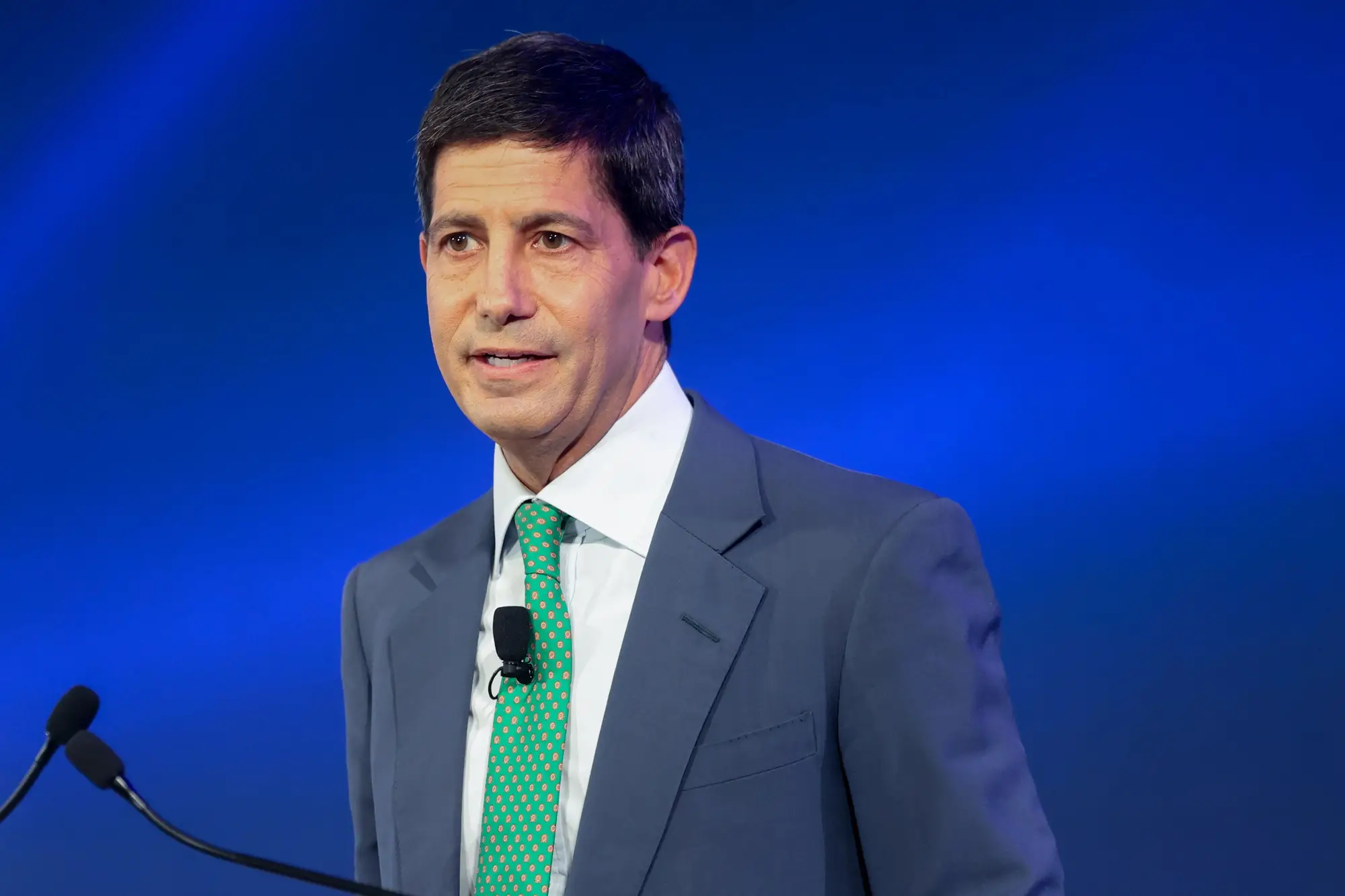
In the very likely scenario that Kevin Warsh’s nomination for Fed chairman makes it through Senate hearings, he will be eager to leave his first Federal Open Market Committee (FOMC) meeting with a key rate cut in hand.
After all, to get the nomination and succeed Jerome Powell, the White House’s guidance was explicit: the candidate would have to be more inclined to reduce interest rates than Powell. Warsh, a former Fed governor, fits this profile: He is optimistic about the U.S. economy, in large part because of the promise of AI, and advocates a relative tightening of Fed balance sheet policy to compensate for lower interest rates.
Also read: NY Fed President says it’s too early to predict war’s impact on inflation
Trump’s campaign against the Powell-led central bank has been intense — he has literally brought it to the Fed’s doorstep. Any new Fed chair will want to set the tone early and deliver the much-requested rate cut the president has been pushing for.
But making this cut will not be a simple task. Trump’s military forays, along with Israel, into Iran will likely push an already nervous FOMC into an even tougher stance, analysts believe. This is because the biggest economic consequence of the conflict (in addition to the humanitarian cost) is the impact on the Gulf region’s energy supply.
Iran borders the Strait of Hormuz, a narrow waterway in the Persian Gulf through which exports from the United Arab Emirates, Qatar, Kuwait and Iraq pass. Ship captains are now wary of crossing it. The White House has suggested its military could provide escort to vessels through the strait to keep the route open, although it remains unclear whether that will actually happen.
The indirect effect on oil and gas prices is economists’ main concern. The Fed’s mission is to keep inflation at 2%, and consumer prices are already above the target in this indicator. Reducing the basic rate would mean adding more fuel to the inflationary fire, by stimulating consumption and debt.
Complicating the scenario even further, the most recent data from the job market shows that it continues to strengthen. Payroll provider ADP reported that private employers added 66,000 jobs in February, well above the 50,000 expected.
That doesn’t help the argument for a cut. The second part of the Fed’s mandate — stable employment — is already taking care of itself with virtually no intervention.
Regional Fed presidents, whose vote has the same weight as that of the institution’s president, have already indicated that the wait-and-see stance gained even more justification with the conflict.
Cleveland Fed President Beth Hammack said interest rates could remain at current levels for “quite a long time,” with Iran posing a new inflation risk.
Similarly, Minneapolis Fed President Neel Kashkari said last week that he is less confident in his previous estimate of a 0.25 percentage point cut this year, explaining: “With geopolitical events, we need to gather a lot more data.”
Global Central Bank Hawks
Central banks are approaching the war in Iran with a tougher stance, Macquarie’s Thierry Wizman said in a note to clients. In addition to US bankers, Wizman highlighted that representatives from the Bank of Japan, the Bank of England, the Bank of Canada and the European Central Bank have also signaled that they are alert to any sign of inflationary pressures.
“The possibility that the Fed will ‘pause’ rather than cut rates this year may explain why the dollar gained an additional appreciation boost (in addition to the search for safe assets) during the war,” Wizman added.
“As the OIS swaps market was previously projecting more than two Fed cuts in 2026 (as of last week), it is the US interest rate outlook that appears to have the greatest ‘potential’ to be reversed by a new bout of global inflation in 2026 if energy supplies are constrained.”
The strong data has investors scaling back bets on a cut in the first half of this year, noted Deutsche Bank’s Jim Reid: “The probability of a cut by the June meeting (which would be the first with a new president) fell to just 39% at the close, the lowest level so far this year. So there is clearly growing skepticism that a new president can start cutting rates immediately, especially with the data as strong as it is now.”