
The invisible price of the best restaurant in the world: violence and humiliation at Noma
LOS ANGELES — On the first day of the Noma pop-up in Los Angeles, amid noisy protests outside the venue and after The New York Times published accusations that he had violently assaulted staff in the past, Danish chef René Redzepi announced on Wednesday that he was stepping down as head of Noma, one of the most influential restaurants in the world.
“I’m sorry everyone is in this situation,” Redzepi told a silent, attentive team in a video posted to both his and Noma’s Instagram accounts.
Redzepi, an international celebrity, was once knighted by the Queen of Denmark for his contributions to the country’s culture. The restaurant he co-founded in 2003 had three Michelin stars, reached the limit of times (five) that it could be ranked first on the World’s 50 Best Restaurants list, and published cult cookbooks that have influenced countless chefs.
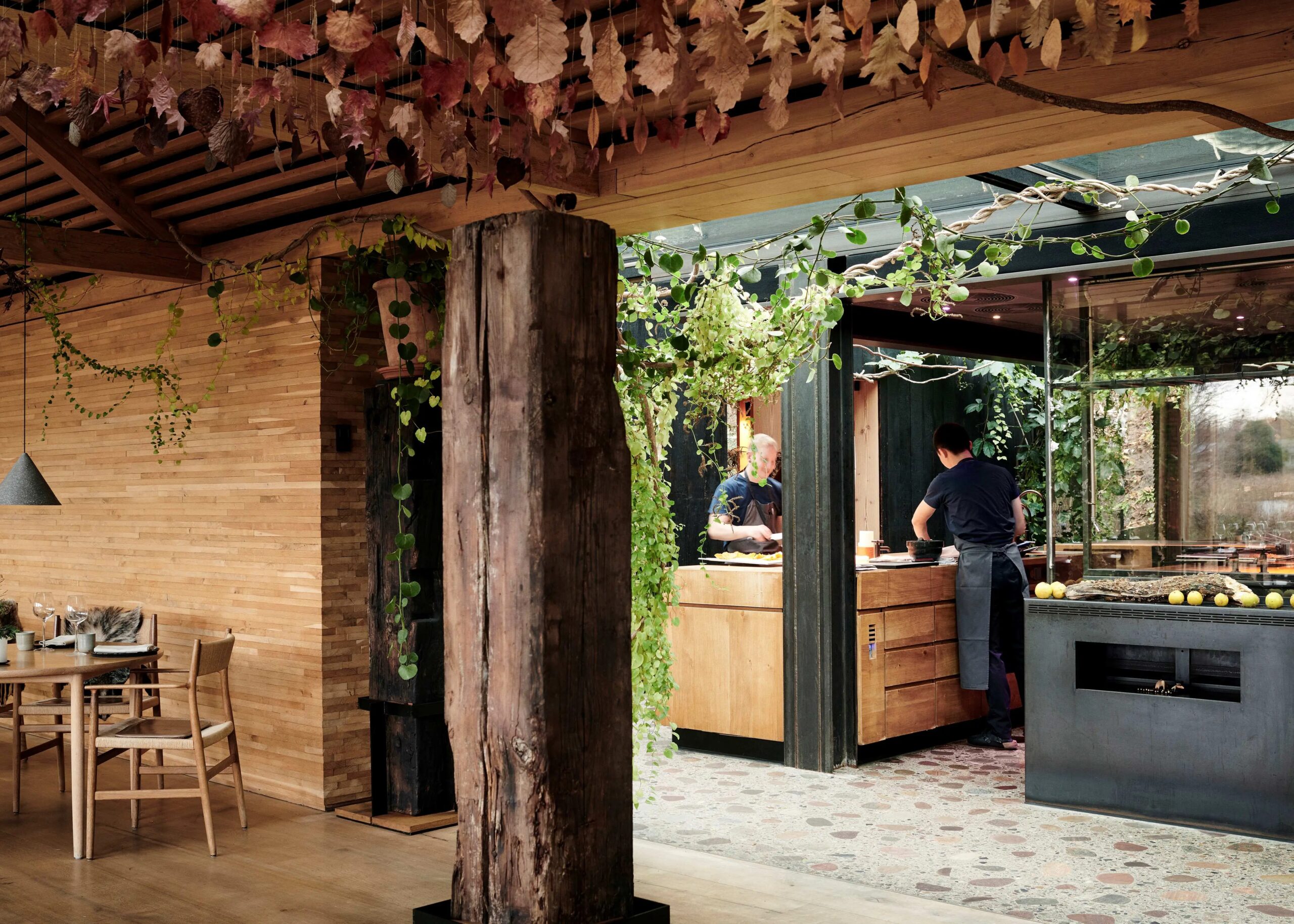
From Noma’s earliest days, Redzepi operated within self-imposed limits of time and place, of seasonality and geography, applying ancient ideas to haute cuisine in a way that felt modern. He rejected imported luxury ingredients, recasting the food around him with a sense of immediacy, and brought cooks into the dining room to explain dishes to diners. The annual MAD symposiums he founded aimed to drive cutting-edge ideas about environmental sustainability, modern leadership and the future of food.
At the height of its power, it seemed like anything and everything might be possible at Noma: the restaurant moved the creative center of the culinary world, and its financial and cultural capital, to Copenhagen. It profoundly changed the aesthetics of haute cuisine. But it failed to change anything below the surface.
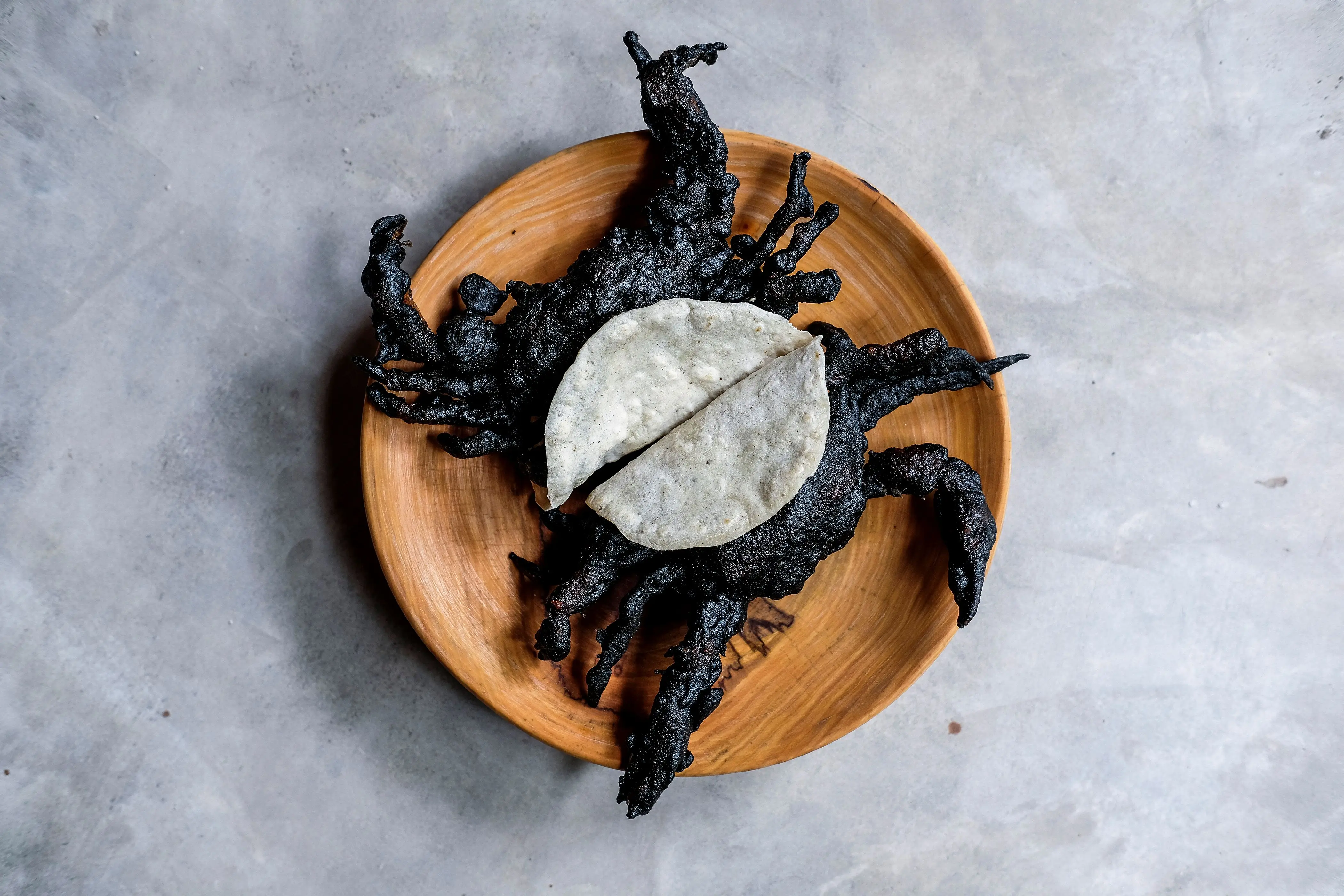
Now, it seems that Noma’s progressive ideas perhaps began and ended on the plate, each of them a perfectly contained fantasy, an intricate composition that required exhaustive and often punishing work, and then hid it altogether. As with so many great performances, you weren’t supposed to think too much about the people behind the scenes, or know how much blood and sweat could have been invested there.
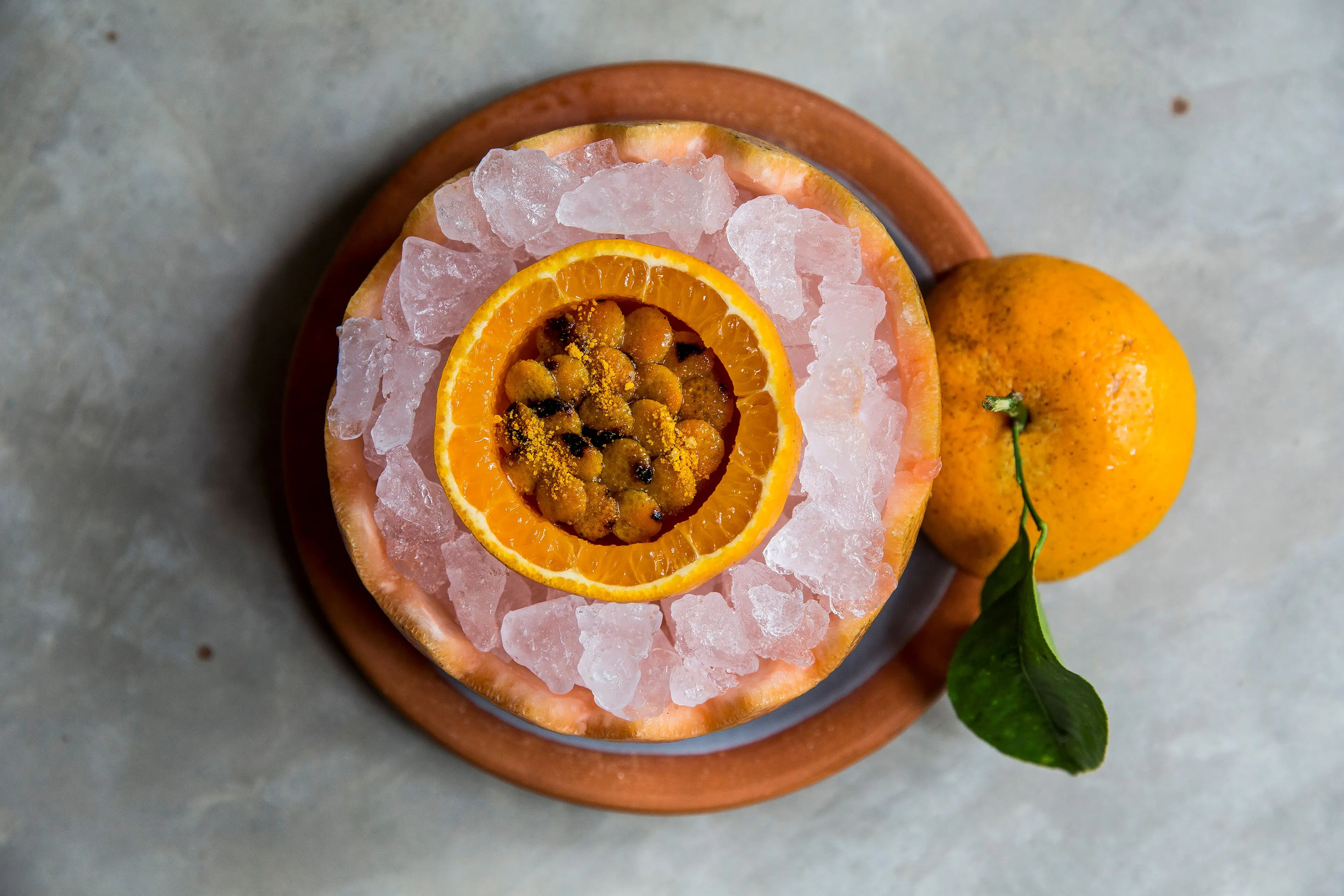
Noma’s ideas were imitated in kitchens around the world, where suddenly you could find moss and stones and flower petals applied with tweezers. As the restaurant accumulated prestige and power, it could have applied some of that creative energy to reinventing and reshaping the toxic kitchen culture so familiar to so many cooks, setting a standard of fair pay and fair treatment for its staff.
Instead, we find that Noma has perpetuated the darkest parts of the restaurant industry and enacted the most violent and regressive chef-auteur clichés.
In the Times report, cooks who worked at Noma from 2009 to 2017 shared accounts of how Redzepi walked down the kitchen line, punching the entire staff as punishment for a single person’s mistake. And how Redzepi would crouch under the counters to spear them with a barbecue fork, out of sight of diners passing by to admire the open kitchen. These cooks, while being intimidated, were called upon to perform their own sense of well-being.
Redzepi says that has changed in recent years, but from the comments posted under a recent apology, it appears that many food professionals downplay bullying in the kitchen or agree that it can be motivating, even necessary — the only way to get the best out of the people who work for you, the only way to get to the top.
This is simply not true, and one of Noma’s biggest failures is that it conveyed this idea to thousands of cooks, many of them unpaid, who made the pilgrimage there to learn from the best.
The Times article included reports of Redzepi beating cooks, humiliating them, threatening them with deportation. One of them said that Redzepi threw him against the wall and punched him in the stomach for leaving a mark on a flower petal when he placed it with the tip of the tweezers — a mark that would make his presence, his work, however faintly, visible to the customer.
Many former staff members said they kept the abuse secret for years and still fear retaliation from one of the world’s most powerful and well-connected restaurants. Cooks were expected to be invisible, to remain silent, not to laugh, and for years, as Redzepi’s star rose as a creative force and face of the restaurant, many of them complied.
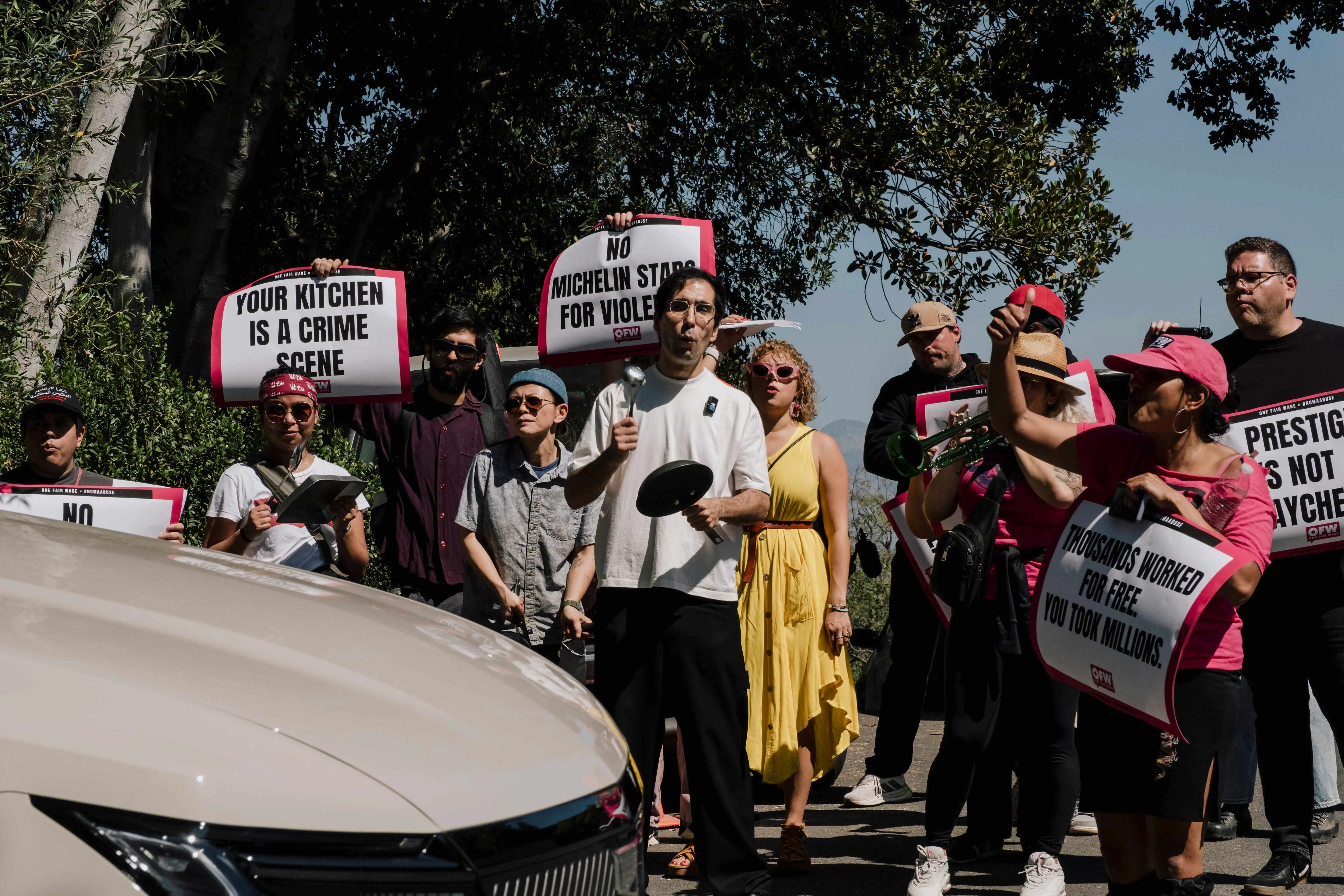
On Wednesday, shortly before Redzepi announced he was stepping down, a dozen protesters gathered outside the Los Angeles pop-up, banging pots and chanting slogans, led by the labor group One Fair Wage and Jason Ignacio White, Noma’s former head of fermentation, who has been sharing accounts from former restaurant employees online.
Protesters held signs with phrases like “You Bought a Ticket to a Crime Scene” as chauffeur-driven Cadillac Escalades approached the complex’s iron gates and shoppers inside leaned away from the tinted windows. Each time a car passed by, an installation of giant inflatable mushrooms became visible for a few seconds before the gates closed again, gently and automatically.
Although American Express and Blackbird, two major Noma partners in Los Angeles, withdrew their sponsorship of the pop-up this week, it appeared that many of the customers who had purchased tickets — at $1,500 a head — continued to attend. If the pop-up continues as planned for the next three months, Noma is expected to record millions of dollars in revenue.
Redzepi had published a statement of apology days earlier on Instagram, and a Noma spokesperson said that, unlike in the past, the company now has a formal human resources system. The restaurant began paying its interns in 2022. But protesters argued that the chef was never actually held accountable for the extent of his violence.
Noma has become an international symbol of abusive kitchen culture, but what does redress and accountability look like in practice in an industry that needs it so much?
In his 2010 book, “Noma: Time and Place in Nordic Cuisine,” Redzepi compared a typical high-pressure day at Noma to the kind of perfect storm Norwegian fishermen sometimes face, “when sky and sea seem to merge and Ragnarok (in Norse mythology, the end of the world) is just around the corner.”
In his video about stepping aside, he explained to the team that “this is your restaurant now, each and every one of you.” He asked them to fight for him. But it was not clear what this meant.
Would Noma, a place full of talent, become a worker-owned organization? Who exactly would lead the team? What role, if any, would Redzepi have? Or would this be just another day in Noma’s perfect storm, another gale and wave for Redzepi to contend with?
“I’m going to plan the next phase,” he said.