
Wall Street Journal highlights CCP’s organizational power: They seek fortune, not fame

Amid the cooperation agreement between Brazil and the United States to combat transnational organized crime and discussions about classifying Brazilian factions as terrorists, the American newspaper The Wall Street Journal published, this Monday, the 20th, a report highlighting the financial, organizational and military power of the Primeiro Comando da Capital (PCC). The text also states that the faction already has a specific operation division for the Americans.
The article explains how the PCC, born in São Paulo prisons with the aim of demanding improvements for inmates, became a complex, sophisticated and professional criminal group, with tentacles that reach the international drug market.
Lula: left also has to learn to deal with new workers’ desires
During an interview, the Brazilian president considered changes in the work relationship brought about by apps and new technologies that need to be incorporated into the discourse in favor of workers
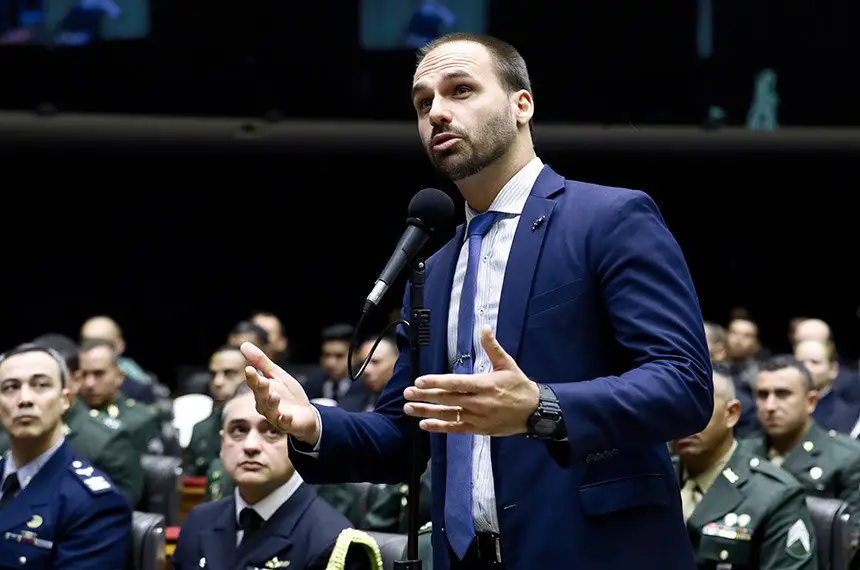
STF has 3 votes to convict Eduardo Bolsonaro for defaming Tabata Amaral
Case is being analyzed in the virtual plenary of the STF; Minister followed rapporteur
“Currently, the group has around 40,000 members behind bars and on the streets, as well as a vast network of affiliates – making it, by some estimates, the largest criminal group in the Americas, operating in almost 30 countries on every continent except Antarctica,” writes journalist Samantha Pearson.

To produce the report, she listened to Brazilian public security authorities, such as Lincoln Gakiya, prosecutor of the Special Action Group to Combat Organized Crime (Gaeco), of the Public Ministry of São Paulo, as well as journalist and researcher Bruno Paes Manso, who writes about the faction.
The Wall Street Journal differentiates the PCC from other international criminal organizations, such as the Mexican drug cartels and Colombian militias, groups that maintain a more flashy and “extravagant” stance.
“PCC members maintain a low, professional profile, seeking fortune rather than fame – and avoiding the types of gratuitous violence that attract police and TV news crews,” writes Samantha.
This profile, highlights the journalist, contributes to the faction developing different strategies for laundering money arising from illegal activities. This includes everything from the financial market, through the use of fintechs, to evangelical churches, which help the faction to gain ground among the low-income population through the prosperity gospel, in a phenomenon called narco-pentecostalism.
‘North American Division’
“Cocaine, however, remains the PCC’s main business, which means that the gang has also become a problem for the United States”, states the vehicle, which reveals that the PCC now has, within its organizational chart, a “North American Division” for its operations.
The report recalls that the American Treasury Department froze the assets of Diego Gonçalves do Carmo, a Brazilian accused of laundering around US$240 million for the PCC in the United States. “And he continues to help manage financial operations, despite being stuck in Brazil.” Carmo’s defense is not mentioned in the report.
Since the Brazilian’s arrest, American authorities have identified, according to Samantha, individuals linked to the PCC in Florida, New York, New Jersey, Connecticut and Tennessee.
“In Massachusetts, the US Public Prosecutor’s Office announced, last year, charges against 18 Brazilians who, according to prosecutors, were linked to the PCC for trafficking in pistols, rifles and shotguns – and, in one case, fentanyl”, he states.
Amazon
The vehicle also highlights how the PCC, in its search for expansion, currently uses the Amazon to connect with the main cocaine producers – Colombia, Peru and Bolivia –, purchasing the drug from neighboring countries and shipping it to other continents through the Port of Santos, on the coast of São Paulo.
To achieve this, the group dominated territories, broke pacts with other factions, bribed authorities and eliminated intermediaries involved in the purchase of drugs at the borders.
To transport large quantities of drugs out of Brazil, the report highlights that even divers and welders linked to the PCC have been arrested in recent years for hiding cocaine in the hulls of ships destined for Europe and Africa.
“In some cases, up to half a ton of the drug was stored in underwater compartments installed in the dead of night.”
‘Criminal convergence’
According to the newspaper, the PCC’s organization is more horizontal and less vertical, another factor that also allowed the group’s accelerated expansion.
Without a rigid centralizing hierarchy, its members have more freedom to form partnerships with other major criminal organizations, such as the Italian ‘Ndrangheta, the Japanese Yakuza, as well as Albanian and Serbian gangs.
These alliances, defined as “criminal convergence” by prosecutor Lincoln Gakiya, from Gaeco, opened even more paths and routes for the drug to circulate.
As Samantha writes, Brazilian authorities no longer talk about eliminating the PCC, “but rather about managing its unstable coexistence with the State – which often leaves investigators frustrated or perplexed by the links between criminals and the State itself”.
