
Van Hollen challenges Schumer for Senate Democratic leadership, previews his 2027 agenda with tariffs on the line
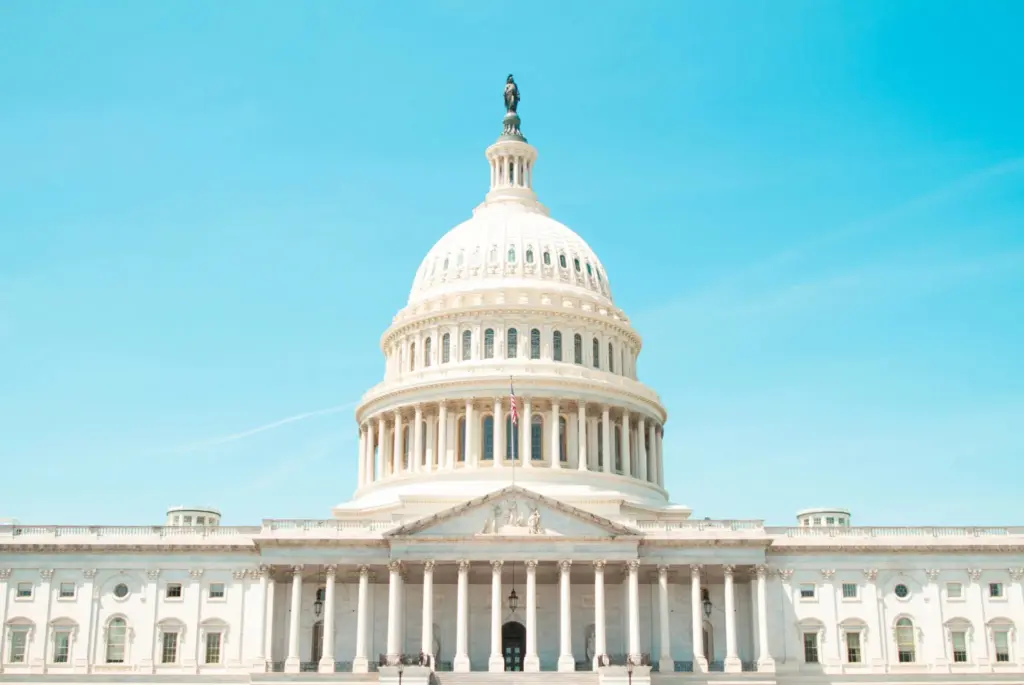
Van Hollen challenges Schumer by the Democratic leadership of the Senate with the secret vote of December 1 as the arbiter.
The scene is repeated these days in the hallways of the Capitol. A 67-year-old senator explains out loud and at an open microphone that the man who has led the Democrats for a decade should no longer be there. The other, 75 years old, responds with a phrase that in Washington It sounds like a sentence: I have the votes.
The first is Chris Van Hollensenator from Maryland, two decades in Congress and a profile carved in the most ideological wing of the Democratic Party. The second is Chuck Schumer, a New Yorker, the man who inherited the position from Harry Reid in 2017 and who faces the first serious threat to his chair.
His campaign argument fits into a short sentence: the old system no longer wins elections. The argument that really moves votes is another. It’s Israel.
What is decided on December 1: 55 seats, secret vote and a majority that opens in 2027
Democrats were left with 55 seats in the United States Senate and with that comes the uncomfortable question: who organizes next year’s agenda. The vote is held on December 1 by secret ballot, so No senator will have to explain in public who he supports.
That detail turns the race into a lottery. Commitments are closed in private and the public count of support serves more to pressure than to count. He majority leaderthe majority leader, is the position that decides what reaches the plenary session, in what order and with what calendar.
The leadership of the Senate is not decided at the polls: it is decided in the heads of a dozen senators who will never have to give explanations.
Schumer does not hide his confidence. ‘I am proud of what we have achieved together: 55 seats and counting is an extraordinary result. I have the votes to continue being the Democratic leader‘, he wrote last Thursday on his X account.
Van Hollen counterattacks on the flank of methods. ‘Schumer’s team has spread a lot of misinformation,’ he said Sunday. ‘They are trying to sow fear among those who say they will support me. That’s part of the problem. It’s part of the old system.’
The real axis of his campaign is money to Israel. Van Hollen has turned Schumer’s connection with the AIPAC (the main pro-Israel lobby in the United States) in the center of his speech: ‘I oppose the idea of a blank check from the American taxpayer to the Government of Israel, regardless of its actions. Both reject military intervention donald trump in Iran, but only one has made a flag of that: ‘We should not vote a single cent in mid-December to continue this war.’
The support map: from Sanders to Fetterman, with Slotkin in the middle
Behind Van Hollen is the entire left flank: Bernie Sanders (independent from Vermont), Jeff Merkley (Oregon) and senators-elect Abdul El-Sayed (Michigan) and Peggy Flanagan (Minnesota). It is not an improvised coalition. It is the generation that came to the party after 2016.
On the other side, Kirsten Gillibrand and Ruben Gallego They have closed ranks with Schumer. Gallego’s argument last week was about the locker room: ‘When the coach takes you to the World Series, you renew his contract. Chuck and I have had our differences, but at the end of the day it’s time to come together.’
The problem for the challenger is that the fight is not fought on the left-right axis. John Fetterman (Pennsylvania) warned on Fox News that a Van Hollen victory would be a red line for your continuity in the game: ‘It would be worrying if my group elected someone who has made a name for himself by being very anti and very hostile to Israel.’
Elissa Slotkin It is the vote that everyone looks at. He has met with both and has endorsed neither: ‘We need leadership that governs for the entire group, for the people of the blue states, the purple states and the red states. (Blue are the Democrats; red are the Republicans; purple are the disputed ones). Mississippi Senator-elect Scott Colom summed up his position with unusual candor: ‘I don’t know either of them well.’
Washington Logic
From within the system, this vote is not about ideology. It’s about management. A group of 55 senators that goes from Sanders to Fetterman is not governed with a program, governed by calendar. And the Senate calendar has a restriction that is almost never explained in Europe: the filibusterthe mechanism that requires 60 votes to be gathered to close a debate and that leaves the simple majority of 51 insufficient for almost everything. With 55 seats, Democrats still need ten Republican votes to legislate.
That is why the winner of December 1 will have three real tools: budget reconciliation (the procedure that allows tax laws to be approved with 51 votes and avoid the filibuster), confirmations of charges and control of appearances. The fourth tool is the one that Spain looks at: which votes are forced and which are buried.
There is precedent. In 1975, the Democratic class that came to Congress after Watergate broke the seniority system and ousted three committee chairmen who had been in office for decades. That generation did not change its leader: changed the rules that elected leaders. What we observe now is the same maneuver, half a century later, with the same fuel: the feeling that the apparatus outweighs the electoral result.
For Spain, reading is less epic and more practical. The Senate does not set tariffs—Section 232, the article of the 1962 trade law, allows the president to impose them for reasons of national security without going through Congress—but it can force votes on them and, above all, condition the budget and the confirmations of the United States trade team. The American market absorbs around 18,000 million euros annually of Spanish exports: olive oil, wine, preserves, machinery, automotive and pharmaceutical components. The companies with direct interests are the same as always: Iberdrola, SantanderFerrovial, ACS, Inditex, Repsol, Mapfre, or Meliá.
The difference between one leader and another will not be measured in the rate of the tariff, which is decided in the White House, but in the urgency. A more combative majority leader will dedicate the plenary session to staging the commercial battle; one with an institutional profile will prefer to negotiate through an agreement and leave trade in the hands of the corresponding commission. For Brussels, and for La Moncloa, that means two different calendars and one certainty: The useful interlocutor in Washington will continue to be the Executive. Sector exposure data is followed, for example, at the Elcano Royal Institute.
There remains a mystery that will not be resolved before December 1. Van Hollen says there is ‘a wide open lane’. Schumer says he has the votes. Both can be right at the same time, because the vote is secret and the pressure is public. In the Senate, no one rules out a surprise.
The calendar is what it is. The vote is held on December 1st. In January, when the new Senate is formed, the winner will control the 2027 agenda with tariffs, the Iran war and the federal budget in the same inbox. Washington waits for no one.
Case File
- The case: Senate Democrats elect leader on December 1 in secret ballot. Van Hollen challenges Schumer after an election victory that leaves the group with 55 seats.
- Key facts: Secret ballot on December 1; Schumer, 75, claims to have the votes; Van Hollen, 67, joins Sanders, Merkley, El-Sayed and Flanagan; Gillibrand and Gallego back Schumer; Slotkin remains undecided and Fetterman talks about ‘red line’.
- For Spain: The new leader controls which votes come to the floor in 2027, including those on tariffs, although Section 232 keeps the decision in the hands of the president. Spain exports around 18 billion euros a year to the US in food, machinery, automotive and pharmaceuticals.