
Nvidia and China: advanced chips ended up illegally in Beijing and Musk joins the 175,000 signatures by Jensen Huang
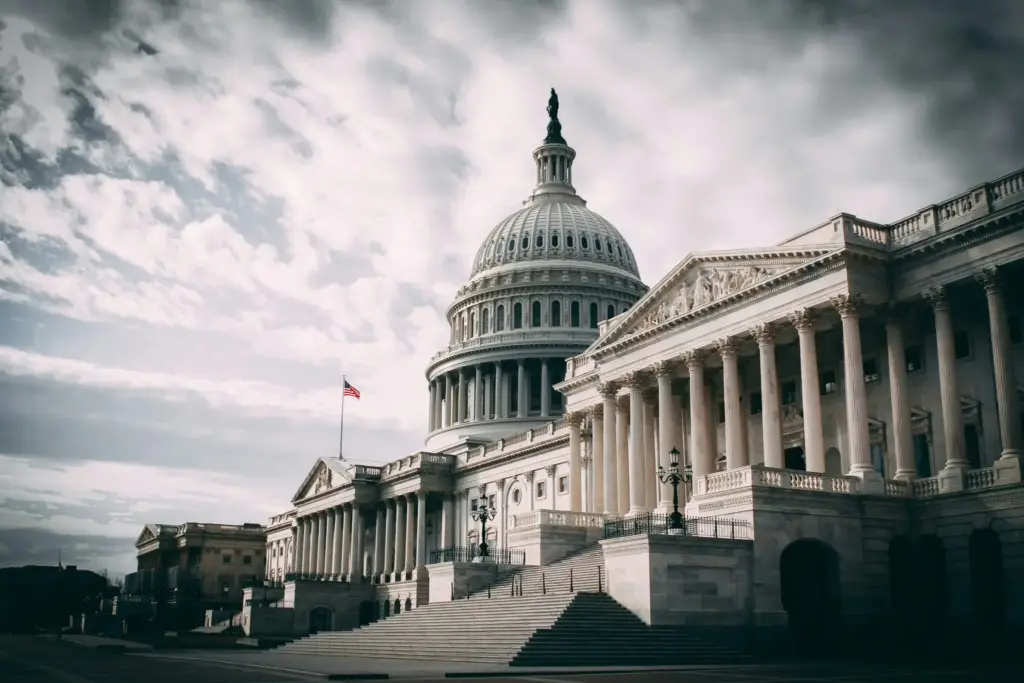
The advanced chips of Nvidia they came to China through the back door and Elon Musk already signs for Jensen Huang.
The departure of the CEO last week has turned a affair private in the largest technological file opened today in Washington. The conversation began with a romantic relationship and an accusation of espionage. It has ended up in the processors that the company could not sell to Beijing and that, even so, they ended up training Chinese artificial intelligence models.
The calendar orders the case. The board of directors published a statement on November 8; two days later he hired Joon Kim, former acting federal prosecutor for the Southern District of New York, to investigate the matter; Two days later, Huang submitted his resignation. The Secretary of the Treasury, Scott Bessentset the deadline from Fox News: ‘We want answers from the board and its external advisors in the next ten days.’
That deadline expires at the end of November and has pushed half the ecosystem to position itself. Elon Musk He has done it: he has joined the ‘Stand with Jensen’ campaign, a citizen petition that has around 186,000 signatures and that demands the manager’s return, according to The Daily Caller. Nvidia He has not commented on that request.
From the A100 to the Blackwell: how the chips escaped
In October 2022, the Joe Biden administration banned Nvidia and AMD from selling their most advanced AI hardware to China and Russia. The rule—the export controls managed by the Bureau of Industry and Security of the Department of Commerce, BIS for its acronym—reserved GPUs, the cards that train language models, for internal use and for a club of allies: United Kingdom, Canada, Germany and Japan. Iran, North Korea and Sudan later joined the list.
During 2025, the administration of donald trump It opened a loophole and allowed a degraded version of the H100 to be sold to China. The White House closed it and later reopened it, caught between two fires that should not be confused: the company’s billing and the national security doctrine. The crack lasted as long as a headline lasts.
Washington does not dispute whether the processors left. Discuss how many, where, and who looked away as they left.
Research center Epoch AI estimates that between 290,000 and 1.6 million advanced GPUs arrived in China as of last year. For 2026 there is no public data. Nobody knows how many.
Will DePue, researcher and former OpenAI employee, maintains that the four big Chinese laboratories —DeepSeekMoonshot, MiniMax and Ant Group—have trained their latest models with Blackwell chips, banned from China. Their method does not depend on leaks: each model retains a fingerprint of the hardware on which it was trained. Chips leave traces even when they disappear.
Megaspeed, the free port and the question that Nvidia does not answer
The mechanism described is manual. The diverters acquired the GPUs under the license, sent them to an authorized international port and there the cards passed from one ship to another to China. One of the companies mentioned is Megaspeeda Singapore-based cloud infrastructure group that was born as the Chinese video game firm 7Road International and changed its name in 2023 after its purchase by Alice Huangalso known as Huang Le.
As an Nvidia Cloud Partner, the company could purchase and install the most powerful GPUs. Bloomberg placed some in data centers in Shanghai; Crypto Briefing found others unpacked in Malaysia. Alice Huang resigned from Megaspeed in August 2025, months after an investigation by the Singapore police that detained her passport for eight months and found no incriminating evidence.
There are two different questions on the table and only one has a lawyer. The first is whether there was espionage. The second is whether the company pushed opaque sales to fatten its results, the suspicion that Bessent dropped. This medium asked Nvidia to clarify whether the council also investigates the trade route; There was no response before press time.
It is advisable not to lose sight of the essential: no one has been convicted. There are no charges against Huang or Alice Huang, there is no evidence that the manager knew about the diversion and the company has not been found responsible for anything. Therein lies the contradiction of this entire file.
Washington Logic
Washington’s logic does not begin with Trump nor end at Nvidia. Starting in 2022, American technology policy will be governed by an idea that Commerce Department officials repeat like a mantra: small yard, high fence. A handful of technologies are controlled—training chips, lithography, frontier models—and controlled with an intensity that borders on trade blockade. The coalition that supports this policy is transversal: hawks of China in it Republican Partynational security Democrats and the intelligence apparatus.
The precedent is in 1987, not in the digital Cold War. Toshiba Machine sold milling machines capable of making silent submarine propellers to the Soviet Union. Congress responded by banning the sale of Toshiba products in the United States. It’s an old manual. Washington has always harshly punished the ally that acts as a bridge.
For Spain, the problem is not in exporting – it does not manufacture advanced chips – but in access. Spain is not among the four destinations that the 2022 rule reserved for the most cutting-edge hardware, and that forces us to justify the final use and coexist with the extraterritorial surveillance of the BIS.
The large data centers being built in Aragon, the computing contracts of Telefónica or Santander with American suppliers and the Barcelona Supercomputing Centerwhich has equipped the MareNostrum 5 with Nvidia accelerators, depend on that tap remaining open. If the fence is narrowed, the allied buyer will also pay for it..
The clock is ticking. The ten days that Bessent claimed expire at the end of November and three things will come out of it: Joon Kim’s report, the council’s public response and, probably, an appearance at the Capitol. The real unknown is not whether Huang returns – 186,000 signatures do not return a position – but whether Washington takes advantage of the case to close the loophole that the White House itself opened in 2025. The strategic reading is different: each tightening that is announced later will be applied first to the allies. And the allies, this time, include Spain.
Case File
- The case: Jensen Huang resigned as CEO of Nvidia following the scandal of his relationship with Alice Huang, identified as a possible spy, while the focus shifts to the diversion of banned chips to China.
- Key facts: October 2022 ban on A100, H100 and H200 GPUs; between 290,000 and 1.6 million units arrived in China by 2025 according to Epoch AI; Treasury demands answers from council within ten days; 186,000 signatures call for Huang’s return; No authorities have filed charges.
- For Spain: It is not in the club of privileged destinations for cutting-edge hardware, so its artificial intelligence infrastructure and data center plans are exposed to any tightening of US controls.