
Who was Yahya Sinwar? Hamas leader was known for cunning and brutality
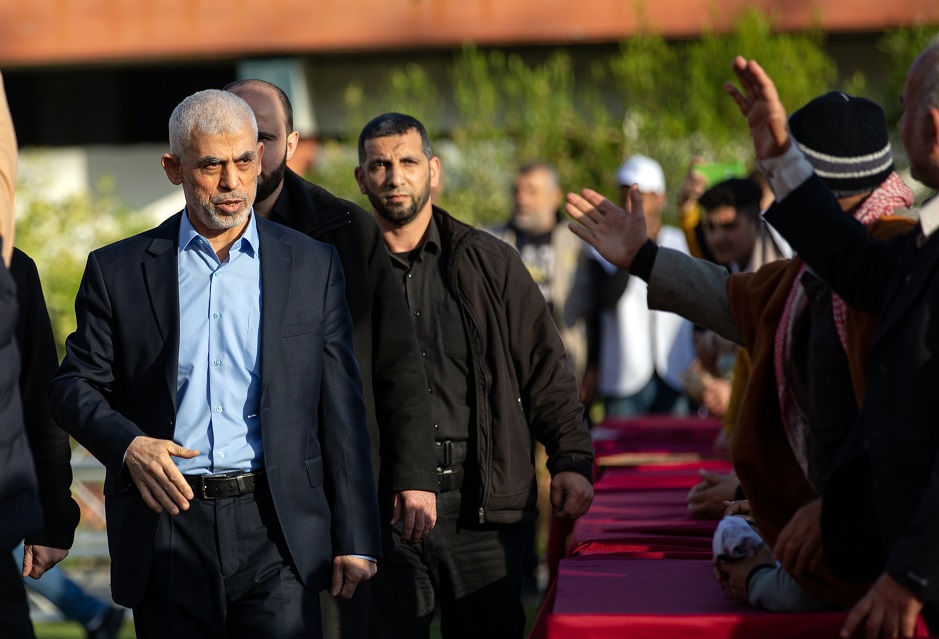
Yahya Sinwar, the Palestinian militant leader who emerged from two decades in prison in Israel to assume leadership of Hamas and help plan the deadliest attack on Israel in its history, died on Thursday. He was in his 60s.
A longtime leader of Hamas who took up his top political job in August, Sinwar was known among supporters and enemies alike for combining cunning and brutality. He built Hamas’s ability to harm Israel in service of the group’s long-term goal of destroying the Jewish state and building an Islamic Palestinian nation in its place.
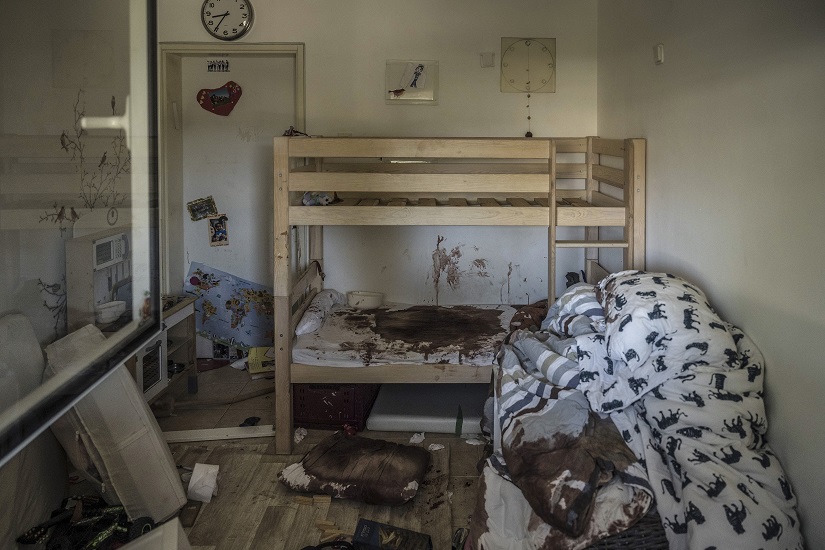
He played a central role in planning the surprise attack on southern Israel on October 7, 2023, which killed around 1,200 people, took another 250 back to the Gaza Strip hostage and put him at the top of Israel’s hit list. . Israeli leaders have vowed to hunt him down, and the army has dropped leaflets over Gaza offering a $400,000 reward for information on his whereabouts.
But for more than a year he remained hidden, surviving in tunnels that Hamas had dug beneath Gaza, even as Israel killed many of his fighters and associates.
Sinwar’s legacy among Palestinians is complex. He has built a force capable of attacking the most sophisticated army in the Middle East, despite the strict Israeli-Egyptian blockade of Gaza. But the October 7 attack prompted Israel to commit not only to ending Hamas’ 17-year rule in Gaza, but also to destroying the group entirely.
The attack boosted Hamas’ standing in the Israeli-occupied West Bank and other parts of the Arab world, according to polls, but not among Palestinians in Gaza, whose lives and homes bore the brunt of the subsequent Israeli invasion.
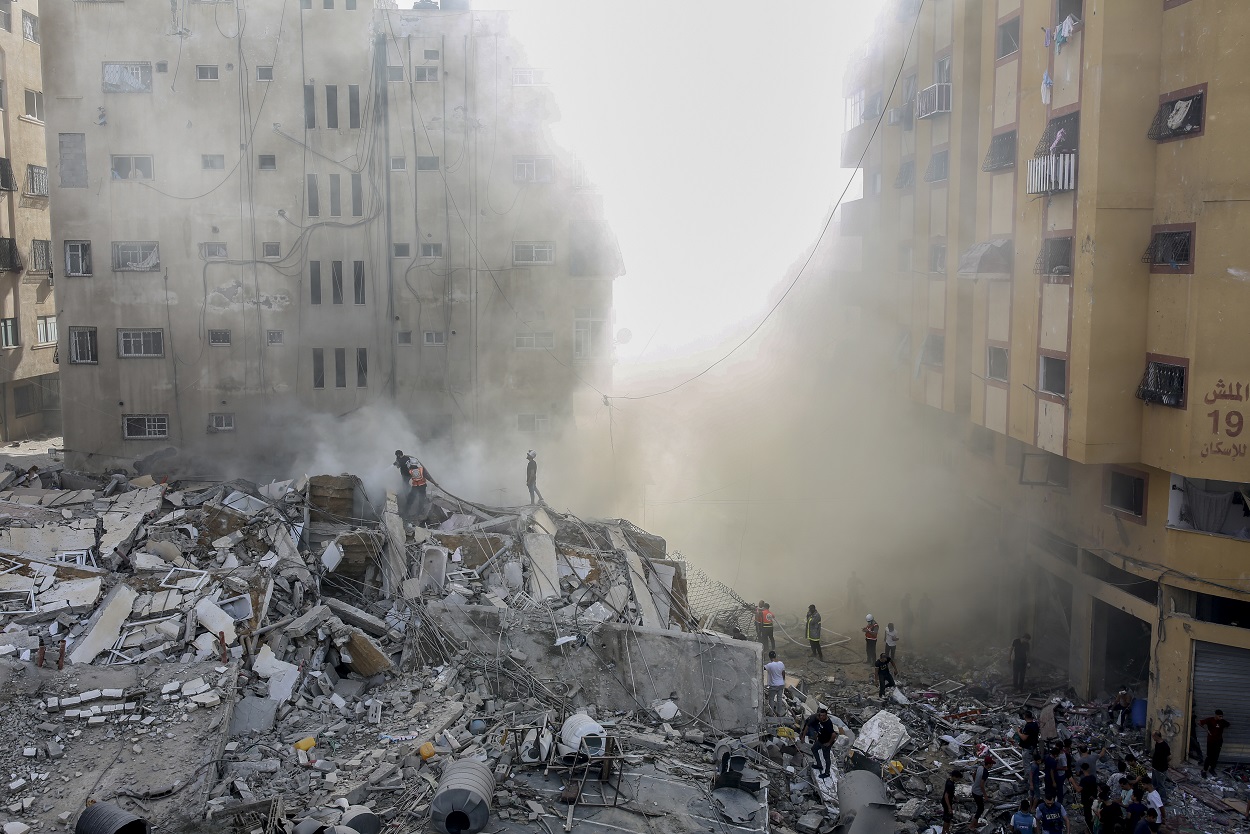
And although he succeeded in bringing the Palestinian cause back to global attention, he failed to bring his people closer to independence or statehood—and at tremendous cost to those he claimed to want to liberate. Israel reduced much of Gaza to rubble in response to the Hamas attack, and more than 42,000 Palestinians were killed, according to Gaza health officials.
When news of his death spread in Gaza, many people celebrated.
Mohammed, a 22-year-old who had been repeatedly displaced during the war, said he blamed Sinwar for the hunger, unemployment and homelessness the conflict caused.
“He humiliated us, started the war, dispersed us and made us displaced, without water, food or money,” said Mohammed, speaking on condition of anonymity for fear of reprisals from Hamas members. “He’s the one who made Israel do this.”
The news of Sinwar’s death, he said, marked “the best day of my life.”
As leader of Hamas in Gaza from 2017, Sinwar quietly rekindled the group’s relationship with Iran, a longtime patron, helping Hamas develop the ability to overcome Israel’s defenses. And while he secretly prepared a major war with Israel, he led Israel to believe that he wanted the opposite: not exactly peace, but at least some tranquility.
Many in the Israeli security community spent the years before the war focusing on other threats and assuming that Gaza was under control, some said in interviews after the war began.
Sinwar’s life was profoundly shaped by the Israeli-Palestinian conflict.
He was born in 1962 in Khan Younis, in the southern Gaza Strip, a crowded and impoverished territory on the Mediterranean coast, bordering Israel and Egypt.
Information about his parents was not immediately available, but like most Gazans, his family members were registered Palestinian refugees. They or their ancestors had fled or been driven from their homes in the war that surrounded the creation of Israel in 1948 and longed to return.
Sinwar studied Arabic at the Islamic University of Gaza and became involved in Islamic politics. At the beginning of the first Palestinian intifada against the Israeli occupation of the West Bank and Gaza in 1987, Palestinian Islamists founded Hamas, which promised to destroy Israel and replace it with a Palestinian state. Israel, the United States and other countries have designated Sinwar as a terrorist and Hamas as a terrorist organization.
Sinwar, an early member of Hamas, led a group tasked with punishing Palestinians accused of spying for Israel, often with execution. He performed the task with such brutality that he earned the nickname The Butcher of Khan Younis.
In 1988, Israel arrested Sinwar and later prosecuted him for the murder of four Palestinians suspected of collaborating with Israel. He spent more than two decades in Israeli prisons, an experience he later said allowed him to study his enemy.
“They wanted prison to be a tomb for us — a mill to grind our will, determination and bodies,” he said in 2011. “But thank God, with our belief in our cause, we turned prison into sanctuaries of worship and academies of study.”
He learned Hebrew, read widely about Israeli history and society, and became a leader in prison, participating in negotiations between inmates and their jailers.
“There is no doubt that he is stubborn and a good negotiator,” recalled Sofyan Abu Zaydeh, who met Sinwar in prison in the late 1980s and later served as a minister in the Palestinian Authority.
Over the years, Israel has missed numerous opportunities to keep Sinwar off the battlefield — or eliminate him altogether.
During Sinwar’s imprisonment, Yuval Bitton, a prison dentist, met him and learned of his continued efforts to punish Palestinians he suspected of working with Israel, Bitton told in 2024.
In 2004, Sinwar developed pain in the back of his neck that Bitton told colleagues needed urgent medical attention. Doctors removed an aggressive brain tumor that could have killed Sinwar if left untreated, and Sinwar thanked Bitton for saving his life.
“It was important to him that I understand from a Muslim how important this was in Islam — that he owed me his life,” said Bitton, who later became head of intelligence for the Israel Prison Service.
In a painful twist of fate, when Hamas attacked Israel in 2023, Bitton’s nephew, Tamir Adar, was among the hostages taken back to Gaza, where he died shortly after.
In 2011, Israel and Hamas agreed to exchange a captured Israeli soldier, Gilad Schalit, for 1,027 Palestinian prisoners. Sinwar was the highest-ranking prisoner released under the deal. He returned from prison with a deeper understanding of Israel and a firmer commitment to freeing other Palestinian prisoners.
“He promised his colleagues when he left that their freedom was his burden,” Abu Zaydeh recalled. “October 7th, at a basic level, was about freeing prisoners.”


He returned to Gaza to find a new reality. By 2007, Hamas had taken control of the more moderate Palestinian Authority. This made Hamas, for the first time, not just an armed group but also a de facto government overseeing electricity, garbage collection and other public services.
The Hamas takeover led Israel and Egypt to impose a blockade on Gaza, restricting the movement of goods and people in and out of the territory and deepening the strip’s poverty and isolation.
Sinwar rose through the ranks within Hamas. In 2012, he became the representative of Hamas’ armed wing, the Qassam Brigades, a role similar to that of defense minister. This further linked him to the Hamas fighting force and its mysterious commander, Mohammed Deif, another architect of the October 7 attack, who Israel killed in a massive bombing raid in Gaza in July.
In 2017, Sinwar became the leader of Hamas in Gaza, taking over from Ismail Haniyeh, who moved to Qatar and served as the group’s top political leader until Israel assassinated him in Tehran, Iran, in July. In this role, Sinwar looked for new ways to protest the blockade and draw attention to Palestinian grievances. In 2018, Hamas supported large protests by Palestinians in Gaza who sought to march to their ancestral villages inside Israel in demonstrations that Israel violently suppressed.
Sinwar also projected an interest in improving the lives of Palestinians in Gaza. In a rare interview with an Italian journalist in 2018, he called for a long-term ceasefire.
“I’m not saying I’m not going to fight anymore,” he said. “I’m saying I don’t want any more war. I want the siege to end. You walk down to the beach at sunset and see all these teenagers on the shore talking and wondering what the world is like on the other side of the sea. What life is like,” he added. “I want them to be free.”
In 2021, Hamas launched a new war — its third major conflict with Israel since 2008 — to protest Israeli efforts to evict Palestinians in East Jerusalem and Israeli police raids on Jerusalem’s Al-Aqsa Mosque, a landmark of the Palestinians’ demand. Palestinians over the city. During the conflict, Israel bombed his home in an unsuccessful attempt to kill him.
On live television after a ceasefire came into force, Sinwar announced he would walk home and dared Israel to assassinate him. He then strolled through Gaza, shaking hands, waving to shop owners and stopping for photos with passersby.
His violent rhetoric against Israel has never softened. In 2022, he gave a fiery speech calling on Palestinians everywhere, including inside Israel, to “prepare your cleavers, axes or knives.” Less than a week later, three Israeli Jews were killed in an ax attack in central Israel.
But Sinwar also continued to seek accommodations with Israel, negotiating to allow in about $30 million in monthly aid to Gaza from Qatar and an increase in the number of permits for Gaza residents to work in Israel—both much needed for the country’s faltering economy. territory.
Such moves, in addition to Sinwar’s decision to keep Hamas out of clashes between Israel and other armed groups, led to a belief in the Israeli security community that strict security measures and limited improvements in the quality of life for Gaza residents could maintain the Hamas contained.
But that hope was dashed on October 7, 2023, when fighters disabled Israel’s border defenses; they invaded Israel by sea, air and land; and devastated Israeli communities and military bases, shooting soldiers and civilians and showing how wrong Israel’s assessments of Sinwar were.
Israel responded with overwhelming force, destroying large parts of Gaza, launching a ground invasion aimed at destroying Hamas and causing one of the fastest-rising death tolls of any war this century.

Sinwar did not appear publicly during the war, leaving it unclear what he thought Hamas had achieved in its attack on Israel and how it felt about the tremendous cost in Palestinian lives.