
Mummy CT scans reveal what Egyptians did with organs from the dead
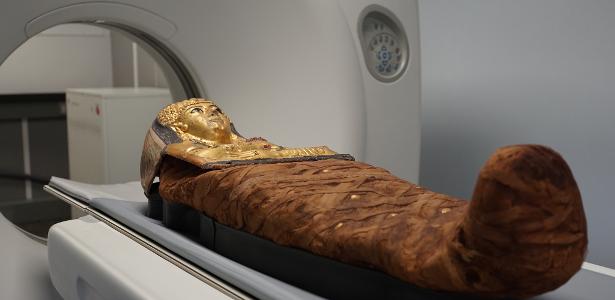
The removed organs were placed in canopic vessels. Each of them had a lid with symbols representing each of the four sons of the Egyptian god Horus, which would protect each organ. Imsety (god with a human head) was the guardian of the liver, Hapy (with a baboon’s head) protected the lungs, Duamutef (with a jackal’s head) guarded the stomach while Qebehssenuef (hawk’s face) preserved the intestines.
But the analysis of the Field Museum mummies showed that this process was not always carried out exactly. Furthermore, by looking for obvious diseases, age and sex on CT scans, scientists identified that most Egyptians from this period had significant wear on their teeth from consuming foods mixed with desert sand. Chenet-aa and Harwa, however, were prestigious people in the team’s understanding, as there are no signs of illness due to physical work on the body.
Precisely due to their high social position, both received a very high quality ceremonial and funeral treatment. However, analysis of other mummies shows carelessness with less prestigious deaths. One of the coffins is filled with hieroglyphics indicating that a priest was buried there, but the mummy inside was that of a 14-year-old boy.
“We know that in some cases, people really wanted to be mummified, but they didn’t necessarily have the best means of doing so. You could get a cheaper coffin by borrowing or using someone else’s,” Drake told CNN. Upcoming CT scans may therefore reveal how common funeral bargaining was in Ancient Egypt.
