
Lula: ‘COP30 is the last chance to avoid irreversible disruption in the climate’
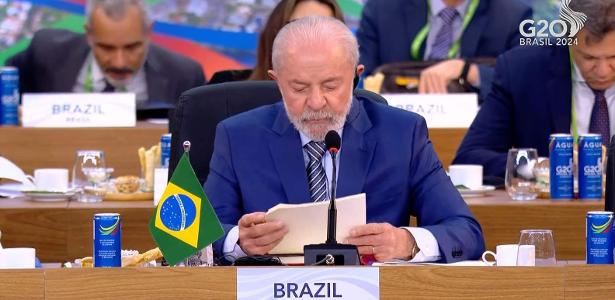
Countries have “common but differentiated responsibilities”. “Even if we don’t walk at the same speed, everyone can take an extra step”, said Lula. The Brazilian president proposed that developed countries in the G20 bring forward their climate neutrality goals from 2050 to 2040 or 2045. To developing countries, Lula made a “call” to establish more ambitious national goals (called NDC).
The need for financing to contain the climate catastrophe is “trillions” of dollars, said Lula. “In Paris (Paris Agreement, 2015), we were talking about a hundred billion dollars a year, which the developed world did not fulfill. Today, we are talking about trillions. These trillions exist, but they are being wasted on armaments while the plan agonizes “, he spoke. At COP29, which takes place in Azerbaijan at the same time as the G20, leaders have called for concrete commitments to climate finance.
The Brazilian president also suggested the creation of a UN climate change council. “There is no point negotiating new commitments if we do not have an effective mechanism to accelerate the implementation of the Paris Agreement.”
“In the fight for survival, there is no room for denialism and misinformation,” said Lula. Today, the Brazilian government and UNESCO launched an initiative to combat disinformation in this area.
G20 leaders are meeting this Tuesday morning (19) to discuss topics related to combating climate change. Brazil, which presides over this edition of the G20, proposed energy transition and sustainable development as one of the main axes of the summit — topics that combine the environment with the economy, which is the group’s focus.
See excerpts from Lula’s speech
COP30 will be our last chance to avoid an irreversible disruption of the climate system.
Kyoto Protocol has become a reference for frustration in collective action. COP15 was a trauma that almost derailed the climate regime. The Paris Agreement is reaching Belém after ten years and its results are still far short of what is necessary.
Without assuming their historical responsibilities, rich nations will not have the credibility to demand ambition from others.
