
Gleisi calls for a new monetary policy with instruments “that do not bow to blackmail”

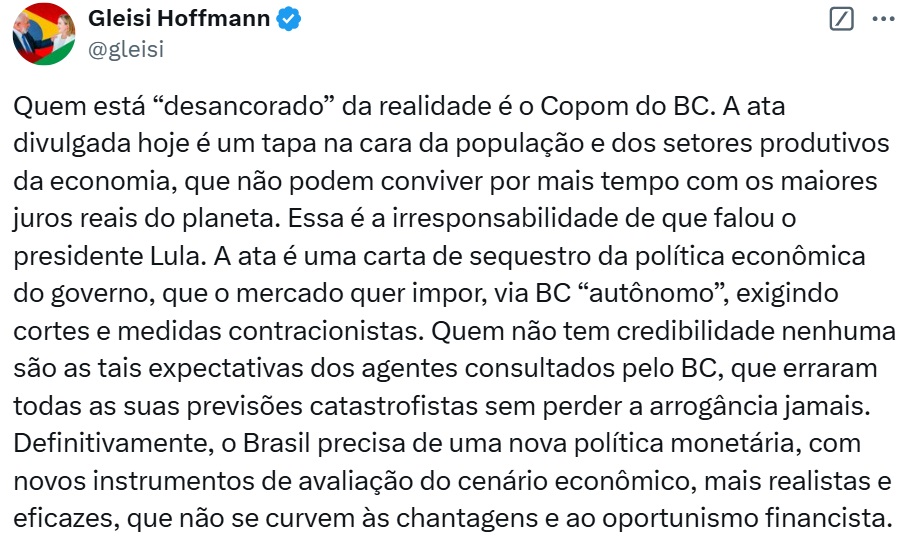
The national president of the PT, federal deputy Gleisi Hoffmann (PR)called the minutes of the Monetary Policy Committee (Copom) a “letter of hijacking of the government’s economic policy”.
On X (formerly Twitter), the parliamentarian stated that the financial market wants to impose this “kidnapping”, demanding spending cuts and contractionary measures through the autonomous Central Bank (BC).
“What has no credibility whatsoever are the expectations of the agents consulted by the BC, who made all their catastrophic predictions wrong without ever losing their arrogance. Brazil definitely needs a new monetary policy, with new instruments for assessing the economic scenario, more realistic and effective, that do not bow to blackmail and financial opportunism”, stated the deputy.
DOWNLOAD NOW
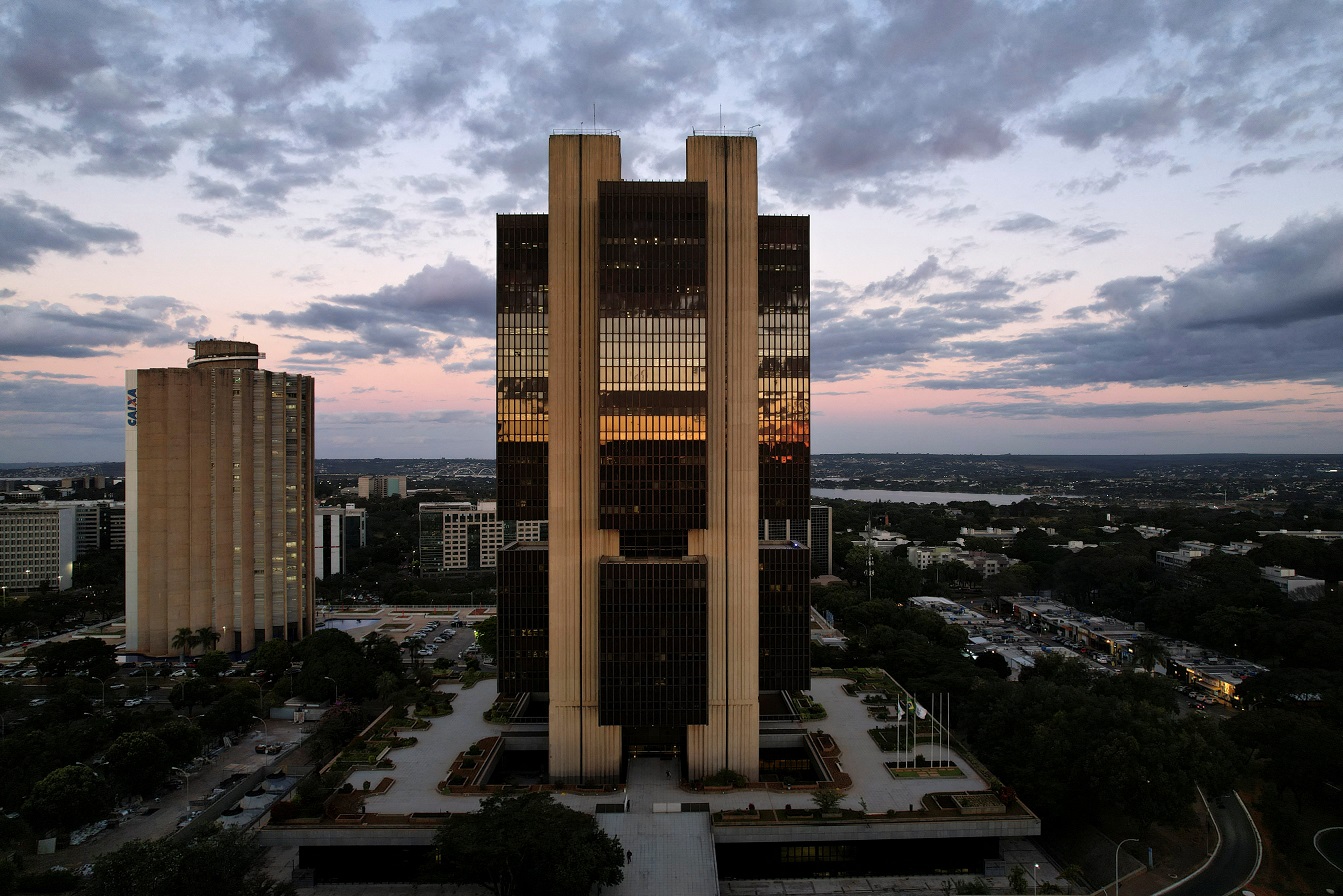
BC says it raised Selic to 12.25% due to deteriorating inflation and more adverse scenario
Copom also signaled two more interest rate hikes of 1 pp in the next two meetings
The Copom reported in the minutes that both the decision to raise the Selic rate by 1 percentage point, from 11.25% to 12.25%, and the forward guidance of two more increases of the same magnitude in the next meetings were taken unanimously – or that is, with the consent of the four directors appointed by President Luiz Inácio Lula da Silva (PT) to the committee, including Gabriel Galípolo, who will be president of the BC from next year.
Gleisi’s criticisms echo recent comments by Lula himself. On Sunday (15), the head of the Executive stated, in an interview with Fantástico, on TV Globo, that “the only thing wrong in the country” is the interest rate, above 12%.
“The irresponsibility belongs to those who increase the interest rate and not the federal government, but we will take care of it,” said the president.
In X, Gleisi also wrote that the BC is “unmoored” from reality and that the Copom minutes were a “slap in the face of the population and the productive sectors of the economy.”