
A crime or two? Understand the legal debate that can relieve Bolsonaro’s penalty
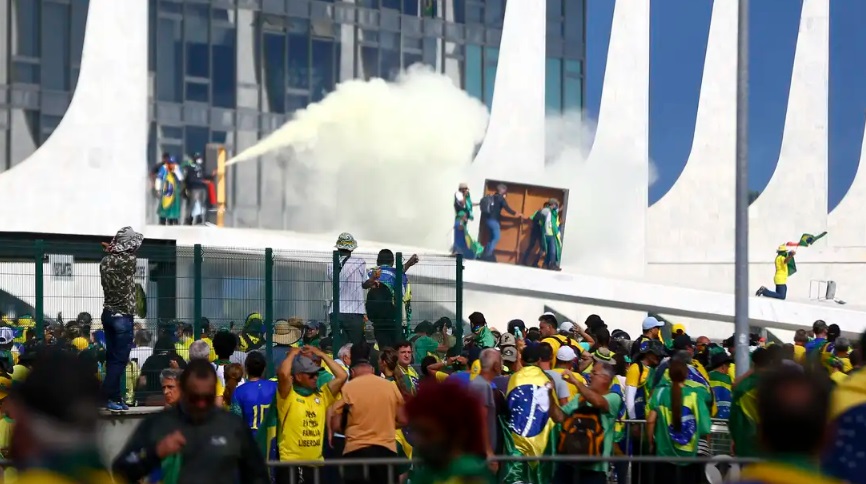
The trial of the so -called coup plot in the Federal Supreme Court (STF) brought up a central legal discussion: after all, should the crimes of coup and violent abolition of the democratic rule of law be treated as distinct conduct or as a single offense?
The answer has a direct impact on the sentence of former President Jair Bolsonaro (PL) and seven other defendants. This is because, if recognized the absorption of one crime for another, the conviction could result in milder punishments.
Live: Luiz Fux starts reading his vote; scoring is 2 to 0 by conviction
1st class of the Supreme Court resumes on Wednesday (10) the presentation of the votes in the trial of the former president and seven other accused for involvement in an attempted coup d’état
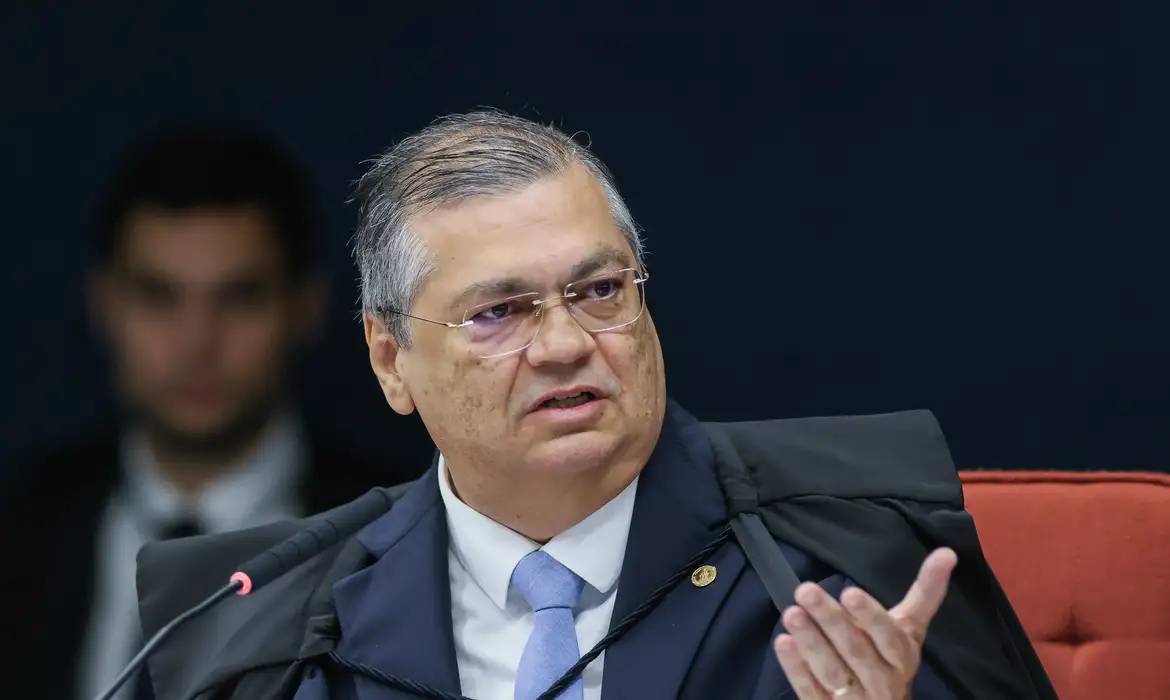
Bolsonaro lawyers consider Dino’s positive divergence in relation to three defendants
Weighing the minister in relation to the vote of Moraes referred to the defendants Paulo Sérgio, Augusto Heleno and Alexandre Ramagem and not Jair Bolsonaro
The defense thesis
Bolsonaro’s defense maintains that there was an attempt to punish in duplicate. For lawyers, violent abolition could only occur through a coup d’état, which would cause a crime to be “kind of necessary” to the other. In this reasoning, it would not be two autonomous infractions, but a single crime.

This argument echoes previous demonstrations of Minister Luiz Fux, who has pointed out a risk of double conviction in similar situations. He may be the main voice to endorse the thesis in the current judgment.
The understanding of Moraes and Dino
Rapporteur of the criminal action, Minister Alexandre de Moraes rejected the idea of absorption. In his vote, he pointed out that the two crimes have different nuclei:
• Violent abolition of the democratic rule of law (Art. 359-L of the Penal Code) occurs when there is an attempt to restrict or suppress the functioning of the constituted powers, such as the Supreme Court and Congress. The central target is the institutional structure itself that guarantees democracy.
• Coup (Art. 359-M) seeks to overthrow or prevent possession of the elected government. The passive subject is the executive, directly affected by an attempt to take power.
Flávio Dino, according to voting, accompanied Moraes. He stressed that these are crimes of enterprise, in which the result is not necessary to materialize. For Dino, the acts practiced were not mere cogitations, but executory acts, which configure violence and serious threat against the institutions.
Practical examples
In the file, the evidence indicates that there were simultaneous attacks on the judiciary – with attempts to delegitimize the Supreme Court and the TSE – and the executive – by planning to prevent the possession of Luiz Inacio Lula da Silva (PT). For Moraes, this combination shows that both crimes occurred independently.
“Defendant Jair Messias Bolsonaro wanted the army’s support to reverse the electoral result, preventing possession or continuity of the president and vice elected. In the history of the world, in comparative law, this has one name only: coup d’état,” the rapporteur said.
Dino stressed that violence was present throughout the plot, from camps in front of barracks to plans such as the so -called “green and yellow dagger”. “I do not consider that we had mere acts of preparation, but executory acts,” he said.
What is at stake
If the vision of Moraes and Dino, Bolsonaro and the other defendants may be convicted of both crimes autonomously, which increases the possibility of more severe penalties. If the defense thesis is accepted, the penalty may be halved.
Luiz Fux’s vote is considered decisive to define the direction of this debate. Although hardly acquitted the former president, the minister may relativize interpretation and align himself in part with the argument of the defense.