
Accounts MP asks TCU to investigate the transfer of health amendments to municipalities

The Public Ministry at the Federal Audit Court (TCU) asked the Court to investigate the transfer of parliamentary health amendments to Brazilian municipalities.
As Estadão showed, city halls began to depend on the amendments to finance basic health services for the population. The distribution of resources is unequal between city halls, according to a study by the National Confederation of Municipalities (CNM).
CMN tightens rules for banks to raise funds with FGC guarantee
New standard creates Reference Asset and may force banks to invest more in public bonds
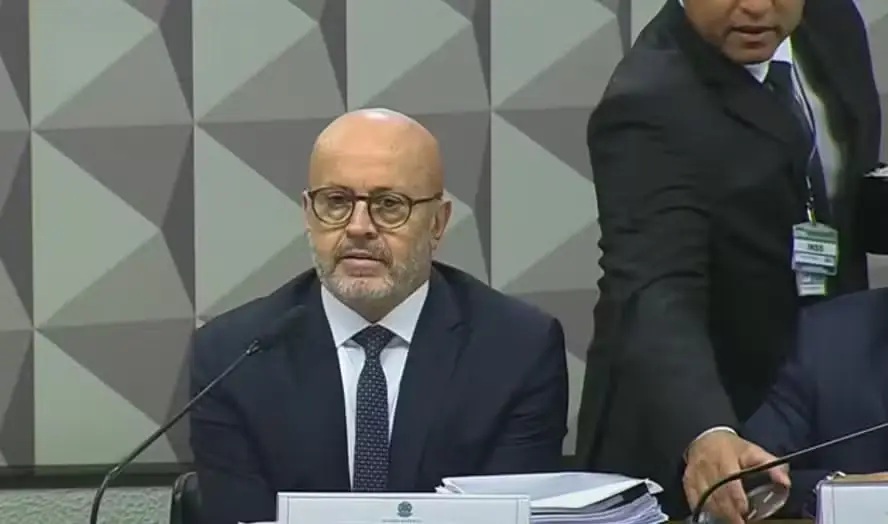
Court denies Careca’s INSS request not to be called by nickname
Antonio Carlos Camilo Antunes is one of those investigated in Operation Without Discount, by the Federal Police (PF), which investigates undue discounts for INSS retirees and pensioners
Based on the report, deputy attorney general Lucas Rocha Furtado filed a representation with the TCU asking for the opening of an audit and special accounting to determine the criteria for distributing amendments among the municipalities in the last three years.

In health alone, transfers from the federal government to municipalities through amendments totaled R$2.5 billion in 2016 and reached R$21.5 billion in 2025. The amendments accounted for just 5% of the Ministry of Health’s budget sent to cities in 2016. The percentage grew to 17% last year.
Faced with the increase in transfers with political indication, the federal government began to rely on amendments to comply with the minimum required by the Constitution for health spending, shows the CNM study. The Union invested R$234.5 billion to meet the minimum in 2025, but 11% (R$25.6 billion) of the amount came from parliamentary amendments.
The prosecutor asked the TCU to evaluate the possible illegality and unconstitutionality of accounting for the amendments to comply with the minimum floor. In the study, the confederation of municipalities calls for this link to be overturned.
“Submitting access to health resources to the discretionary filter of parliamentarians – who, in practice, decide ‘who’ receives and ‘how much’ receives – means transforming people’s lives and suffering into political capital”, says the prosecutor. “In practice, a ‘SUS for allies’ and another for the rest are created, violating the federal solidarity pact and eroding the legitimacy of the system.”
The 20 municipalities most benefiting from amendments in the health area received R$488 million in 2025. This was the amount that a thousand municipalities received together at the other end. While cities such as Autazes (AM), Tuntum (MA) and Laranjal do Jari (AP) led the transfers, Nova Mutum (MT), Mata de São João (BA) and Arraial do Cabo (RJ) did not receive a single cent.
The MP de Contas representative also criticizes the existence of municipalities that disproportionately consume public resources, classifying the cities as “reborn municipalities” – in reference to reborn babies, dolls that imitate real babies.
“In several cases, these are entities that, from an economic, administrative and demographic point of view, do not have any real viability, functioning as true ‘reborn municipalities’: they have an institutional façade – mayor, council chamber, minimum formal structure – but they lack economic density, a productive base, their own revenue and a population scale that justifies their maintenance.”