
After 3 years, January 8th has 1,190 people held responsible and political dispute over penalties
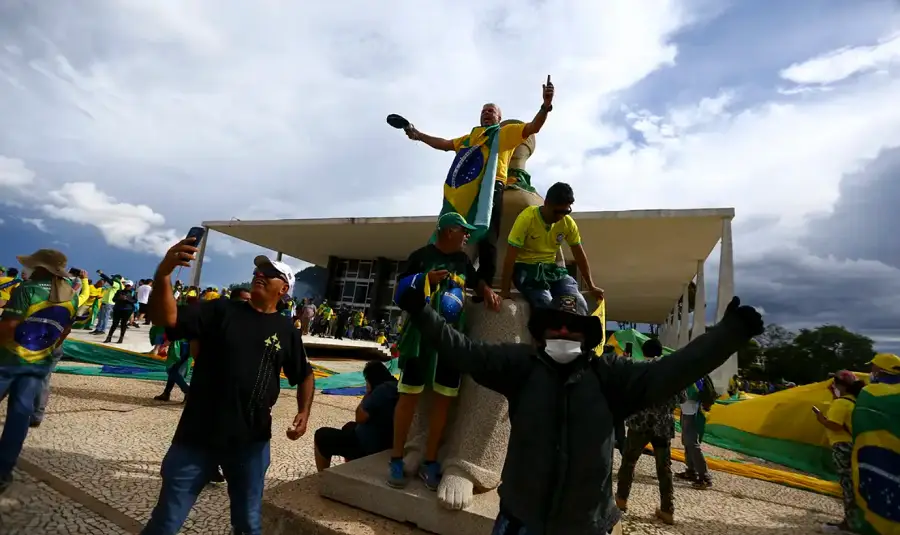
Three years after the coup acts of January 8, 2023, the judicial assessment of the episode reveals a wide range of criminal liability, ranging from the protesters who directly participated in the depredations to the political nucleus accused of articulating the attempted institutional rupture.
Consolidated data from the Federal Supreme Court (STF) show that, by August 2025, more than a thousand people had already been held criminally responsible, while Congress is discussing a legislative alternative to reduce sentences, the so-called Dosimetry PL.
Bolsonaro arrives at hospital in Brasília after Moraes authorizes tests after fall
Former president suffered accident in the early hours of Tuesday
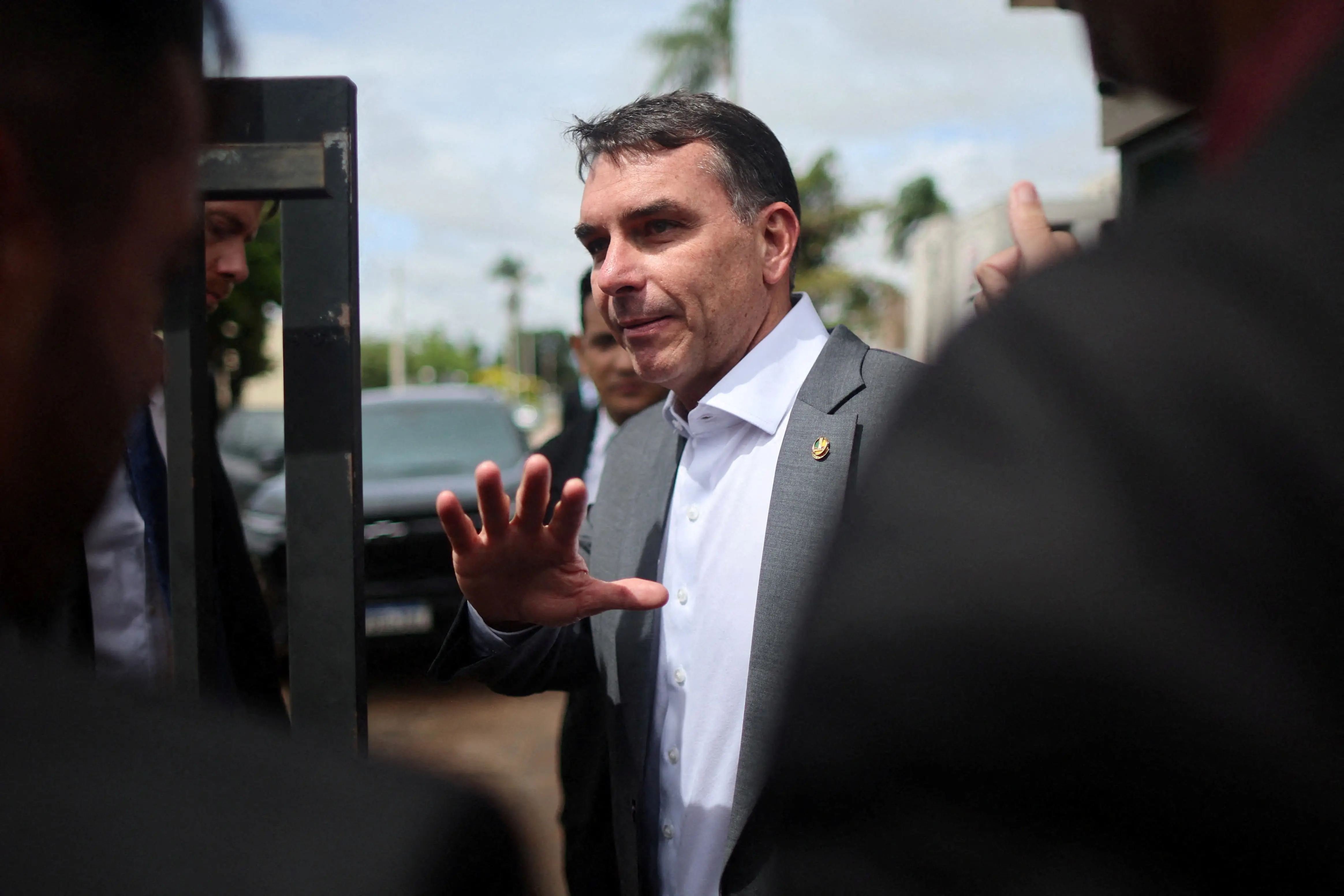
Flávio Bolsonaro attributes his success in the polls to his father’s surname and political heritage
Pre-candidate highlighted that the electorate was awaiting Jair Bolsonaro’s nomination of a successor and that the financial market is beginning to accept his candidacy
The survey by Minister Alexandre de Moraes’ office indicates that 1,190 people have been held responsible so far. Of this total, 638 were convicted by the STF after trial, and another 552 signed Criminal Non-Prosecution Agreements (ANPP) with the Federal Public Ministry, admitting crimes considered less serious.
There were also ten acquittals. Open criminal cases total 1,628, of which 518 deal with serious crimes and 1,110 with less serious crimes. According to the Court, 112 cases are still awaiting trial, while the others are in different stages of investigation or have already been terminated due to the completion of their sentences.
Action groups
Among those convicted, the majority fall into the group of so-called executioners — the protesters who directly participated in the invasion and depredation of the headquarters of the Three Powers.
Of the 638 convictions, 279 involved crimes considered serious, such as attempted abolition of the Democratic Rule of Law, coup d’état, qualified damage, criminal association and deterioration of public property. Another 359 convictions relate to less serious crimes, such as incitement and criminal association.
Currently, 29 people remain in pre-trial detention, 112 are serving a permanent sentence and 44 are under house arrest, with or without the use of an electronic ankle bracelet.
In the case of agreements signed with the MPF, the STF approved 552 ANPPs. They were offered to defendants who responded only for incitement to crime and criminal association, without proof of direct participation in acts of violence or attempted coup.
In return, those involved confessed to the crimes, agreed to perform community service, pay a fine of R$5,000, not repeat similar crimes and stay away from open social networks until the conditions were fully met. Mandatory participation in courses on democracy, the rule of law and coups d’état was also imposed.
Read more: Why did January 8 prisoners refuse an agreement with the Public Ministry?
In addition to individual penalties, the Supreme Court set a minimum compensation of R$30 million for collective moral damages, an amount that must be paid jointly by those convicted of serious crimes. This amount refers to the damage caused to public property during the invasion of the offices of Planalto, Congress and the STF.
At the same time, the Court has already requested the extradition of 61 people being investigated who left the country, in cases that are being processed under secrecy.
At the same time, the Court has already requested the extradition of 61 people being investigated who left the country, in cases that are being processed under secrecy.
Political core
Accountability was not limited to executors. The Federal Police investigations, which supported the complaint from the Attorney General’s Office (PGR), showed the existence of a political nucleus responsible for planning and leading the coup attempt.
According to the PGR, the criminal organization would have acted continuously between July 2021 and January 2023, mobilizing State structures to discredit the electoral process and prevent the elected president from taking office.
Read more: Why is Bolsonaro on trial even though a coup has not been carried out?
In this context, the First Panel of the STF sentenced former president Jair Bolsonaro to 27 years and 3 months in prison for crimes related to the coup plot. According to the accusation, Bolsonaro played a central role in articulating the plan, from disseminating attacks on the electoral system to drafting a decree that provided for exceptional measures to reverse the results of the elections.
Other close allies were also hit by the convictions. General Walter Braga Netto, Bolsonaro’s running mate in 2022, was named as an accomplice in command of the criminal organization, accused of acting to influence sectors of the Armed Forces.
The group considered crucial by the PGR also includes names such as the former Minister of Justice Anderson Torres, the former Minister of Defense Paulo Sérgio Nogueira, the former Navy Commander Almir Garnier, the former director of Abin Alexandre Ramagem and the former head of the GSI Augusto Heleno.
Lieutenant Colonel Mauro Cid, Bolsonaro’s former aide-de-camp, became a key player in signing a collaboration agreement and detailing the inner workings of the plot.
From amnesty to dosimetry
While the STF progressed with the convictions, Congress began to discuss a legislative solution to alleviate the sentences imposed on those involved in January 8th. The original proposal was an amnesty project, presented a few months after the attacks. The text, however, encountered strong legal and political resistance, especially given the risk of being considered unconstitutional.
Faced with this impasse, an alternative gained strength: the so-called Dosimetry PL. Instead of extinguishing crimes, the proposal changes criteria for setting and progressing sentences, significantly reducing prison time for those convicted of coup acts.
According to calculations presented during the processing, the text could even benefit Jair Bolsonaro, reducing his sentence from more than 27 years to just over two years.
Read more:
- 51% of Brazilians are against amnesty of January 8 prisoners, shows PoderData
- Dosimetry PL: who wins and who loses with the reduction of sentences on the 8th of January
The project was approved by the Chamber of Deputies in December, in a vote held at dawn, and advanced in the Senate after adjustments that limited its effects to crimes against the Democratic Rule of Law.
Even so, the proposal generated criticism from jurists and parliamentarians from the government base, who see the text as a risk of encouraging impunity. President Luiz Inácio Lula da Silva (PT) has already publicly declared that he intends to veto the project.