
AGU reacts to Dino and challenges the end of compulsory retirement for judges

Minister Flávio Dino’s decision to remove compulsory retirement from the set of administrative punishments applicable to magistrates opened a new front of divergence within the Justice system itself.
In a statement sent to the Federal Supreme Court (STF), the Attorney General’s Office (AGU) criticized the scope of the measure and argued that the minister transformed a specific case into a general interpretation valid for the entire judiciary.
The opinion, filed last Friday (8), maintains that the action analyzed by Dino dealt exclusively with the individual situation of a judge of the Court of Justice of Rio de Janeiro administratively condemned by the National Council of Justice (CNJ). For the AGU, the process did not broadly discuss the constitutionality of compulsory retirement as a disciplinary sanction.
“Restricting the effects to the specific case preserves the postulates of due legal process and adversarial proceedings”, stated the body in the statement.
The clash arose after a decision taken by Dino in March this year. At the time, the minister concluded that Constitutional Amendment 103, of the 2019 Social Security reform, removed the legal basis that allowed compulsory paid retirement to be applied as an administrative punishment to magistrates.
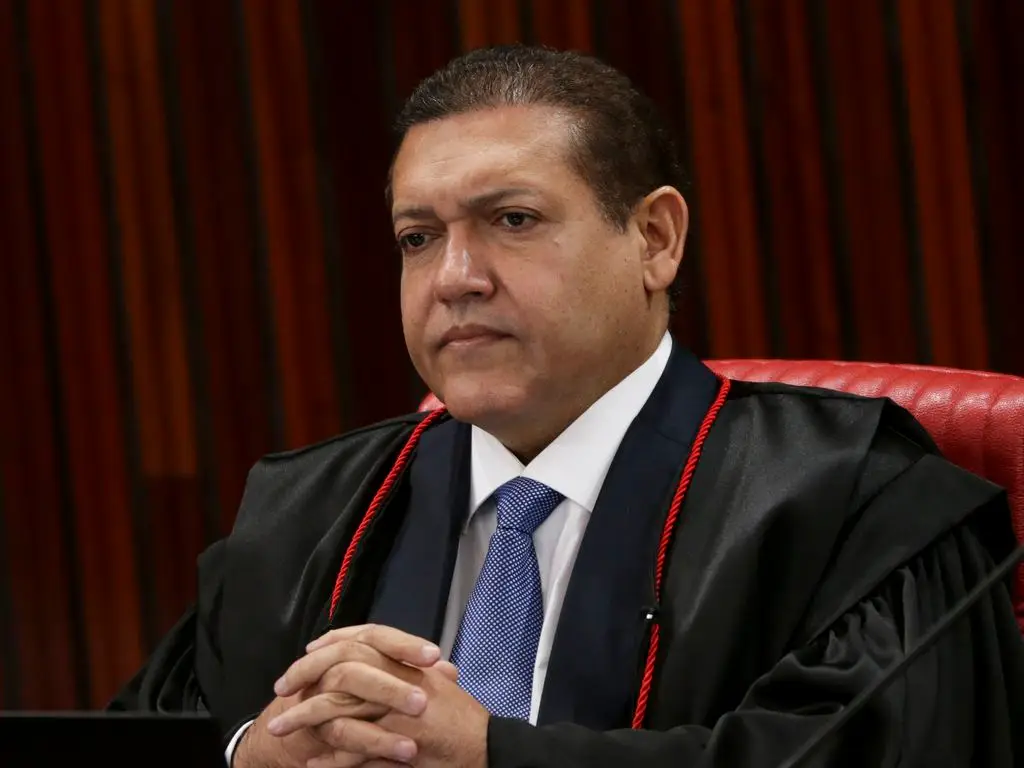
Nunes Marques is selected as rapporteur for the request to annul Bolsonaro’s conviction in the STF
The action was filed last Friday, 8th, and seeks to annul the 27-year prison sentence imposed on the former president for an attempted coup d’état.

Lula reaffirms support for Michelle Bachelet’s UN candidacy after meeting in Planalto
On social network X, the president stated that Bachelet has the credentials to command the UN because of her experience in command of the Chilean government
In practice, the understanding opens up space for serious infractions committed by judges to result in loss of position, without maintaining proportional salaries.
The position reignited an old debate about the effectiveness of the punishments imposed by the CNJ. Critics of compulsory retirement have argued for years that the measure ended up functioning as a lenient punishment, as dismissed judges continued to receive remuneration.
When justifying his decision, Dino stated that retirement is a social security benefit designed to guarantee decent living conditions for workers and should not be used as a sanctioning mechanism.
“There was legislative will, materialized in Constitutional Amendment nº 103/2019, to remove from the legal system the basis for the validity of compulsory retirement as an administrative sanction”, wrote the minister.
The AGU, however, assesses that the issue requires greater legal caution and questions the possibility of automatically expanding the effects of the decision to all disciplinary processes in the Brazilian judiciary.
According to the body, the constitutionality control carried out by Dino occurred within an individual process, known as diffuse control, which would prevent the creation of an abstract rule applicable to third parties who did not participate in the action.
The opinion also highlights that the original demand did not intend to review the entire disciplinary regime of the national judiciary. For Union lawyers, any structural change on the topic should occur in specific actions of concentrated control, aimed precisely at discussing the constitutional validity of norms in a broad sense.
