
Airbus GCAP European fighter: Faury opens the door to the consortium with the United Kingdom, Italy and Japan after the FCAS blockade
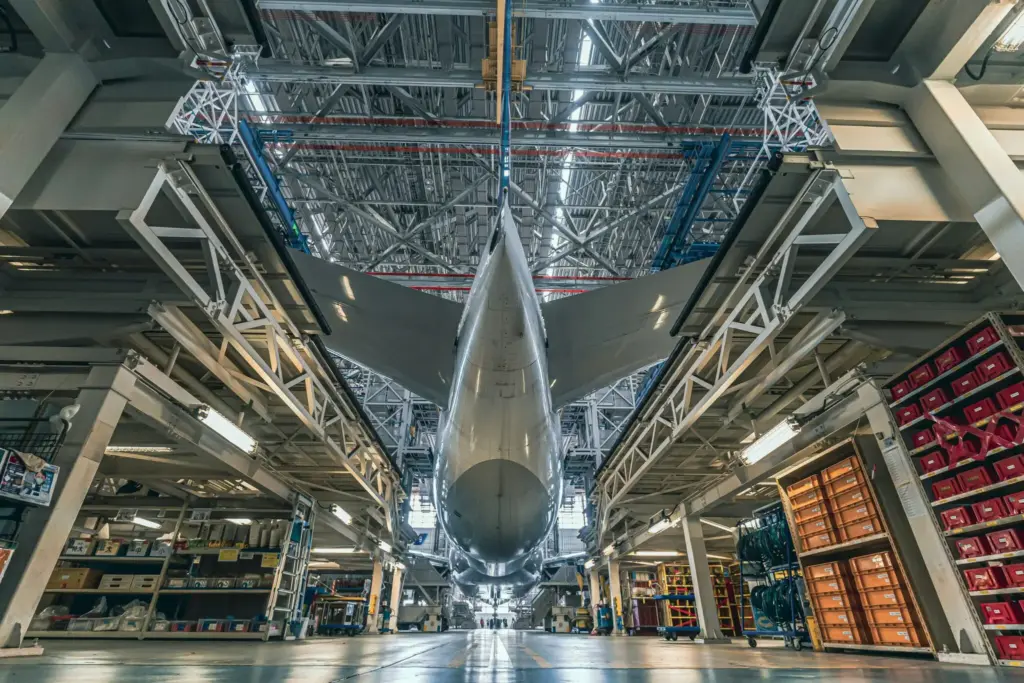
Guillaume Faury open the door to Airbus enter the GCAP of the United Kingdom, Japan and Italy after the FCAS block.
The CEO of the European manufacturer assured on Wednesday, in a call with the media in Paris, that joining the trilateral program would be “a solution” once the breakup of the Franco-German project is complete. «At Airbus we continue to believe in the need for a sixth generation fighter in Europe as a cooperation program. And we want to be part of that solution for Europe,” he added.
What is the GCAP and what remains of the FCAS
He Global Combat Air Program was born in 2022 as a consortium of United Kingdom, Italy and Japan to develop a sixth-generation multirole fighter scheduled to enter service in 2035. In July, the three governments closed a 4.6 billion pound contract—about $6.12 billion—to finance the next phase of development.
On the other side is the FCAS, the 100 billion euro Franco-German system launched in 2017, and buried in June after years of design disagreements between Airbus and the French company. Dassault Aviation. Airbus represented Germany and Spain in that consortium, so the breakup left the company without its main air combat program on the continent.
The German Chancellor Friedrich Merzconfirmed from Tokyo that Berlin considers “playing a role” in the GCAP. He did so on a two-day official visit in which he signed with the Japanese prime minister, Sanae Takaichia joint statement on economics, security and critical raw materials supply chains. Merz warned, however, that Germany will hardly decide before 2027 starts; Japan demands to maintain 2035.
The future European fighter is no longer decided in Paris and Berlin: it is negotiated between London, Rome and Tokyo, with Washington looking askance.
At the beginning of the month, the British Prime Minister Andy Burnham I had already said in Berlin that London welcomed the German entry. Canada participates as an observer, without financial commitment, and Saudi Arabia has shown interest in joining the project.
What is at stake in Spain if Airbus changes partners
Spain is not just any spectator in this game. It entered the FCAS as an industrial partner and its industry was embedded in a work distribution designed for a 100,000 million program that no longer exists: Airbus Spain, Indra and ITP Aero had packages assigned to the Franco-German fighter. If Airbus joins the GCAP, the question in Madrid It is whether Spain can follow in his wake. Today it is not in the consortium. It also does not operate the F-35, unlike Italy, and its combat fleet relies on the Eurofighter and legacy F-18s.
The industrial reading is uncomfortable: the GCAP is distributed between three governments and their national industries—BAE Systems, Leonardo, Mitsubishi Heavy Industries—and the entry doors are not infinite. The distribution is negotiated between three governments and their industrial champions, without extra chairs. Germany arrives with political weight and with Airbus as a bargaining chip. Spain arrives with Airbus too, but without a seat at the trilateral table. What we observe is that Berlin is using its status as a reference shareholder to renegotiate its gap, and Madrid needs to decide if it wants to go hand in hand or find its own fit.
Washington Logic
Washington look at this reorganization with interest and caution. NATO’s official message has been the same for two years: allies must spend more, and that spending must be translated into real capabilities and interoperability with the rest of the Alliance, which is the argument that the Trump administration repeats at each summit. A functioning sixth-generation European fighter purchased in Europe is, by that logic, a more capable partner. It is also, who doubts it, an alternative to the F-35.
The historical precedent is the Japanese FSX. At the end of the eighties, Tokyo wanted to design its own next-generation fighter and Washington pushed to turn the project into a joint development with General Dynamics, with limited technology transfer and the American industrial base protected. The logic has not changed: the United States accepts that its allies develop their own capabilities as long as the technological standard and the chain of command remain aligned. What we observe is that the GCAP, with the United Kingdom and Italy within it – two partners that already operate the F-35 – is born much closer to that standard than the defunct FCAS, weighed down by the dispute between Dassault and Airbus.
For Spain the calculation is double. First, industrial: staying out of the two large European sixth generation programs would mean giving up decades of workload in a sector that Brussels wants to strengthen and that supports thousands of qualified jobs. Second, political: Madrid It has defended European industrial autonomy without breaking with NATO, and that balance is only sustained if there is a program to distribute. The projection is clear: the German decision—Merz has set the horizon at 2027—will set the calendar, and Japan will hardly accept delays beyond 2035 due to its own countdown with the F-2. Between those two dates it is decided whether Spain enters the cast or remains watching from the stands.
Case File
- The case: Airbus is studying entering the GCAP consortium of the United Kingdom, Japan and Italy after the Franco-German FCAS program, of which Spain was an industrial partner, collapsed in June 2026.
- Key data: GCAP scheduled to enter service in 2035 and a £4.6bn contract signed in July; €100 billion FCAS launched in 2017 and scrapped due to disagreements between Airbus and Dassault Aviation.
- For Spain: Without a seat in the GCAP or F-35 in its fleet, Madrid needs an industrial fit in the new distribution before Germany closes its position, with 2027 as the horizon declared by Berlin.