
Alesp: Fabiana Bolsonaro generates crisis after blackface protest against Erika Hilton
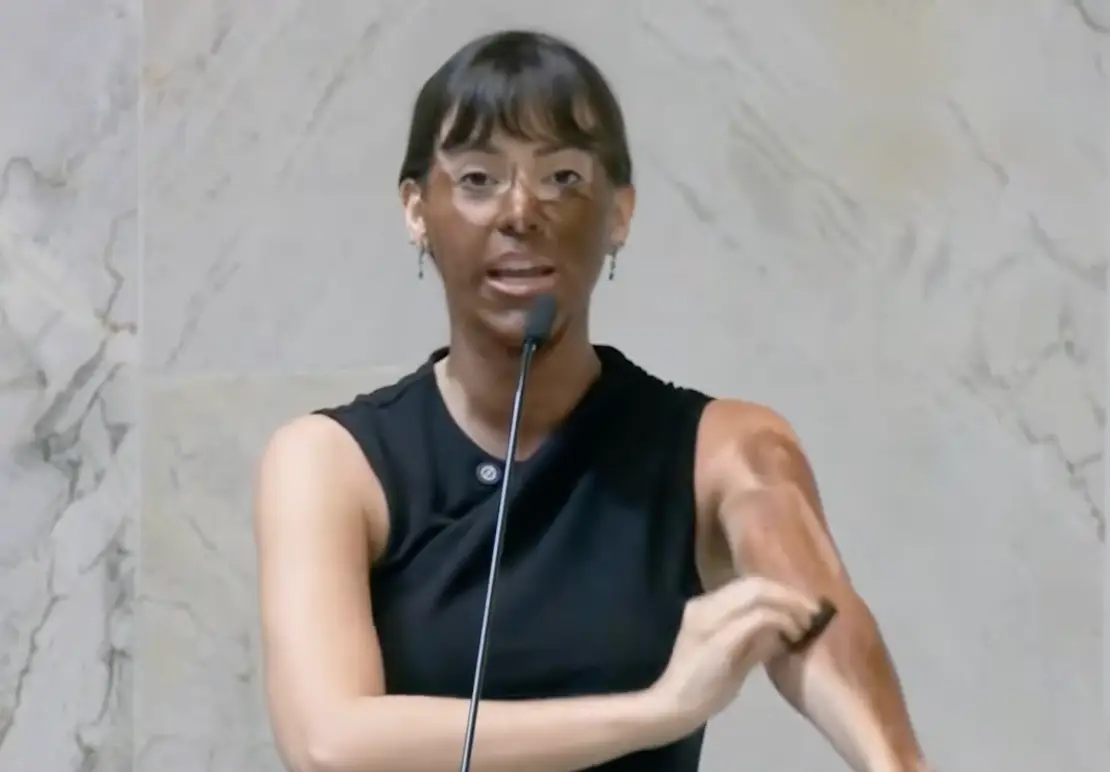
A protest held in the plenary session of the Legislative Assembly of São Paulo (Alesp) this Wednesday (18) provoked an immediate reaction from parliamentarians and should have disciplinary consequences.
State deputy Fabiana Bolsonaro (PL) wore dark makeup during a session to criticize the appointment of federal deputy Erika Hilton (PSOL-SP) to the presidency of the Commission for the Defense of Women’s Rights in the Chamber.
During her speech, Fabiana compared racial identity and gender identity, in a speech that generated immediate opposition in the plenary. “I’ve had the privileges of a white person my entire life. Now, at 32, I decide to put on makeup (…) And now, have I become black?”, she stated.
The protest was directed at the choice of Erika Hilton to head the committee in the Chamber, an issue that has mobilized political sectors and expanded the debate on representation and criteria for occupying institutional positions.
The comparison made by Fabiana Bolsonaro between racial and gender identity was the central point of criticism, with parliamentarians pointing out conceptual distortions and offensive potential in the speech.

Tarcísio arrives in Brasília and tries to contact Bolsonaro at home
Governor will also have a meeting with Flávio and Valdemar amid the uncertainty of the platform in SP
Despite her last name, Fabiana is not related to former president Jair Bolsonaro. Daughter of federal deputy Adilson Barroso (PL), she adopted the name “Bolsonaro” as a political strategy to signal ideological alignment.
The demonstration led to the intervention of congresswoman Monica Seixas (PSOL), who raised a question of order and classified the episode as a practice of racism, transphobia and blackface. She requested the interruption of the session and broadcast, in addition to measures against the speech.
After the episode, Seixas stated that he contacted the House Ethics Committee and registered a report at the police station, asking for “immediate accountability” from the parliamentarian.
Practice has a history associated with racism
The use of blackface — when white people paint their faces to represent black people — is widely criticized by social movements and academics due to its historical association with the reproduction of racist stereotypes.
The practice gained notoriety in the United States in the 19th century, in shows that caricatured the black population, and has since become considered a form of discrimination.
