
Apple won’t be the same in 2026: meet the new generation of rising leaders
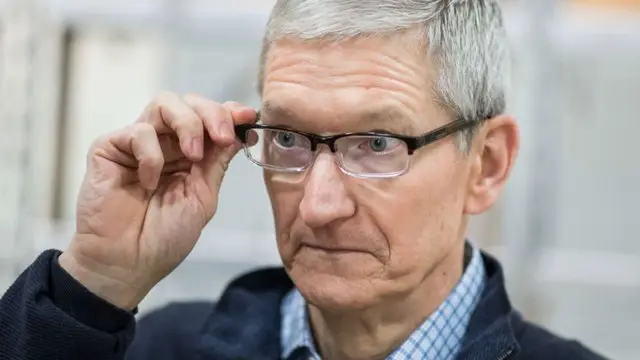
Apple is undergoing its most profound leadership transformation since the death of visionary CEO and co-founder Steve Jobs in 2011, with a wave of departures across artificial intelligence, design, legal, operations and finance that will reshape one of the world’s most valuable companies.
The iPhone maker announced last week that Lisa Jackson, vice president of environment, policy and social initiatives, will retire in January, while Kate Adams, who has served as general counsel since 2017, will retire at the end of next year. These departures add to a series of recent departures, including that of head of AI John Giannandrea, who announced his retirement this month, and that of Alan Dye, responsible for user interface design since 2015, who left the company to work at Meta.
Also read: After 14 years, Apple is preparing a change in command and a new successor for Tim Cook; see who it is
Bloomberg also reported that Johny Srouji, Apple’s chief chip architect for Apple Silicon, is considering leaving, but the 61-year-old executive cooled those rumors on Monday, saying, “I love my team, I love my job at Apple,” in a memo sent to employees.
Speaking of Meta, Mark Zuckerberg’s social media empire has been the biggest beneficiary of the exodus from Apple. Billy Sorrentino, another senior design director, decided to leave Apple for Meta along with Dye, and Ruoming Pang, who led Apple’s fundamental AI models team, also left the company in July for Meta, taking about 100 engineers with him.
Ke Yang, who ran Siri’s AI-powered web search, and Jian Zhang, AI robotics lead at Apple, also joined Meta this year.
But perhaps the most significant change at the top in 2025 was the departure of chief operating officer Jeff Williams, who decided to retire in July after 27 years at Apple.
He was long considered the leading candidate to succeed CEO Tim Cook. Also this summer, finance director Luca Maestri left his role to, from the new year, oversee corporate services, while Kevan Parekh took over as CFO.
Succession planning and the future of Tim Cook
The scale of the departures is impressive, but the timing appears to be linked to succession planning. Both Bloomberg and the Financial Times reported that Apple is stepping up efforts to prepare for Cook, who turned 65 in November, to possibly retire in 2026. He has led the company since 2011 and has seen its market value jump from about $350 billion to $4 trillion.
John Ternus, senior vice president of hardware engineering, emerges as the leading internal candidate to replace Cook. Ternus, 50, joined Apple’s product design team in 2001 and has overseen hardware engineering for every generation of the iPad, the latest line of iPhones and the AirPods. He played a crucial role in the transition from Mac to Apple Silicon.
Ternus’ selection would mark a shift from Apple’s recent operational focus under Cook. While Cook and Williams had operations-oriented backgrounds, with expertise in global supply chains, Ternus brings technical hardware knowledge.
His selection would signal that Apple is prioritizing product innovation as it faces challenges in new categories, such as Vision Pro, and competition in artificial intelligence.
The new AI leadership
Apple is bringing on Amar Subramanya, a veteran of both Google and Microsoft, to lead its AI efforts. Subramanya spent 16 years at Google, rising to head of engineering for AI assistant Gemini, before a brief stint at Microsoft as corporate vice president of AI.
He will oversee Apple Foundation Models, machine learning research and AI security, reporting to head of software Craig Federighi.
Subramanya’s hiring signals Apple’s determination to accelerate its AI capabilities after falling behind competitors like Google and OpenAI.
His experience building large language models at Google puts him in a position to help Apple develop competitive generative AI products, a critical field for technology companies in the coming years.
New paths in design
On the design front, Stephen Lemay is replacing Dye as head of user interface design. Lemay has been at Apple since 1999 and has played a key role in creating all of the company’s major interfaces, from the original iPhone to the latest operating systems.
Lemay’s promotion would have been enthusiastically received within Apple. Blogger and podcaster John Gruber, who has covered Apple for decades and has strong connections within the company, wrote that employees are almost “euphoric” about Lemay taking over.
“Sources I spoke to who worked with Lemay at Apple speak very highly of him, especially his attention to detail and impeccable workmanship,” Gruber wrote. “These qualities were sorely missed in the Dye era.”
This internal promotion stands in stark contrast to how Dye’s departure was received. He ran interface design for a decade, but faced internal criticism over design direction and product quality.
Lemay’s appointment represents a return to the design-first philosophy that characterized Apple’s previous phases of innovation.
Operations and supply chain
Sabih Khan, who has been at Apple for 30 years, took over as chief operating officer in July, replacing Williams. Khan joined the executive team as senior vice president of operations in 2019 and has led Apple’s global supply chain for the past six years.
He will also oversee environmental and social initiatives, assuming some of the responsibilities that were previously held by Lisa Jackson.
Khan’s appointment represents continuity in operations, while consolidating functions at the top executive level. His deep understanding of Apple’s manufacturing and logistics networks positions him to address ongoing supply chain challenges, especially as the company diversifies production beyond China.
Legal and regulatory leadership
Jennifer Newstead, current chief legal officer at Meta and former legal counsel at the US Department of State, will become Apple’s new general counsel on March 1, 2026.
In a consolidation of roles, Newstead will oversee both legal and government relations, effectively unifying the positions previously held by Adams and Jackson.
Newstead brings deep expertise in international law and regulation at a critical time for Apple. The company faces increasing scrutiny from antitrust authorities around the world, especially in the European Union and the United States.
The Justice Department and 16 attorneys general filed an antitrust lawsuit against Apple last March, alleging that its policies harm competition and make it difficult for consumers to switch phones. The trial does not yet have a date, but it is certain that Newstead will have his work cut out for him once it begins.
His appointment reinforces Apple’s focus on navigating complex regulatory environments while addressing challenges related to AI development and data privacy.
Her experience in government relations at Meta, where she managed engagement with policymakers around the world, makes her well-prepared to handle Apple’s evolving regulatory obligations.
Financial area
Kevan Parekh assumed the role of chief financial officer on January 1, 2025, replacing Luca Maestri, who had held the role since 2014. Parekh came to the post with in-depth knowledge of Apple’s financial operations, having previously worked in the company’s finance division.
His elevation to CFO continues Apple’s pattern of promoting experienced talent from within the company, although his tenure also reflects the need for financial stability in the face of market volatility and changing investor expectations.
Apple’s inflection point
The exits cover areas critical to Apple’s competitiveness. In addition to the visible casualties, the company lost key talent in AI research to Silicon Valley competitors, mainly Google, Microsoft and OpenAI.
Apple has tried to respond to this with high-profile hires like Subramanya, but the scale of the losses suggests internal friction or strategic shifts that have led executives to look for opportunities elsewhere.
The consolidation of responsibilities — especially with Newstead overseeing legal and government relations, and Khan heading operations and environmental initiatives — indicates that Apple is also streamlining its executive structure.
This may have been driven by cost concerns or a desire to create clearer lines of command as the company prepares for potential leadership changes.
Despite the turbulence, Apple presents these changes as strategic, not reactive. The transitions of Williams, Maestri and others were described as “long-planned successions” in official statements.
Cook has publicly praised the new leaders and emphasized continuity, even as Apple assembles what amounts to an entirely new leadership team for its next chapter.
Cook himself remains an unknown. Although some reports indicate that he could retire in 2026, the executive has been incisive about his plans.
In January, Cook told CNBC that he would never retire, at least not “in the traditional way,” adding that he would always like to work. Still, all credible reporting since that interview points to scenarios in which Cook would step away from day-to-day operations.
Looking ahead
Whether this new generation will be able to maintain Apple’s pace of innovation while facing competition in AI, regulatory pressure and the eventual departure of Cook himself remains the big question for the company’s future.
The success of Ternus, Newstead, Lemay, Khan and Subramanya will determine whether Apple can accelerate its AI capabilities, maintain design excellence, overcome regulatory challenges and sustain its position as one of the world’s leading technology companies.
The changes also reflect a shift in Apple’s strategic priorities. Under Cook, the company excelled in operational efficiency and managing global supply chains.
But under Ternus — if he actually takes over as CEO — Apple may begin to emphasize hardware innovation and product differentiation, especially in emerging categories where AI and design meet.
Subramanya’s appointment to lead AI, combined with Lemay’s rise in design, indicates that Apple is doubling down on what has always set it apart: innovative products with cutting-edge technology and thoughtful design.
Everything indicates that 2026 will be a decisive year for Apple, which must accelerate its AI efforts, launch new iPhone designs and face regulators to ensure its long-term positioning in a rapidly changing landscape.
For this story, Fortune journalists used generative AI as a research tool. An editor checked the information for accuracy before publication.