
At 36, she is a technology prodigy and head of a startup that Mark Zuckerberg covets
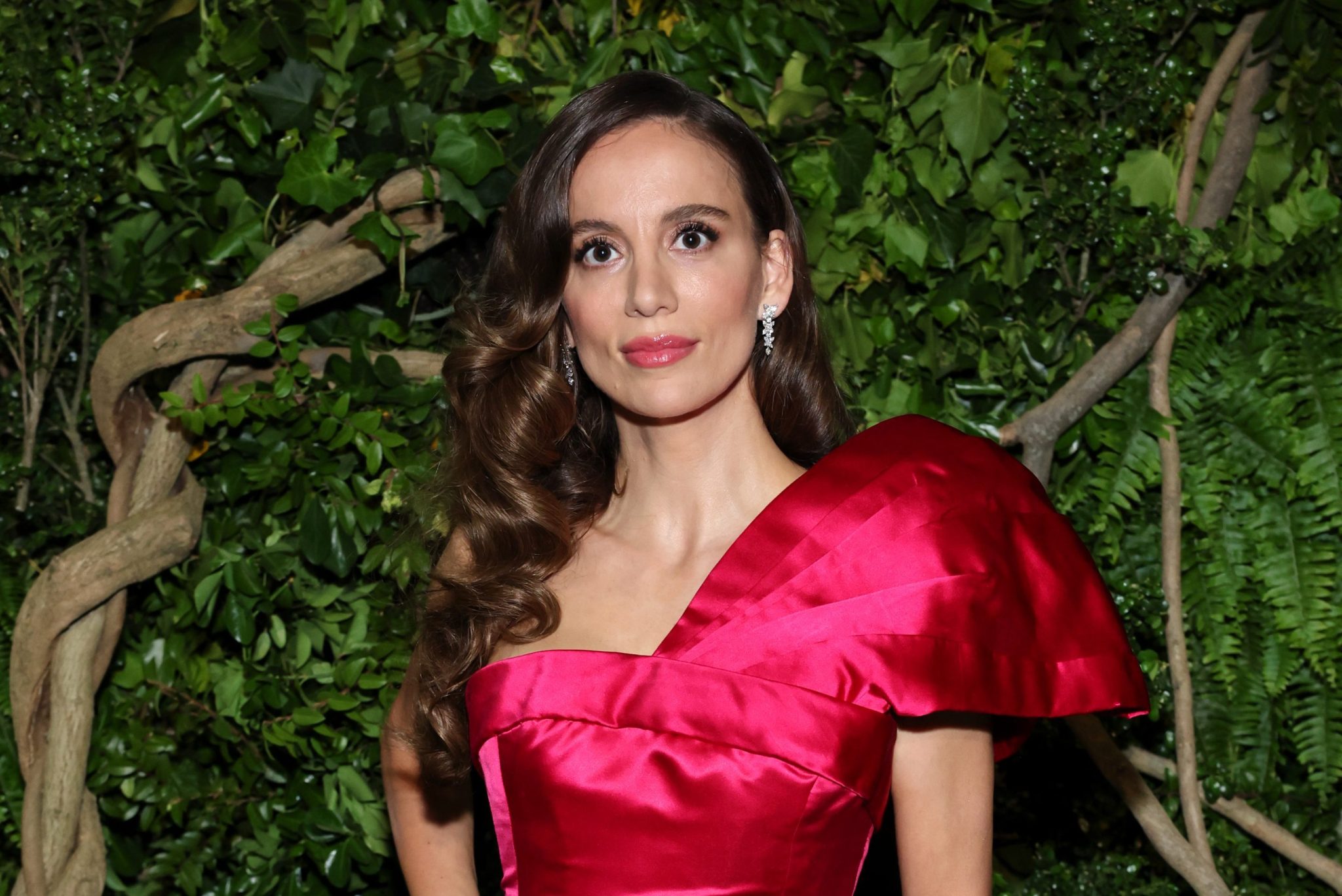
She may not be famous on the level of other technology executives like Tim Cook, Bill Gates or Mark Zuckerberg — not yet, at least — but Mira Murati is one of the most watched entrepreneurs in Silicon Valley.
The former chief technology officer at OpenAI, who left to launch her own AI startup last year, just celebrated a major milestone: her company, Thinking Machines Lab, this week launched its first product, called Tinker. Rather than being yet another generative AI chatbot like ChatGPT, Tinker is designed to help researchers and developers fine-tune AI models without having to manage a massive computing infrastructure.
Also read: JPMorgan CEO says savings generated by AI already equal the value invested in it
FREE TOOL
XP simulator
Find out in 1 minute how much your money can yield
The launch represents the first commercial product from Thinking Machines, which has raised record seed funding of $2 billion. The company’s estimated value is US$12 billion.
Murati, the 36-year-old Albanian-American engineer turned executive, has emerged as a defining figure in the AI boom. Her journey from mechanical engineering student to chief technology officer who helped create ChatGPT exemplifies the rapid transformation of both AI technology and the careers of those who build it.
More recently, her ability to resist Mark Zuckerberg’s aggressive recruiting efforts — including billion-dollar offers to acquire her company and co-opt her talent — solidified her reputation as a leader willing to chart her own course in an industry dominated by tech giants.
From Albania to the world stage
Born on December 16, 1988, in Vlorë, Albania, during the final years of the country’s totalitarian regime, Murati’s early life was shaped by political turmoil and economic uncertainty.
Her parents, both high school literature teachers, encouraged her academic pursuits, but Murati told Microsoft CTO Kevin Scott in 2023 that she had an “organic interest in math and science,” where she excelled in Olympiads and competitions throughout her schooling.
At age 16, Murati won a scholarship from United World Colleges — a program that brings together students from more than 80 countries to promote intercultural understanding and social responsibility — to study at Pearson College, on Vancouver Island, British Columbia (Canada).
Art and Engineering
After graduating from Pearson in 2005, Murati followed an unusual academic path that would prove prophetic for his later career. She enrolled in a dual degree program, completing a Bachelor of Arts in Mathematics from Colby College in 2011 and a Bachelor of Engineering in Mechanical Engineering from Dartmouth College’s Thayer School of Engineering in 2012.
This combination of liberal arts and engineering disciplines provided her with both analytical thinking skills and technical expertise, which would be useful in her later roles in Silicon Valley.
Murati’s professional journey began with a summer analyst internship at Goldman Sachs in Tokyo in 2011, followed by a brief stint as an Advanced Concepts engineer at Zodiac Aerospace from 2012 to 2013.
She joined Tesla the same year as senior product manager for the Model X program, contributing to the development of Tesla’s SUV project. In 2016, she joined Leap Motion, an augmented reality startup, as vice president of product and engineering.
For two years, she focused on advancing human-computer interaction technology, helping to shape the company’s product offerings and market strategy. This role positioned her perfectly for the next phase of her career in AI development.
The years at OpenAI
Murati joined OpenAI in June 2018 as vice president of applied AI and partnerships during a pivotal time for the organization. She quickly rose through the ranks, becoming senior vice president of research, product and partnerships in 2020, before being promoted to chief technology officer in 2022.
As CTO, Murati oversaw the development of some of the most transformative AI technologies of the modern era. She led teams that worked on ChatGPT, DALL-E, Codex, and Sora — products that fundamentally changed the way the public interacts with artificial intelligence.
His leadership was instrumental in scaling OpenAI from a research organization to one of the world’s leading AI companies.
In November 2023, Murati briefly found herself at the center of a Silicon Valley drama when she was named interim CEO following the sudden removal of Sam Altman by OpenAI’s board.
Although her tenure lasted just three days before she was replaced by Emmett Shear, who later stepped aside when Altman was reinstated, the episode highlighted her standing within the organization and the industry — and, given the media uproar, it ended up being the first time many people heard the name “Mira Murati.”
Recognition and controversy
Murati’s influence has been recognized across the technology industry. She was ranked 57th on Fortune’s list of the 100 Most Powerful Women in Business of 2023 and was featured on Time’s list of the 100 Most Influential People in AI in 2024.
In June 2024, Dartmouth College awarded her an honorary Doctorate of Science, recognizing her contributions to artificial intelligence, technology, and engineering.
However, Murati’s time at OpenAI was not without controversy. At a speaking event at Dartmouth’s Thayer School of Engineering, Murati made comments about the impact of AI on creative jobs that generated significant backlash.
“Some creative jobs might disappear, but maybe they shouldn’t have existed in the first place,” she said. Critics, including Dartmouth students themselves, have accused her of being insensitive to the concerns of artists and writers whose livelihoods are threatened by AI automation.
Despite the controversy, Murati has consistently advocated for responsible AI development and government regulation.
In an interview with Time magazine in 2023, she said: “It’s important for OpenAI and companies like us to bring this into the public consciousness in a controlled and responsible way. But we are a small group of people and we need a lot more input into this system and a lot more input that goes beyond technologies — definitely regulators, governments and all the other actors.”
Building the Thinking Machines Lab
In September 2024, Murati announced his departure from OpenAI to pursue his “own exploration,” publishing the note he shared with his coworkers at X.
“There’s never a perfect time to walk away from a place you value, but this time feels right. Our recent launches of speech-to-speech and OpenAl o1 mark the beginning of a new era of interaction and intelligence — achievements made possible by your ingenuity and skill,” she said. “I will be forever grateful for the opportunity to build and work alongside this remarkable team.”
Months later, in February this year, Murati officially launched Thinking Machines Lab, a corporation focused on developing AI systems that are more accessible, customizable and aligned with humans.
The startup has assembled an impressive roster of talent, recruiting approximately 30 researchers and engineers from leading AI companies, including former OpenAI colleagues, as well as experts from Google, Meta, Mistral and Character AI.
The team’s collective expertise and Murati’s track record enabled the company to raise $2 billion in funding, led by Andreessen Horowitz, with participation from Nvidia, AMD, Accel, ServiceNow, Cisco and Jane Street, giving his startup a valuation of $12 billion.
Resisting the giants of Silicon Valley
The true test of Murati’s leadership came when Meta CEO Mark Zuckerberg launched what the Wall Street Journal called a “full-scale raid” on his startup.
Zuckerberg reportedly approached more than a dozen employees at the 50-person company, offering packages ranging from $200 million to $1.5 billion over several years.
One researcher reportedly received an offer worth more than $1 billion, while others were promised earnings of between $50 million and $100 million in the first year alone.
The aggressive recruitment campaign targeted key figures including Andrew Tulloch, co-founder with Murati and a machine-learning expert who previously worked at Meta for more than a decade.
Despite the astronomical offers, not a single employee accepted Meta’s proposals — a remarkable display of loyalty in an industry where talent is often moved by financial incentives.
This resistance speaks to both Murati’s leadership and the team’s belief in Thinking Machines Lab’s mission. As she said when announcing the company’s funding: “We believe that AI should serve as an extension of individual initiative and, in the spirit of freedom, be distributed as broadly and equitably as possible.”
Murati’s present and the future of AI
With the launch of Tinker, Thinking Machines Lab is betting that the next frontier in AI lies not in building ever-larger models, but in democratizing access to advanced capabilities through fine-tuning tools.
The platform currently allows users to customize Meta’s Llama and Alibaba’s Qwen models using just a few lines of code, dealing with the complexity of distributed training that typically requires specialized expertise and significant computing resources.
“We believe (Tinker) will help empower researchers and developers to experiment with models and make cutting-edge capabilities much more accessible to everyone,” Murati told Wired.
The company plans to release additional scientific findings to help the broader research community understand cutting-edge AI systems.
As the AI industry continues to evolve at breakneck speed, Murati’s approach offers a compelling alternative to the “winner-takes-all” dynamics that have come to define Silicon Valley.
Whether Thinking Machines Lab can maintain that independence while scaling its technology and influence remains to be seen, but Murati’s track record suggests it’s building something designed to last.
Last June, Murati discussed a wide range of topics at the “Fortune” Most Powerful Women dinner in San Francisco, including the Apple partnership, security and privacy concerns, how she discovered her love for AI and more.
