
AtlasIntel in São Paulo: Nunes has 54.8%, and Boulos, 42.2% in the 2nd round
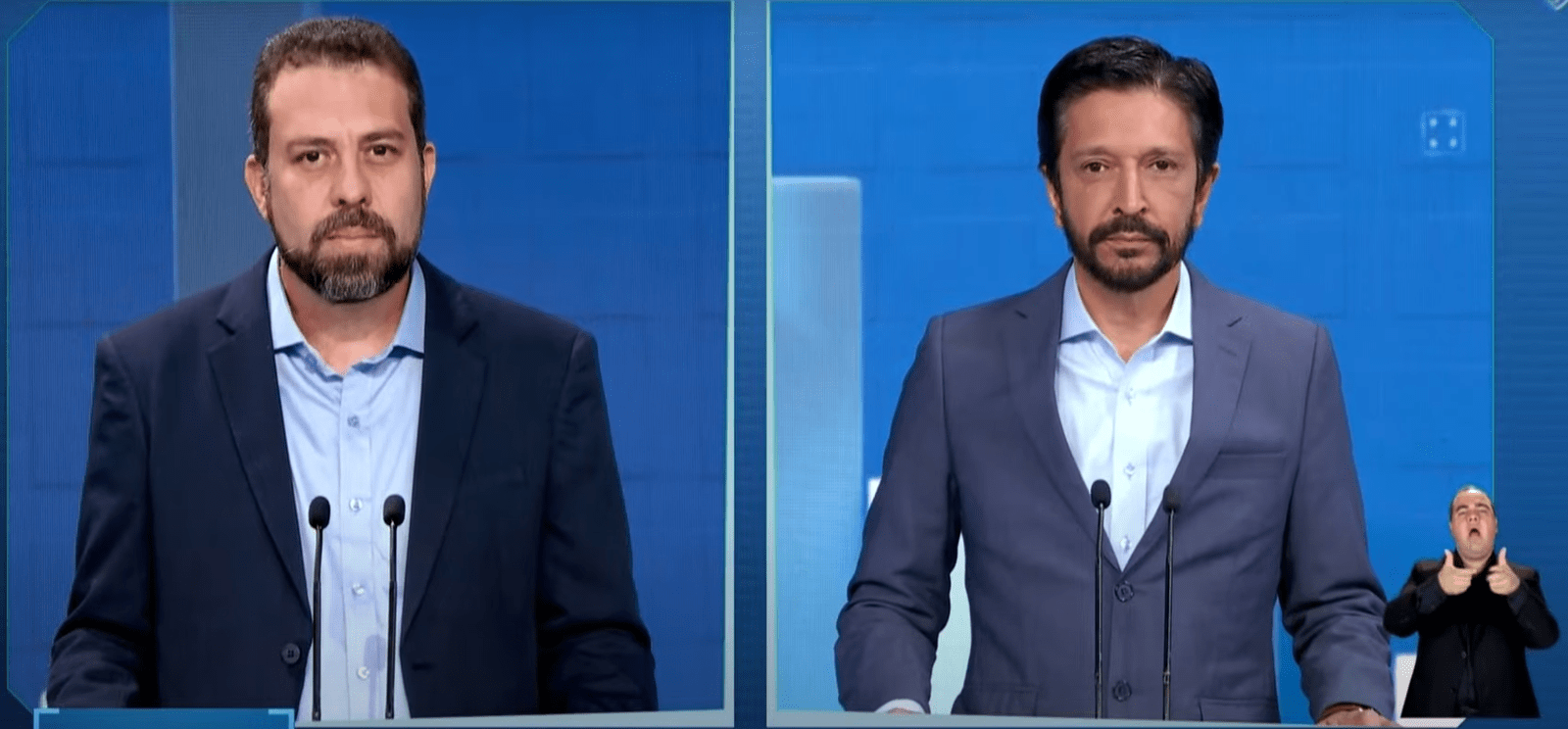
A new survey released by the Atlas institute, this Monday (21), shows that the mayor Ricardo Nunes (MDB) leads the voting intentions of voters in the city of São Paulo (SP), with 54 8% in the second round.
His opponent, federal deputy Guilherme Boulos (PSOL)marks 42.2% of the São Paulo electorate’s preference.
Blank and invalid votes total 2.1%, and those interviewed who were unable to answer, 0.8%.
Considering only valid votes — that is, disregarding voters who declared a blank, invalid vote or who did not know how to respond —, the current mayor accounts for 56.5% of voting intentions, compared to 43.5% for the federal deputy.
Vote migration
Among voters who voted for Pablo Marçal (PRTB) In the first round of elections, 84.4% declared their vote for Ricardo Nunes, while 11.1% were expected to vote for Guilherme Boulos.
The scenario is reversed in relation to the population that voted in Tabata Amaral (PSB) in the first stage of the election. Of the deputy’s voters, 73.9% say they intend to vote for the Psolist, while 20.3% for the Emedebist.
Image of candidates
Nunes’ image is better than Boulos’s for São Paulo voters: 45% of those interviewed say they have a positive view of the current mayor, while for 44% this image is negative.
In turn, 40% of those interviewed in the survey believe that the federal deputy’s image is good, compared to 59% who have the opposite perception of the psolist.
To try to turn the election around, Boulos reissues Lula-2002 and launches “Letter to the People of SP”
In the letter, Guilherme Boulos (PSOL) recognizes that left-wing political forces have stopped talking to a large portion of the electorate who intend to “find their own way of making a living”
The city’s biggest problems
The three biggest problems for the population of São Paulo, according to the Atlas survey, are crime (64.6%), health (52%) and education (39.6%).
The issues that least affect the city are pollution (7.4%), urban cleaning (6.4%) and bureaucracy and barriers to business (4.4%).
Government assessment
The institute also researched the approval of government leaders at the municipal, state and federal levels. Mayor Ricardo Nunes is approved by 42% of São Paulo voters, compared to 50% who disapprove of his administration. 8% did not know how to answer.
In turn, the governor Tarcísio de Freitas (Republicans) has 55% approval and 40% disapproval from São Paulo residents. 5% of respondents were unable to answer. The president Luiz Inácio Lula da Silva (PT) has the lowest approval rate among the three: 40%. His disapproval rate reached 57%, and only 3% were unable to give their opinion.
The search
The Atlas institute interviewed 2,000 voters in the city of São Paulo between October 15th and 21st. The survey’s margin of error is plus or minus 2 percentage points, and the confidence index is 95%. The research is registered with the Superior Electoral Court (TSE) under number SP-02116/2024.
How is AtlasIntel research done?
AtlasIntel research conducts interviews using technology known as Random Digital Recruitment (RDR), in which respondents are recruited organically during routine web browsing in geolocated territories on any device (smartphones, tablets, laptops or PCs).
This type of research tends to be more affordable in terms of price compared to face-to-face or even telephone surveys, but there is controversy in academia about the risk of possible “selection bias” of respondents.
On the other hand, AtlasIntel argues that this model, compared to in-person surveys at home or at flow points, “avoids the possible psychological impact of human interaction on the respondent” and favors the collection of more reliable responses.
Compared to the telephone model, the institute says that internet surveys allow “a granular mapping of non-response patterns, so that biases arising from variable non-response rates can be adequately addressed during the process of constructing each sample”.
(With Estadão Content)