
Batteries that no one trusted are supporting the world’s power grids
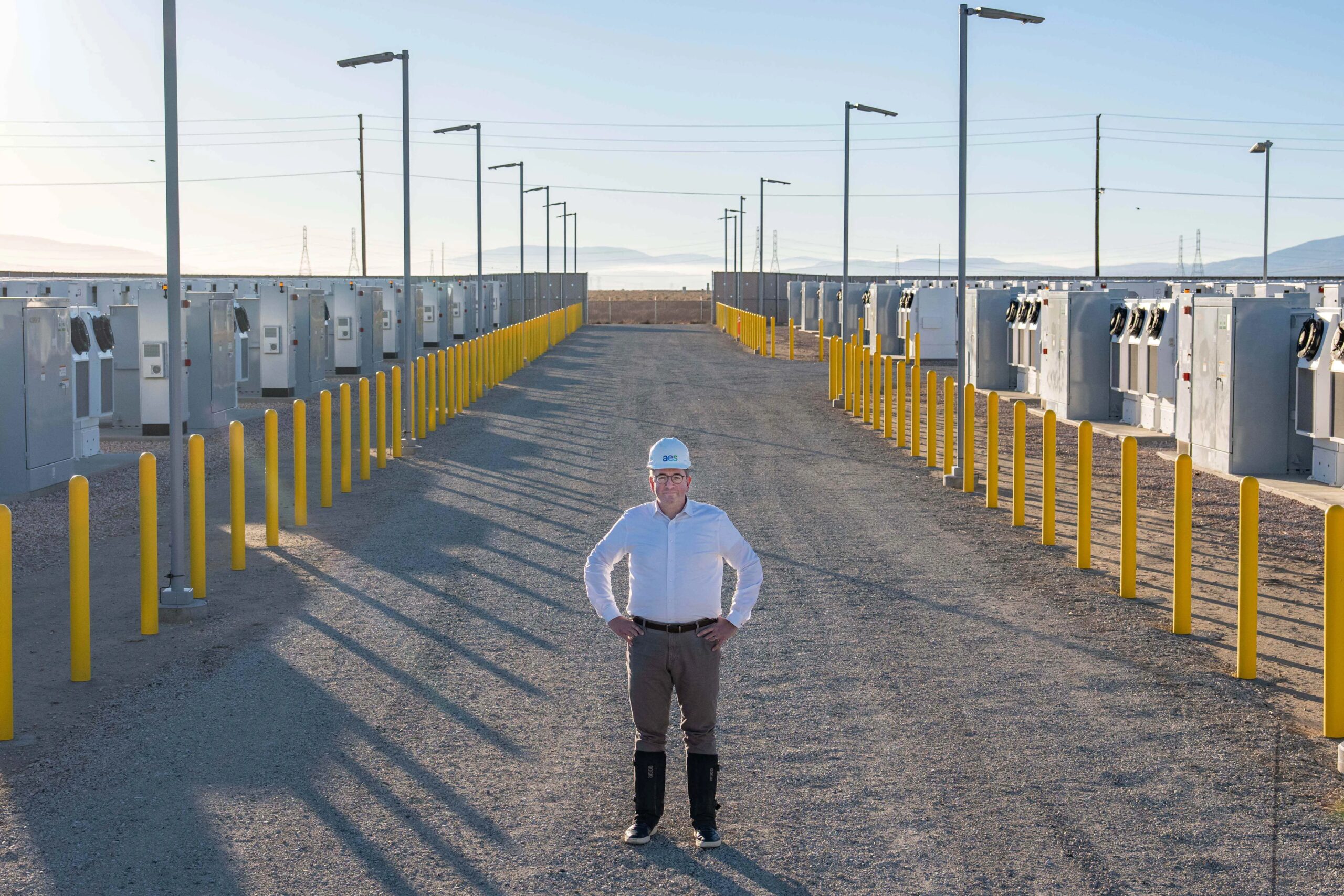
Antofagasta, Chile — Lithium-ion batteries, which power everything from cell phones to cars, are increasingly saving power grids around the world.
Container-sized batteries are being connected to power lines and installed alongside solar panels and wind turbines. They store energy when it is abundant and cheap and release it when consumption soars, helping to reduce the need for expensive power plants and transmission lines.
Also read: Tesla recalls 10,500 Powerwall 2 batteries in the US due to fire risk
American researchers invented the lithium-ion battery in the 1970s and later showed that the devices could help the power grid. But for a long time, batteries made little headway because grid operators and utility executives dismissed them as expensive and risky.
One of the first breakthroughs came about 15 years ago, when engineers from a US energy company installed one of the first grid-connected lithium-ion batteries in a desert, almost 2,700 meters above sea level, in Chile.
Challenging conventional ideas about how the electrical system should work, that team helped prove that batteries could make electrical grids more stable and reliable.
The concept of storing energy was not new. Thomas Edison developed alkaline nickel-iron batteries aimed primarily at industry and the first electric vehicles.
Several companies tried other technologies, such as sodium-sulfur, which did not gain much space. And some utilities have long pumped water uphill and then released it downhill to generate electricity.
But these systems were relatively limited. Lithium batteries installed in the Atacama Desert in 2009, by comparison, are now used around the world.
The rapid growth of wind and solar energy and the growing demand for electricity from data centers are making batteries indispensable. They store surplus renewable energy when there is no wind or sun and maintain the balance between supply and demand.
Consider California. In recent years, state officials have frequently asked residents to reduce electricity use on hot summer days to avoid blackouts.
But there have been no such alerts since 2022, largely because batteries have allowed California to use its abundant solar power until late in the afternoon. Over the past seven years, the state has added 30 times more storage capacity than it had in 2018.
The rest of the world has also seen impressive growth, according to the International Energy Agency, a multilateral organization in Paris.
The boom was made possible by a staggering 90% drop in the cost of batteries over the past 15 years, as new factories came online. China is by far the largest battery manufacturer, but Europe, India and the United States have also been expanding production.
“Batteries are changing the game before our eyes,” Fatih Birol, executive director of the International Energy Agency, said recently.
A bumpy start
The use of batteries in the electrical grid was not simple.
A Virginia company called AES began testing grid batteries in Indiana, Pennsylvania and California as early as 2008, but U.S. power providers only started using them commercially two years later. The pace was slow for a while.
“There was no experience with battery storage,” said Carla Peterman, a former member of the California Energy Commission and now executive vice president of Pacific Gas & Electric, the state’s largest utility.
“It was a bit of chicken and egg logic: There weren’t enough batteries installed to really say this could be an important part of the power system.”
But some Americans clearly saw the benefits of batteries. One of them was Christopher Shelton, an executive at AES, which owns dealerships and plants around the world.
He began studying lithium-ion batteries when his bosses asked employees to submit proposals for a “billion-dollar idea.”
Shelton said he believed batteries could reduce the need for power plants that utilities fire up only when demand peaks.
“Why build an asset that you wouldn’t use more than 5% of the time?” Shelton said. “We were saying batteries should be an alternative to peaking plants.”
He first installed battery cells in a discrete electrical substation outside Indianapolis, a city known for its 500-mile car race.
His company later connected another battery in Norristown, Pennsylvania, at an operations center of the country’s largest grid operator, PJM Interconnection. The Los Angeles area was connected soon after, followed by a larger battery for the Indianapolis grid.
Although his tests were successful, they did not sufficiently impress many American utility executives.
The reaction was typical of an industry that prides itself on maintaining what it knows best: large coal, gas and nuclear plants. Anything else was generally treated as a threat that could cause blackouts.
“Testing on the Moon”
Almost nothing but the occasional desert fox lives on the arid plateau in Chile where AES set up its battery project. The location is several hours from the two nearest airports, in Calama and Antofagasta.
After landing, visitors must drive at least four hours to the salt flats of the Atacama Desert, where workers collect lithium — an essential ingredient for batteries.
The AES camp is another hour further. It sits on a rocky, unpaved trail lined with blown-out tires. Although temperatures in late spring and early summer can reach around 27°C, nights can border on freezing.
“It was like taking the battery and testing it on the Moon,” said Joaquín Meléndez, an engineer who led the AES project there under Shelton’s supervision.
In the early 2000s, Chile faced an energy crisis because Argentina, its main supplier of natural gas, was unable to deliver enough.
This has left Chile — which has no fuel sources of its own — with insufficient energy for its population and its copper, iodine and lithium mines.
Chile was forced to rely on power plants that burned expensive imported coal. But these plants could not be easily turned on or off, and the needs of Chilean mining companies varied greatly.
That’s where batteries came in. While a coal-fired power plant can take about 12 minutes to come into operation, batteries can discharge energy almost instantly. By combining the two, engineers realized that batteries could provide the electricity mines needed while the plants warmed up.
Meléndez worked 16-hour days for six months to connect the first commercially available lithium-ion battery to an electrical grid. This equipment is still standing, although most of its functions have been taken over by newer, more efficient and affordable units.
The project was immediately successful, helping to keep the electrical system stable when mining operations caused spikes that previously led to failures and blackouts.
Over the past decade, batteries have helped Chile use less coal. Last December, the country got more than 40% of its electricity from solar panels and wind turbines, up from 19% five years earlier, according to Ember Energy Research, a nonprofit organization.
Australia, the United Kingdom, China, India and other countries have also been adding lots of renewable energy and batteries.
Shelton said even he was surprised by the recent growth in batteries. “We underestimated how much prices would drop.”
