
Boxing robots and fight with non -lethal taser knives are new fashion in the USA
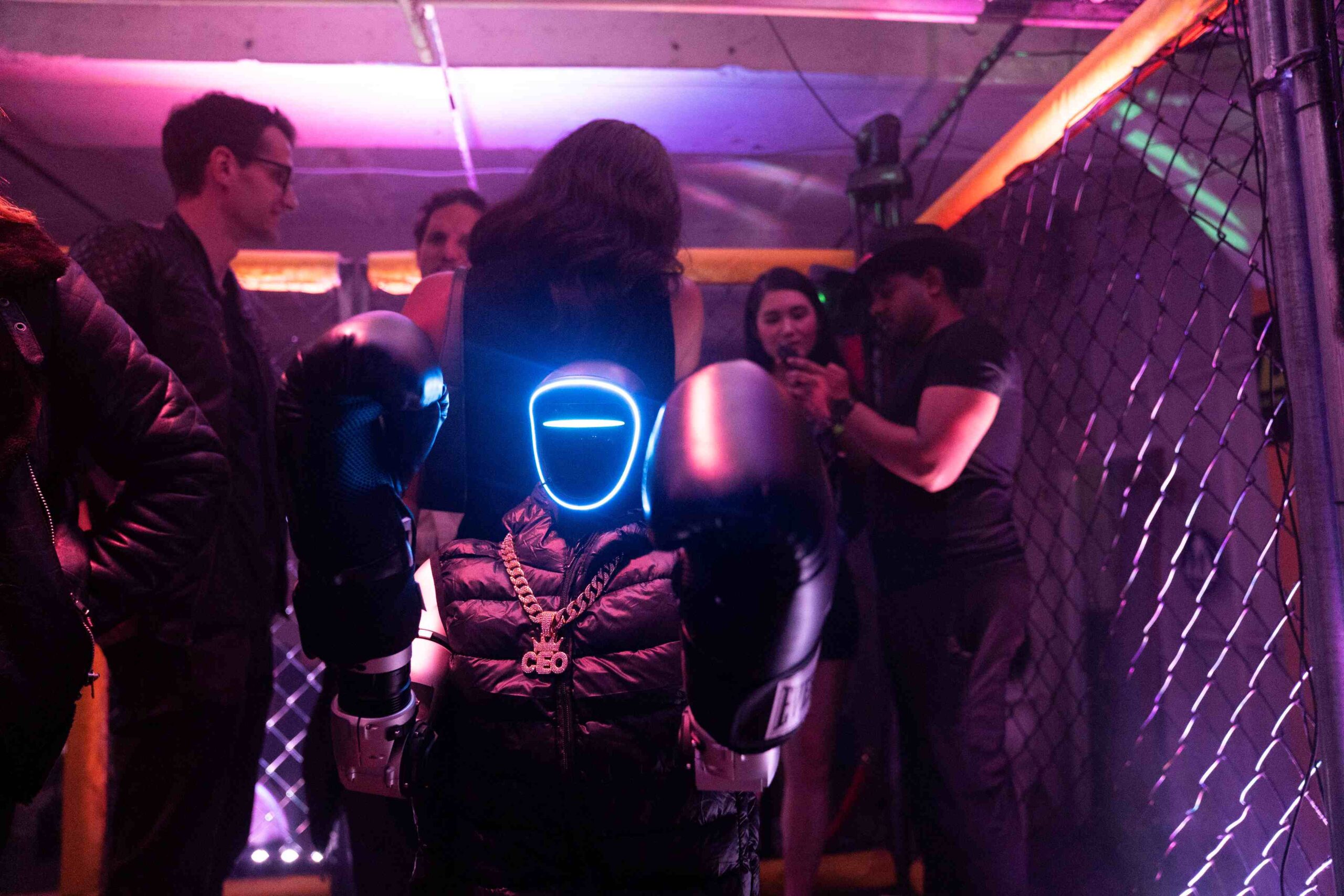
Inside an underground boxing ring, a blow by a humanoid robot made the other robot fell back. The audience roared as the referee hit the mat for the knockout count. With a serious voice, the announcer incited the crowd to raise his fists and scream: “Robot fight club! Robot fight club!”
“It is, honestly, very surreal that this is happening in 2025,” said Jonathan Moon, 26, CEO of Budbreaka startup that builds robots to inspect vineyards, and which came to the night of fighting. “It seemed something that should be happening in 2040.”
Read too
Free tool
XP Simulator
Learn in 1 minute how much your money can yield
- How can chatgPT organize your financial life?
- Prompt: Understand what it is, how it works and examples
Some participants were dressed in costumes steampunk (Retro-Futuristic), while others-probably coming straight from work-wore old Microsoft Windows T-shirts.
AI boom heats night fun
False notes of $ 100 lined the box of the boxing ring while the song Techno played loudly and Neon lights illuminated flying autonomous car posters.
It was just another Friday night in San Francisco. As long as the Artificial Intelligence Boom It cheered the region, it boosted a resurgence of events and live culture.
With the influx of people to the city, technology workers have sought memorable experiences for relief from their laptops.
There were struggles of humanoid robots and events to build taser knives (non -lethal electric shock), which are later used in melee combat. The blade is rubber and wrapped in aluminum ribbon.
A performic male contest – a social media trend of men drinking Matcha green tea and using the Chinese Labus and (large bags) dolls – was recently held at Alamo Square de São Francisco and tried by AI. And engineers took over bars to duel on (questions and answers) with AI -theme.
Grows search for entertainment
Victor Pontis, Cofunder and CEO of Lumaan event hosting platform, said that “many more people” researched the site in search of activities in San Francisco last year.
Almost 2,000 live events They were held in the city last month, including and group dinners, almost double than a year ago, and the number of events focused on AI increased more than four times to 578, according to Luma.
Many of the live events are not traditional meetings of. They said they were looking for community and ways to connect with people out of work.
This is what motivated Chris Miles, 38, software engineer at Quadrican AI startup, participating in a recent AI -theme night.
“I would like to go to more serious things like this,” said Miles, who searches Luma in search of new events and wants to participate in one week.
Demand greater than the supply of fun
Event organizers and party hosts said they were dealing with more demand than expected.
On a night of, the Signalfirea company, rented the bar Standard Deviant Brewing in the district of Mission, in the city.
The place, which is a few blocks from the OpenThe creator of ChatgPT and sponsor of the event was larger than a previous place after more than 600 people said they wanted to attend.
Only about half of those interested were approved by the event organizers.
That night, no question was too much for the crowd, predominantly software engineers. One question included a line of code and asked for the correct output ().
Willingness to do something strange and special
If they “only have a day and from 9 pm to 11 pm to go out and do something, they want to do something strange and special that it seems that it could only happen in San Francisco,” said Josh Constine, 40, a partner at Signalfire.
Steve Jang, managing partner of Kindred Venturesan investment company said San Francisco always had and (periods of ascension and fall), and each brought a wave of social activities that reflected the latest technological advancement.
Thirty years ago, during the pontocom boomhe said, his friends gathered to watch primitive robots fight in the neighborhood Fort Mason from San Francisco.
Now it was happening again, and “just rhymes with everything the city has always represented,” he said.
Child -size boxers robots
Back in robot boxing ring, the crowd didn’t get tired of humanoids, who had the size of a third -grade child and had equivalent dexterity.
Vitaly Bulatov and his wife, Xenia Bulatov, began the event Ultimate Fighting Bots In July to offer people a “not boring technology event,” he said.
The couple manages the robotics floor in Frontier Towera 16 -story technology community in the neighborhood Mid-Market from San Francisco, where it occurred.
The most recent fight, which was broadcast live, featured six robots from Chinese companies UNITEE ROBOTICS and Booster Roboticsprovided by a robotics company based in Singapore, the Frodobots there.
Vitaly Bulatov said that the humanoids, which their team programmed in a personalized way for the fights, cost from $ 30,000 to $ 60,000 ($ 320,000) each.
A ticket for the event – which was hard to get – cost $ 100 and included an escort.
The collection was intended for the decoration of the place and the payment of those who organized the show, although the ultimate goal were to create a series of profitable sporting events, said Xenia Bulatov.
Robots as real life characters
The robots, who were led by people with video games, had stories, names, fantasies and authoritarian coaches interpreted by actors.
A humanoid, Googlordhe was a Google intern wearing a multicolored pinecoma hat.
Another called Peuter Steel – A joke with the name of investor Peter Thiel – wore a “CEO” chain necklace and a black vest.
In the final round, Peuter Steel fought a humanoid with a dress called Waifu.exea reference to the Grok AI companion of Elon Musk da thin.
“This is the height of San Francisco,” said Carter Crouch, 32, a former Amazon data analist who traveled from Los Angeles to see the fight in San Francisco.
The next robot boxing fight is on October 3, the Bulatoovs said. Although some fear the robots, said Xenia Bulatov, the humanoids aroused an emotional reaction.
Organizers wanted to give people a place to have fun and promote “Real Life Relationships”.
“We put on these robots and make them look more human,” she said. “And we involve them in a very human activity to which people naturally have a tendency to connect.”