
COP30-Summit closes difficult climate deal that ignores fossil fuels
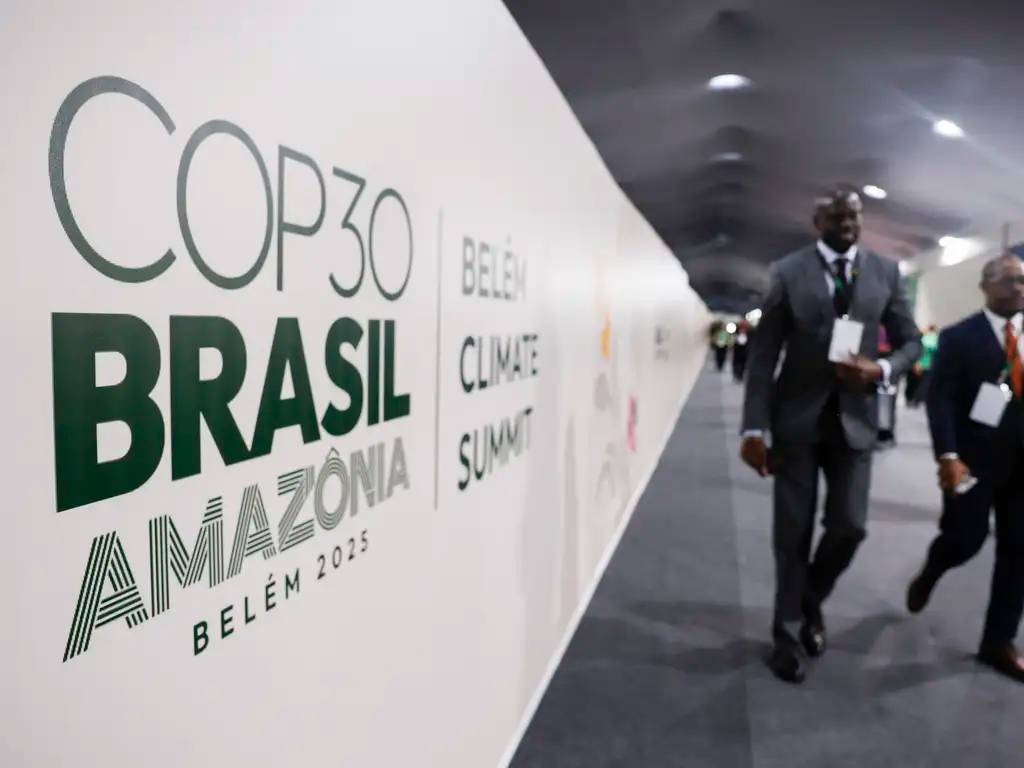
BELÉM (Reuters) – Brazil’s COP30 presidency has struck a compromise climate deal that increases funding for poor nations dealing with global warming but omits any mention of the fossil fuels that drive it.
By securing the agreement, Brazil sought to demonstrate global unity in addressing the impacts of climate change, even after the world’s largest historical emitter, the United States, refused to send an official delegation.
However, the agreement, which reached overtime after two weeks of contentious negotiations in the Amazon city of Belém, exposed deep disagreements over how future climate action should be carried out.
After closing the agreement, the president of COP30, André Corrêa do Lago, acknowledged that the negotiations were difficult.
“We know that some of you had bigger ambitions for some of the issues at hand,” he said.
Several countries objected to the fact that the summit ended without stronger plans to control greenhouse gases or address fossil fuels.
Some of the criticism came from Brazil’s neighbors in Latin America, with several objections made by Colombia, Panama and Uruguay before Corrêa do Lago suspended the plenary for further consultations.
After about an hour, he resumed the session and said that the decisions made would be maintained.
Noting that fossil fuels are by far the biggest contributor to planet-warming emissions, Colombia’s negotiator said her country could not agree to a pact that ignored science.
‘A consensus imposed under climate denialism is a failed agreement’, stated the Colombian negotiator.
The three countries said they were not opposed to the overall COP30 political agreement, but to one of the other, more technical negotiating texts that the countries were expected to approve at the end of the summit, along with the main agreement.
The three joined the European Union in demanding that the deal include language about transitioning away from fossil fuels, while a coalition of countries, including top oil exporter Saudi Arabia, said any mention of fossil fuels was off limits.
After tense overnight negotiations, the EU agreed on Saturday morning not to block a final deal but said it did not agree with the conclusion.
“We should support (the agreement) because at least it is going in the right direction,” European Union Climate Commissioner Wopke Hoekstra told reporters before the deal was sealed.
Panama’s climate negotiator, Juan Carlos Monterrey, said before the final plenary that his country was not satisfied with the outcome of the summit.
‘A climate decision that can’t even say ‘fossil fuels’ isn’t neutrality, it’s complicity. And what is happening here transcends incompetence,’ said Monterrey.
INCREASED FINANCING
The summit also launches a voluntary initiative to accelerate climate action to help countries meet their existing pledges to reduce emissions, and calls on rich nations to at least triple the amount of money they provide to help developing countries adapt to a warming world by 2035.
Developing countries argue that they urgently need resources to adapt to the impacts that are already occurring, such as rising sea levels and worsening heat waves, droughts, floods and storms.
Avinash Persaud, special advisor to the president of the Inter-American Development Bank, a multilateral lender focused on Latin America and the Caribbean, said the agreement’s focus on financing is important as climate impacts increase.
‘But I fear the world still cannot more quickly release subsidies to developing countries responding to loss and damage. This goal is as urgent as it is difficult,’ he said.
Several countries, including Sierra Leone, also opposed, in the final plenary, a relaxation of metrics that should be used in areas such as food security, in order to prepare for climate impacts.
Sierra Leone’s delegate said the agreed list of indicators ‘is not the list drawn up by experts and it is not a list that clearly tells our story’.
TEXT ON FOSSIL FUELS
The impasse between the European Union and the Arab Group of nations over fossil fuels caused talks to run past their Friday deadline, triggering all-night talks before a deal could be reached.
Corrêa do Lago said on Saturday morning that the presidency was issuing a parallel text on fossil fuels — as well as on forest protection — keeping it out of the main agreement due to a lack of consensus.
But he urged countries to continue discussing the issues.
Saturday’s agreement also launches a process for climate bodies to examine how to align international trade with climate action, according to the agreement’s text, amid concerns that rising trade barriers are limiting the adoption of clean technologies.
