
Exceptional measures by the Brazilian Judiciary threaten to become the rule, warns OAS
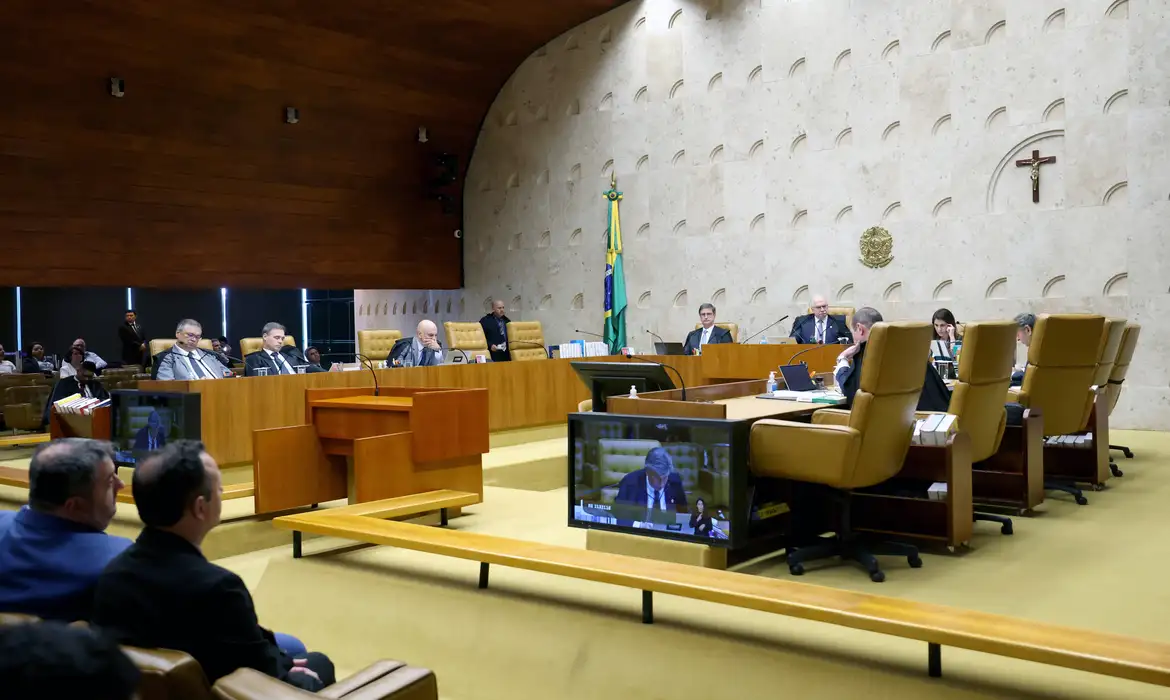
The Inter-American Commission on Human Rights (IACHR) published this Friday, the 26th, the Special Report on the situation of freedom of expression in Brazil. Although it states that the country has “strong and effective democratic institutions”, the document warns about the use of exceptional measures by the Judiciary and their possible effects on freedom of expression.
The report is the result of a visit that the IACHR’s Special Rapporteur for Freedom of Expression made to Brazil in February 2025, at the invitation of the federal government, in the context of the January 8 coup attempt.
OAS recommends changes to the STF and calls for review of crimes on freedom of expression
The organization’s report suggests decriminalizing contempt and curbing abusive use of justice after analyzing the post-8 January scenario
Led by special rapporteur Pedro Vaca Villarreal, the delegation visited Brasília, Rio de Janeiro and São Paulo between the 9th and 14th of February, listening to representatives from different sectors, including opponents of the current government, parliamentarians from across the political spectrum, human rights defenders, non-governmental organizations and journalists.
Right in the introduction, the document notes that Brazilian authorities, with the support of certain sectors of civil society, are sometimes reluctant to self-criticize and question the compatibility of restrictions on freedom of expression with inter-American standards:
“The defense of democracy cannot be achieved through exaggerated restrictions that amount to censorship. At the same time, freedom of expression must not be used to minimize the imperative to achieve truth, justice and accountability for attempts to change the constitutional order in 2023.”
Although it recognizes that the Federal Supreme Court (STF) played a “fundamental role” in initiating procedures to investigate attacks on institutions, the IACHR expresses concerns that these measures constitute a concentration of power.
“There is a risk of transforming a temporary solution, intended to be exceptional, into a lasting problem, by creating precedents that can be used to the benefit of potentially authoritarian regimes in the future”, states the delegation, for whom mitigating this risk requires the recognition of “any excesses in State action”.
The report notes that movements that contested the electoral results and Brazilian democratic institutions themselves demanded from the Judiciary the use of tools considered “extraordinary”, considered decisive to preserve institutionality. Even so, the IACHR urges all State bodies to ensure that these initiatives, whether for the defense of democracy or for any other legitimate objective, do not extend beyond what is necessary.
The document warns that, although the organization of serious crimes requires a response from the State, the Judiciary must be careful not to expand the scope of these extraordinary limitations to the point of “sanctioning legitimate political opinions”.
“In this context, the Rapporteurship draws attention to Brazil’s long-standing challenges, in different bodies of the Judiciary, with regard to restrictions on the expression of human rights defenders, journalists and political activists”, states the report. According to the text, these problems predate the investigations into the coup attempt, and the Judiciary must strive to create precedents that clearly differentiate illicit conduct from “legitimate criticism”.
For the delegation, the seriousness of the events that threatened Brazilian democracy in recent years reinforces the need for any restrictions on freedom of expression “to be more, and not less, compatible with international parameters for the protection and restriction of freedom of expression”.
Limitations on the use of social media accounts
The report mentions the existence of “intense debates” surrounding delays in investigation mechanisms, without conclusive information about their closure, and argues that the speed of processes is especially important when they involve precautionary or interlocutory limitations on freedom of expression.
As Estadão showed, the fake news inquiry, opened to investigate attacks on the Supreme Court and its ministers, is about to complete seven years and should remain open for an indefinite period of time.
The IACHR also reinforces that Brazilian authorities must continually assess whether precautionary measures that restrict freedom of expression are indispensable for the preservation of investigations or whether these limitations can be relaxed. The report states that, although the prolongation of investigations and the adoption of secrecy may be legitimate and useful, they “may also contribute to the uncertainty experienced in Brazil in relation to judicial mechanisms”.
Another point of criticism was the limitations on the use of accounts on social networks, used as part of the restrictive measures imposed on a provisional basis in inquiries, investigations and legal proceedings. These limitations include removing specific posts, removing accounts, prohibiting future potentially illegal posts, and prohibiting the creation of new accounts.
For the commission, state authorities, especially the Judiciary, must make efforts to notify users and platforms about the limitations imposed on the use of social networks and other channels of freedom of expression. Except in very urgent cases, the report explains, platforms and users must be able to challenge them before they start to be applied.
“Although exceptional circumstances may modify this notification, it must, as a general rule, contain an explanation of the order adopted and the illegality of the specified content.”
