
Family of fisherman killed in US military action in the Caribbean seeks justice
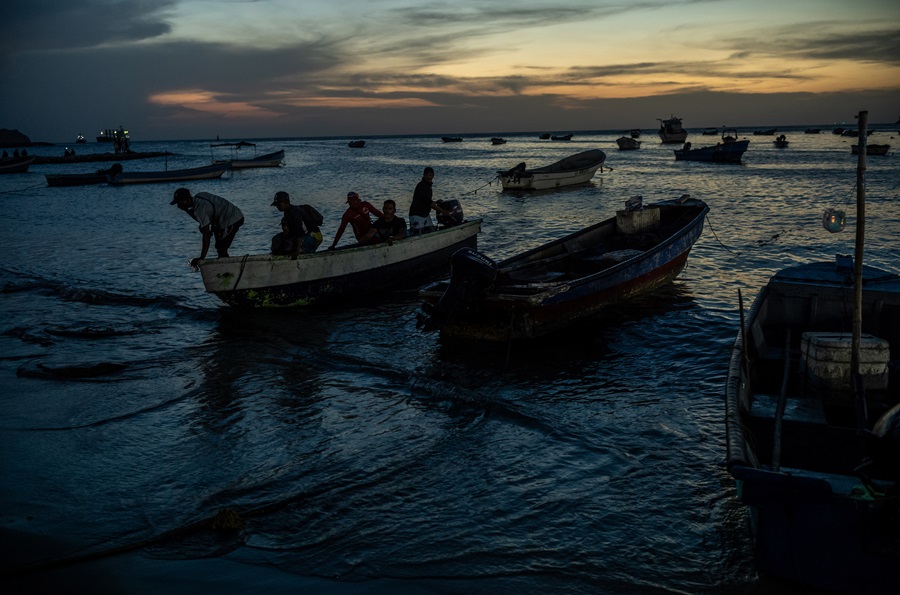
SANTA MARTA, Colombia — One day in mid-September, Alejandro Carranza, a Colombian fisherman who, according to his family, had been sailing the Caribbean in search of marlin and tuna for many years, called his teenage daughter. He told her he was going fishing, she said, and would be back in a few days.
He never came back.
Trump signals possible dialogue with Maduro after new operation near Venezuela
American president says Caracas “would like to talk” as government expands anti-drug offensive and designation as a terrorist organization
The day after he left, on September 15, his family, other fishermen and the president of Colombia, Gustavo Petro, claim that Carranza was killed in a US military attack on his boat. The uproar over what happened to him has triggered a dispute over the massive US military buildup in the Caribbean and the legality of deadly attacks on 20 vessels since September.
FREE TOOL
XP simulator

Find out in 1 minute how much your money can yield
“I never thought I would lose my father like this,” Cheila Carranza, 14, said last week, holding back tears as she looked at a photo of him on her cell phone in her grandmother’s crowded house, where she lives in one room with her mother and two brothers.
As the death toll from U.S. attacks on boats in waters near Latin America rises, tensions with Colombia, which has long been a key U.S. ally in the region, are also rising. So far, at least 20 US strikes have killed at least 80 people.
The attacks angered Petro, who accused the United States of murdering Carranza in one of the attacks. President Donald Trump responded by imposing sanctions on Petro and his family and cutting aid to the country. Last week, Colombia suspended intelligence sharing with the US until the Trump administration stops the attacks.
The Trump administration claims the attacks occurred on boats carrying illicit drugs that have killed thousands of Americans. But many legal experts in the U.S. and elsewhere say the attacks violate international law because those killed, even if suspected of crimes, posed no immediate threat.
Mutilated bodies began washing up on beaches in Trinidad and Tobago following US attacks in the region. The only two known survivors of the attacks are not from Venezuela, but from Colombia and Ecuador.
The Trump administration has described Venezuelan President Nicolás Maduro as the leader of a drug cartel and said privately that the goal of the U.S. military deployment, the largest in decades in Latin America, is to remove the authoritarian leader from power.
The Trump administration has presented no evidence, beyond descriptions of intelligence assessments and declassified portions of video footage, that any of the destroyed vessels were transporting drugs. At the same time, in Carranza’s case, there is no way to determine with certainty whether he was just a fisherman or was involved in drug trafficking.
Petro, at a press conference last month, said Carranza came from a traditional fishing family but “may have been very sporadically involved” in drugs.
Many fishermen in coastal communities and islands, he said, end up involved in drug transport because poverty leaves them few alternatives.
The attacks have left Carranza’s family shaken and searching for answers, offering a rare glimpse of the strain the U.S. military deployment can place on those left behind, as the death toll from the attacks continues to rise. The family hired an American lawyer, who said they were preparing legal action.
Katerine Hernández, mother of three of Carranza’s children, disputed Trump’s claim that the attack that killed her former partner, along with two others in the same boat, targeted “confirmed narco-terrorists from Venezuela.”
“Alejandro had nothing to do with Venezuela; he spent his whole life here in Colombia,” Hernández, 37, said in an interview in Santa Marta, a sunny city on Colombia’s north coast, where he met Carranza when he was 13.
Carranza, 42, also occasionally did work piloting boats for others in the waters around Santa Marta, his family and other fishermen said, raising the possibility that the boat he was on was transporting something illicit, with or without his knowledge.
But Hernández said Carranza was never involved in drug trafficking. “If he was some kind of narco-terrorist,” she said, “why would we be living in squalor instead of in a mansion?”
Despite splitting up several years ago, Hernández said she and Carranza have remained close. Until recently, she and the children lived with his parents. Although he rarely earned more than Colombia’s monthly minimum wage, about $382, she said, he always put food on the table for her and the children.
Now, Hernández said, they are surviving thanks to the kindness of relatives who also have next to nothing. She and her three children live at her mother’s house in Gaira, a rough area of Santa Marta, not far from the city’s glistening beaches.
Dan Kovalik, an American lawyer hired by Carranza’s family, said that even if Carranza had been suspected of piloting a boat carrying illicit drugs, it would have been illegal to kill him.
“If the people on the boat were suspected of drug trafficking, they should have been arrested, not killed,” said Kovalik, who plans to file a lawsuit in the United States and seek compensation for Carranza’s family.
The identities of the other two men on board the boat remain unknown.
“This case is important for two reasons,” Kovalik added. “First, the family deserves compensation for their loss.”
“Second, we want this case to help prevent these murders from happening again,” Kovalik said. “This is murder, and it is destroying the rule of law.”
Asked about Kovalik and Carranza’s family’s claims, the White House reinforced its claims that the people killed in the September 15 attack were “narco-terrorists.”