
Ford CEO says Tesla doesn’t have an “updated car”, and the real competitor is BYD
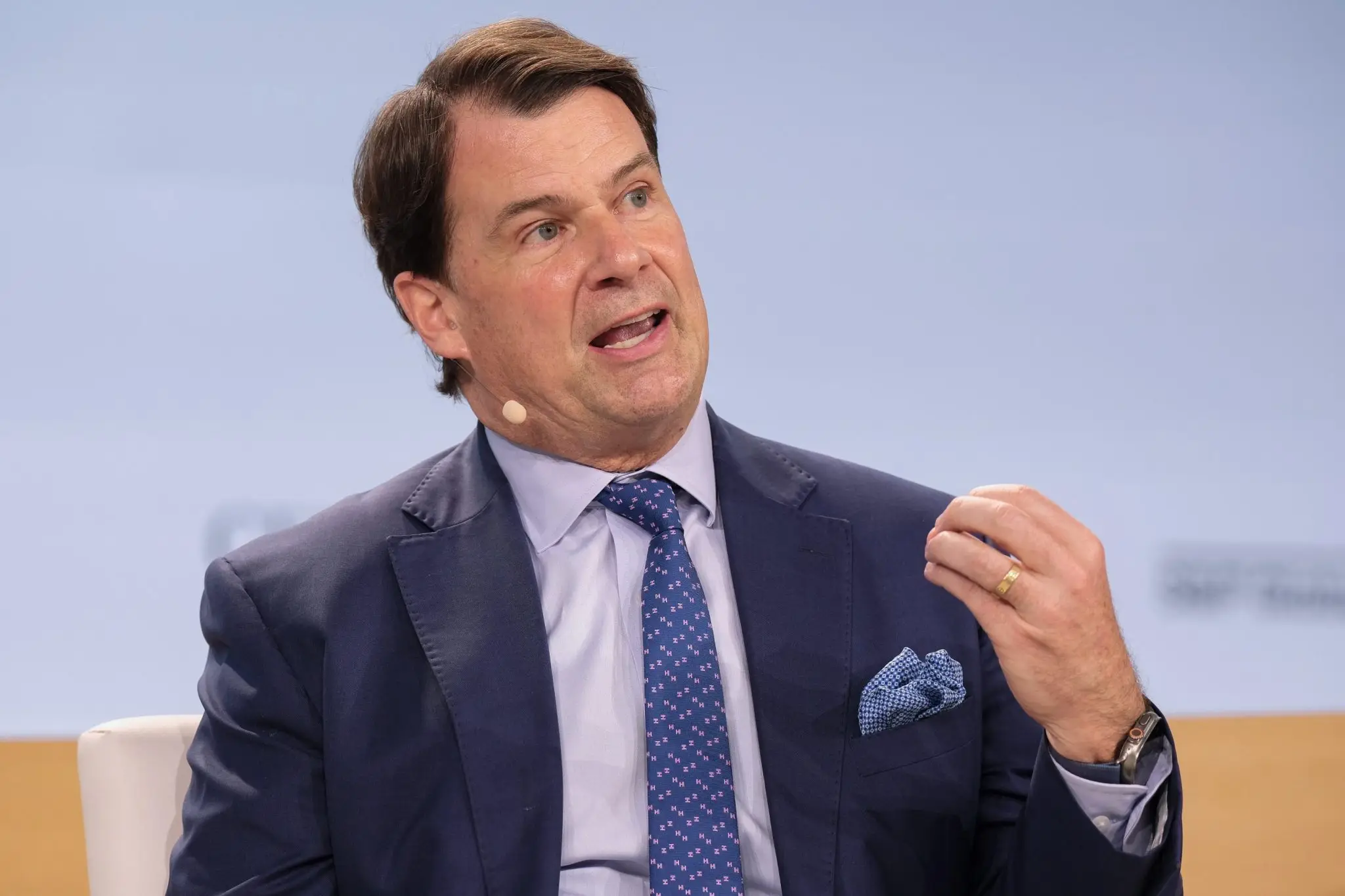
When Ford CEO Jim Farley wanted to test the competition, he looked not to Tesla, but to China. Now, he is looking for ways for the traditional automaker to imitate its Chinese competitors.
In 2024, Farley spent six months driving the Xiaomi SU7, the first electric vehicle from Chinese technology company Xiaomi, known primarily for its smartphones. At the end of that period, Farley said, “I don’t want to give it back.”
Also read: BYD reacts to the competition and launches hybrid with up to 301 km of autonomy in electric mode
In an interview with the Rapid Response podcast, Farley explained why he chose to drive a Xiaomi SU7 instead of a car from an American company like Tesla.
“I have nothing against Tesla. They’ve done a great job, but, you know, they don’t really have an updated vehicle,” Farley told host Bob Safian.
Tesla has promoted some redesigns and updates to its vehicles to face growing Chinese competition. The 2026 version of the Tesla Model Y brought a futuristic-looking exterior and an improved interior, including a redesigned dashboard.
The 2023 version of the Tesla Model 3 also underwent a redesign, with the addition of ventilated front seats and ambient lighting. Some critics argue that these updates are incremental when compared to improvements made by Chinese automakers.
Tesla did not immediately respond to Fortune’s request for comment.
If Ford wants to be the best in the world, Farley argued, the company needs to focus on competition abroad — not just Xiaomi, but also Chinese electric vehicle leader BYD, which Ford’s CEO called “the best in the industry” when it comes to cost, supply chain, manufacturing and intellectual property.
Chinese electric vehicles are not sold in the US because of a 100% tariff imposed by President Joe Biden and maintained by President Donald Trump.
Still, Chinese vehicles, especially BYD’s low-cost electric line, began to gain ground in other markets.
Despite a tariff of up to 38.1% imposed by the European Union in 2024, BYD almost tripled its sales in Europe at the beginning of the year, with new registrations jumping to 18,242 in January, compared to 6,884 in the same month the previous year, according to the Wall Street Journal.
BYD was founded in 1995 as a battery maker, but entered car production in 2003 when founder Wang Chuanfu bought struggling state-owned company Xi’an Qinchuan Automobile.
BYD then expanded its electric vehicle production by focusing on the Chinese market, which quickly became the largest in the world, thanks in part to government subsidies for both consumers and manufacturers.
The country has also expanded charging infrastructure and set strict efficiency standards for combustion vehicles.
In 2022, BYD became the first automaker in the world to stop producing exclusively gasoline cars, focusing on electric and hybrid vehicles.
In 2025, the company surpassed Tesla in revenue and took the lead from Elon Musk’s company as the largest electric vehicle manufacturer in the world. Still, Tesla maintains a much higher valuation of $1.22 trillion versus BYD’s $138 billion.
Farley said during the interview that he wants Ford to emulate BYD and do what Americans do best: “Use innovation to compete with the best in the world.”
Chinese electric vehicles are remarkably cheap but also advanced. Critics argue that some $231 billion in subsidies granted by the Chinese government to the domestic electric car industry have allowed companies like BYD to sell cars below cost to outperform competitors.
Still, even Tesla CEO Elon Musk admitted in 2024 that Chinese companies are “the most competitive automakers in the world.”
Farley said Ford should take inspiration from BYD and build cars to meet the needs of the “next cycle” of American consumers, who want a wide variety of body styles, but for $30,000, not $50,000.
“If we’re smart, we’ll embrace BYD’s cost competitiveness and compete with that platform in parts of the market where we know our customers very well,” he said.
Ford’s cheapest vehicle, the Maverick XL hybrid pickup truck, starts at about $28,000, while Tesla’s cheapest car, the Tesla Model 3 sedan, starts at just under $37,000.
Both are significantly more expensive than the BYD Seagull compact electric hatch, which costs around US$9,500 — but only in China. Abroad, including Latin America and Europe, it is sold at higher prices.
Ford is already reinventing itself to compete and took a $19.5 billion hit — one of the biggest ever taken by a company — in December as it revamped its electric vehicle strategy, in part due to weaker-than-expected demand after Donald Trump ended the EV tax credit.
Now, the company is focusing on hybrids and so-called extended-range electric vehicles (EREVs), which have a small combustion engine used mainly as a generator to recharge the electric battery and extend range. The Ford F-150 Lightning, previously presented as the future of the company’s electric business, will be adapted for this format.
But the company is not completely abandoning electric vehicles. By 2027, Ford still plans to produce a $30,000 electric pickup truck, which will be the first in a new class of low-cost electric vehicles. For comparison, the Ford F-150 Lightning currently starts at $54,780.
Farley has been one of the most vocal voices in advocating that American automakers learn from their Chinese counterparts and has previously stated that the company views Chinese manufacturers — not General Motors or Toyota — as its biggest competitors.
Therefore, Ford is changing the way it operates to take inspiration from Chinese competition as it seeks to become a better company, according to Farley.
“That’s the gift that China gave us: to be cautious and respect their progress to the point where we can’t just do the basics anyway,” he said.
