
Government anticipates 13th INSS retirees; See when amounts will be paid
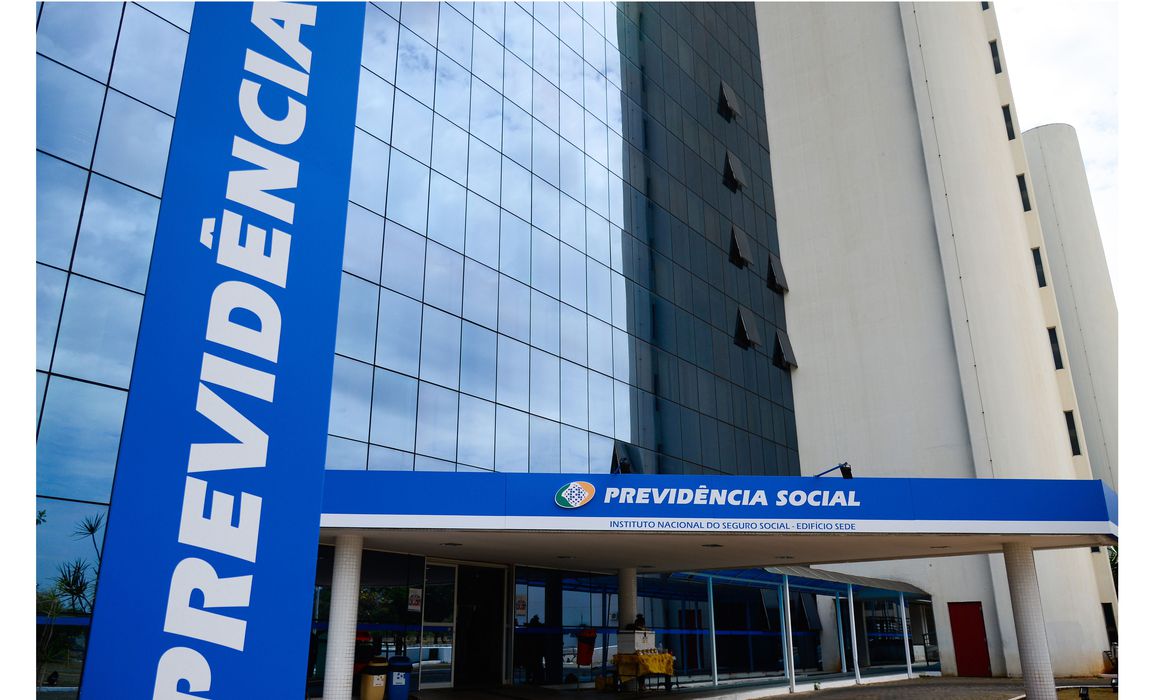
President Luiz Inacio Lula da Silva signed the anticipation decree of the 13th retirees and pensioner of the National Institute of Social Security (INSS), as done in other years. The first installment will be paid in April and the second, in May.
Lula also signed the decree that regulates changes in the social fund, which allocates $ 18 billion for the Minha Casa, Minha Vida program.
The president also promised to expand my house, my life to the middle class and announced the implementation of TV 3.0, an integrated open television system and the internet.
Read more: 13th Salary: See how the calculation is done and when paid. Check out the dates!
Lula participated in the event entitled Brazil by turning around, which, according to him, was “a brief balance of what we were able to do in just two years”. The ceremony took place at the Ulysses Guimarães Convention Center in Brasilia, with the presence of ministers, parliamentarians and representatives of social movements.
Balance
“Throughout 2023 and 2024, the federal government devoted itself to the reconstruction of policies that, in addition to recovering the economy, achieved important results in reducing hunger and poverty, access to work and in areas such as education, health, infrastructure and foreign relations,” said the presidency.
Among the numbers presented are:
Economy – Brazil has returned to the ranking of the ten economies of the world. Over the past two years, the country has grown twice as long as the average between 2019 and 2022. Gross Domestic Product (GDP – sum of goods and services produced) was 3.2% in 2023 and 3.4% in 2024.
Employability – Brazil registered in 2024 the lowest unemployment rate in the last 12 years, of 6.6%, “almost full employment situation,” said the presidency. In 2021, the indicator had reached 14.9%, the largest in the historical series. Since 2023, more than 3.2 million formal jobs have been generated. The minimum wage was also readjusted above inflation.
International trade – In the last two years, the president has maintained meetings with leaders from 67 countries. More than 340 markets were opened for agribusiness products and the Brazilian commercial insertion was expanded in agreements with China, European Union and Middle East. In 2025, the country hosts the BRICS summit, the 30th United Nations Conference on Climate Change (COP30) and assumes the presidency of Mercosur.
Hunger -fighting -“Brazil resumed multiple policies for nutrition and hunger fighting and became one of the nations that reduced food insecurity in the period,” he says. United Nations report pointed out that severe food insecurity fell 85% in Brazil in 2023. In absolute numbers, 14.7 million failed to starve in the country. The severe food insecurity, which afflicted 17.2 million Brazilians in 2022, fell to 2.5 million. In this sense, the Bolsa Família Program protects more than 20 million families every month, with a minimum transfer of $ 600.
More doctors – To expand access to health care, Mais Médicos doubled the number of vacancies. There are more than 26,000 professionals working, after the program was reduced to 13 thousand. Today, they reach 4,500 municipalities and cover a region with 64 million Brazilians.
Popular pharmacy – Popular pharmacy today offers 41 medicines for free, including geriatric diapers.
SUS surgeries – There was a record of elective surgeries in SUS, with more than 14 million procedures by 2024, up 37% compared to 2022.
Ambulances – The Ministry of Health has increased five times the delivery of Samu ambulances. Between 2019 and 2022, 366 were distributed. Over the past two years, the number has risen to 2,067.
Vaccination – “After overcoming a period of negationism, Brazil came out of the list of countries with more unvaccinated children in the world, according to UNICEF,” says the government. Vaccine coverage increased considerably to 15 of the 16 children’s vaccines.
Sick -The Step Program is one of the highlights in stimulating education. Created to ensure the permanence of high school students in class, the financial incentive already reaches 4 million young people. The program transfers up to R $ 9,200 by students during the three years of high school.
Whole school – “More time at school, sports, cultural and scientific activities, as well as peace of mind for parents to work”. This is the government’s perspective for full -time teaching, which reached more than 1 million students, equivalent to 33,000 classrooms.
Higher education – The federal government has announced 10 new universities campuses, 400 works at universities and university hospitals by the new Growth Acceleration Program (PAC) and 102 new federal education institutes. Postgraduate scholarships were also readjusted after 10 years.
New industry – Created to foster productive development, the Nova Indústria Brasil program encourages the sector. The industry grew 3.3% in 2024 and was one of the highlights to pull the GDP of 3.4% of Brazil. The sector alone generated almost 200,000 formal jobs in the year.
New pac – Developed by the federal government from priorities from states and municipalities, the new PAC involves more than 20,000 works and actions. Investments exceed R $ 1.8 trillion to accelerate Brazil’s growth.
Housing – My house, my life was modernized and expanded, with the hiring of over 1.2 million houses in two years.
Agribusiness – Brazil has the highest volume of investments in agribusiness history, exceeding R $ 765 billion credit for agricultural production by the Safra Plan.
Servers – The Unified National Public Competition attracted more than 2 million candidates to 6,640 vacancies in the Public Administration. The inclusive format, with evidence in all federation units, will be adopted again in 2025.
Income tax – The federal government exempted from Income Tax (IR) 10 million people with income of up to two minimum wages. In addition, the project that grants exemption to those who earn up to R $ 5,000 per month and progressive discount up to R $ 7 thousand has been sent to Congress, which should take another 10 million Brazilians from IR from 2026.
Tourism – Brazil had a record of 6.7 million foreign tourists in 2024. The number is higher than those registered in 2014, the year of the World Cup in the country, and 2016, when the Olympic Games in Rio de Janeiro were held.
Deforestation – The Amazon reached the lowest deforestation rate in the 2024, with the highest reduction in 10 years: 46% fall compared to 2022. In the Cerrado, the 25.7% reduction in 2024 was the first in five years.
Culture – Paulo Gustavo Law and National Policy Aldir Blanc guaranteed R $ 6.86 billion in investments for the cultural sector. In the Rouanet Law, there was the nationalization of investments, with new special lines reaching territories and communities that historically did not benefit. In 2024 alone, there were R $ 3 billion of funds, more than 14,000 approved projects and more than 5,600 sponsoring companies.