
Guide to 3-N: the five states and the schedules that decide control of Congress in the midterm elections
IN 30 SECONDS
- What has happened? The midterm elections are held on Tuesday, November 3 and renew the entire House and a third of the Senate.
- Who is behind? donald trump and the Republican Partyin front of a Democratic Party that reaches above the averages.
- What impact does it have? The distribution of Congress decides whether the American tariff policy is consolidated or stuck, and with it Spanish exports.
The midterm elections arrive with the Republicans behind and with five states that will decide control of Congress.
On 3-N the entire House and a third of the Senate are renewed. The guide that publishes The Daily Caller It orders the duels and the schedules of a night that advances in waves: the latest information arrives at dawn in Spain. Republicans trail in both chambers’ poll averageswith an electorate dissatisfied with the economic management of donald trump.
Alaska: the other Sullivan and a plot under federal investigation
Alaska is the strangest case. The former Democratic congresswoman Mary Peltola He arrives with a 1.2 point advantage over the Republican senator Dan Sullivanbut a second Dan Sullivan, a former school teacher, appears on the ballot. The open voting system allows you to declare yourself from any party without prior filtering.
That’s where the mess came in. According to the New York TimesPeltola’s team and advisors to the Democratic Senatorial Committee (DSCC, the party’s electoral arm in the Senate) coordinated the search for Republicans to run against Sullivan. Operative Jerid Kurtz toured several communities to recruit them; An Anchorage neighbor told the newspaper that he met a man who introduced himself as Zane in a pub. It was Kurtz.
He Department of Justice has summoned more than three dozen people and the Republican governor Mike Dunleavy ordered a state investigation on October 29. The Electoral Division warned by letter in August; a court removed the nominee and the Alaska Supreme Court reinstated him on June 30. The other Sullivan changed his affiliation to independent on Wednesday.
Recruiting a candidate with the same name as the sitting senator is not an anecdote: it is a technique of electoral confusion.
Texas, Michigan, Ohio and Kansas: where the punishment of the ruling party is measured
In Texas, the Republican attorney general Ken Paxton He appears 1.8 points behind Democratic legislator James Talarico, in a state that has not elected a Democratic senator since 1993. Republicans have spent more than 300 million to support Paxton; Democrats, more than 130 in advertising. Corruption has become the axis of the duel.
Michigan measures something else: if an anti-establishment Democrat wins where donald trump he won by one point in 2024. Abdul El-Sayed surpassed Haley Stevens by one in the primaries and is 3.2 points ahead of Mike Rogers, supported by Trump but critical of the tariffs on Canada.
That detail connects with Washington: In July, Trump announced 50% tariffs on Canadian products under the Section 338 (the article in the 1930 tariff law that allows imports to be taxed for unfair practices without going through Congress). AIPAC spent 30.6 million in the primaries, more than 20 against El-Sayed, according to the Federal Electoral Commission.
Ohio completes the list: Sherrod Brown He leads Jon Husted by 2.6 points, and Amy Acton maintains a slim lead over Vivek Ramaswamy in the race for state government. Kansas follows like a thermometer. None of those margins are final.
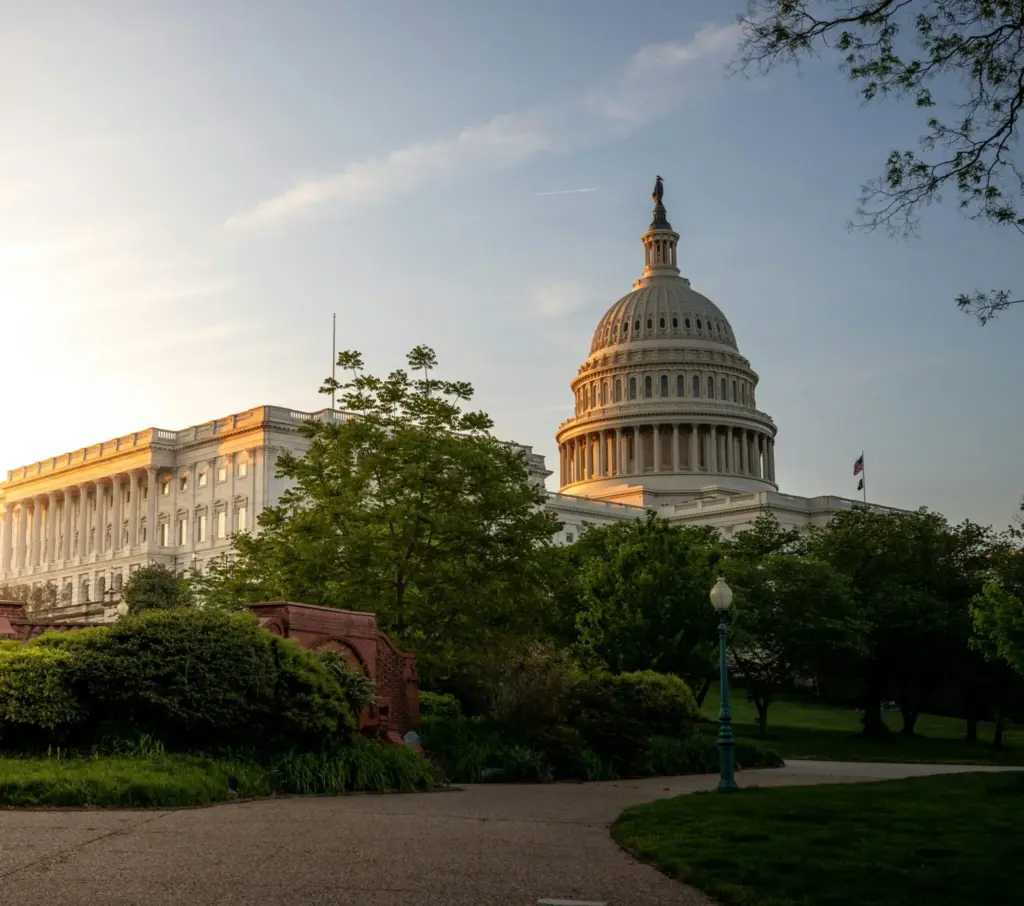
For Spain, the composition of the Capitol It weighs more than the distance suggests. The tariff architecture built by decree is cleared or stuck depending on who chairs the Commerce and Agriculture commissions, and olive oil, wine, machinery and automotive components depend on it. Companies like Inditex either Santander They read the result like a weather report.
Washington Logic
The question that is asked Washington It’s not who wins, but how much the president’s party loses. Since 1934, the ruling party has given up seats in almost every midterm electionand that mechanics explains the three levers activated this year: tariffs, pressure on the Federal Reserve and order on the border. They are the ones that mobilize the base when the pocket is tight.
The precedent most cited in Republican offices is 1994, when Newt Gingrich took both chambers from Bill Clinton. The one they fear most is 2010, when the tea party turned fiscal discontent into a 63-seat wave against Barack Obama. Trump’s coalition is different: untitled middle class, rural vote and a Latino segment moving towards the Republican Party. If that block does not respond, the internal diagnosis will be economical.
The calendar also rules. The new Congress takes office on January 3, 2027 and before, in the session of lame duck (the period between the election and the inauguration), the federal budget and defense texts are closed. The next FOMC meeting, in December, adds noise. Fine print rules.
The unknown of Alaska remains: 1.2 points with an open federal investigation can end in a recount, and four of the five states move within the margin of error. The night of 3-N will not give a clean answerbut a correlation of forces that we have to read on Wednesday morning, with the numbers in front.
Case File
- The case: Midterm elections on November 3, 2026, with the House and a third of the Senate up for grabs and Republicans trailing in the averages.
- Key facts: Peltola +1.2 in Alaska, Talarico +1.8 in Texas, El-Sayed +3.2 in Michigan, Brown +2.6 in Ohio; new Congress on January 3, 2027.
- For Spain: The distribution of Congress decides whether the American tariff architecture is consolidated or stuck, with food and automotive in the middle.