
Haddad’s departure opens the electoral chess phase on the Esplanada dos Ministérios

With the confirmation of Fernando Haddad’s departure from the Ministry of Finance this Thursday (19) and the approach of the 2026 electoral calendar, the government of President Luiz Inácio Lula da Silva (PT) entered a phase of political reorganization.
Ministers have already begun to redesign their movements, in a process that should provoke one of the biggest changes in the first echelon since the beginning of the third term.
Haddad leaves Fazenda for election in SP, and Durigan takes over in a scenario of fiscal tension
Departure will be made official at an event with Lula at ABC; new minister inherits compressed budget, sensitive agenda in Congress and external uncertainties about interest rates and inflation
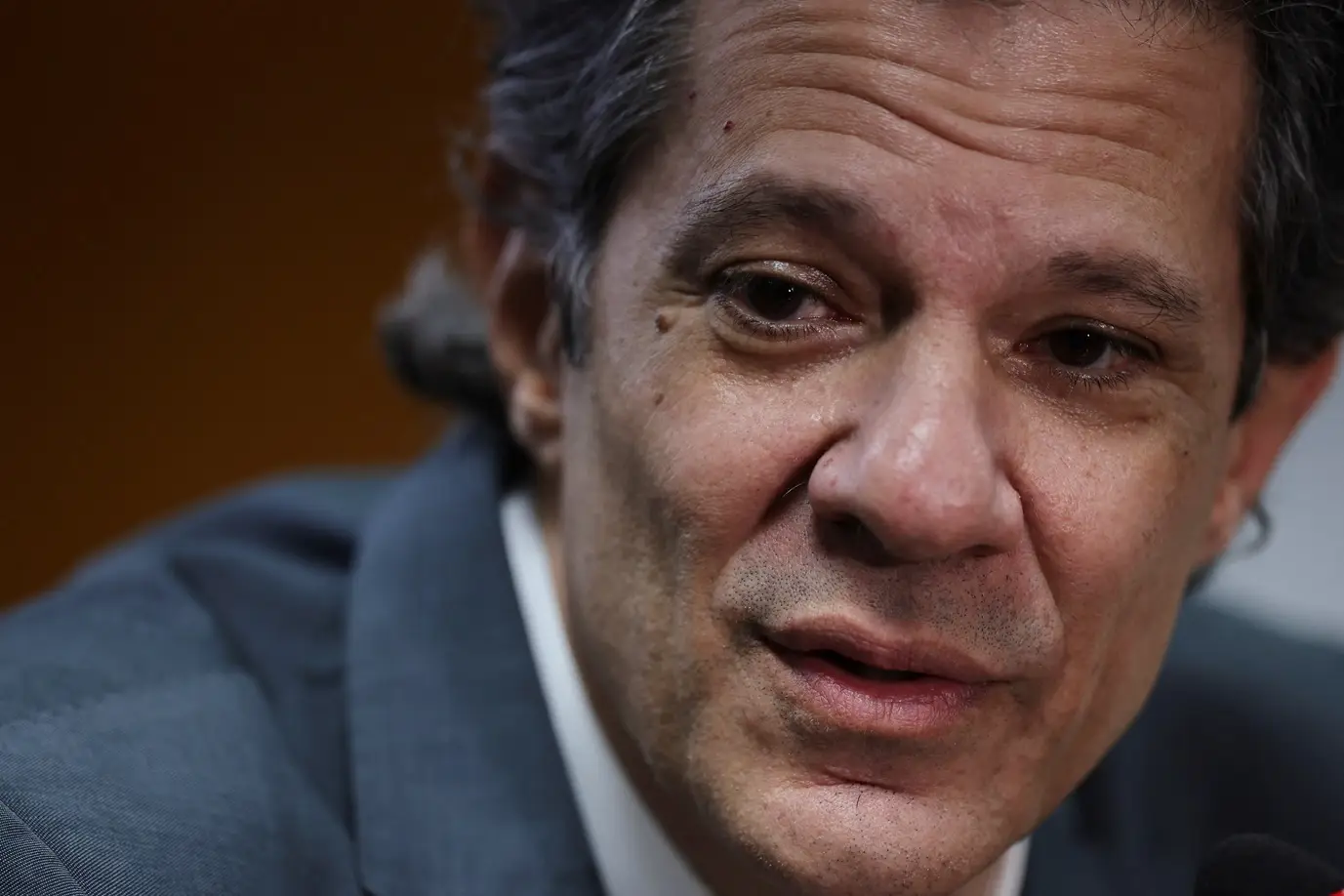
Haddad confirms his departure from the Treasury this Thursday and Lula announces Durigan as his replacement
Later this Thursday, at a press conference at the ABC Metalworkers Union, in São Bernardo do Campo, Haddad is expected to announce his pre-candidacy for the government of the State of São Paulo
The expectation in Planalto is that at least 20 ministers will leave their positions by the beginning of April, the period for non-compliance required by electoral legislation for those who intend to contest the elections.

The government’s central objective is to structure regional platforms for Lula’s re-election and, at the same time, expand the allied base in Congress, with special attention to the Senate, considered strategic for governability in a possible fourth term.
Haddad, for example, left his position to run for governor of São Paulo after repeatedly stating that he had no desire to run for public office and emphasizing that he wanted to collaborate with the campaign for Lula’s re-election.
Battle for Congress
The Senate occupies a central position in this strategy. In 2026, 54 of the 81 seats will be up for grabs, equivalent to two-thirds of the House. The government’s assessment is that expanding the presence of allies can reduce institutional risks, as it is up to the Senate to examine nominees for the Federal Supreme Court and analyze impeachment requests from magistrates.
In this context, the Minister of Institutional Relations, Gleisi Hoffmann (PT), must compete for a seat in the Senate for Paraná, after changing her initial plans to seek re-election as a federal deputy.
Other top names are also mentioned as potential candidates for the Casa Alta, including Simone Tebet (Planning), Rui Costa (Casa Civil) and Marina Silva (Environment).
Political articulation
In the case of the Minister of Agriculture, Carlos Fávaro (PSD), the movement follows a different logic. He must leave the ministry to resume his term as senator, which runs until 2027. His return to the Senate aims to reinforce political articulation and help in forming electoral alliances, without him entering the race for a new position in this cycle.
Other folders must also undergo relevant changes. Camilo Santana (Education) is considering leaving the ministry by April and states that the position keeps him far from Ceará, where he was governor and was elected senator in 2022. If he leaves the government, the tendency is for him to act directly in the campaigns of Lula and Ceará governor Elmano de Freitas.
Behind the scenes, the ministerial redesign is already treated as part of the electoral chess. The reading in Planalto is that the reorganization of the first echelon can strengthen regional platforms and reduce tensions in Congress during the electoral period.
See the main movements being studied by the government:
- Civil House: Rui Costa (PT) is tipped to run for the Senate in Bahia.
- Institutional Relations: Gleisi Hoffmann (PT) should be a candidate for the Senate in Paraná.
- Development, Industry, Commerce and Services: Geraldo Alckmin (PSB) tends to run for reelection as vice president.
- Education: Camilo Santana (PT) can leave the department and work on campaigns in Ceará.
- Transport: Renan Filho (MDB) is identified as a possible candidate for the government of Alagoas.
- Planning: Simone Tebet (MDB) is tipped for the Senate.
- Environment: Marina Silva (Rede) is also mentioned as a possible candidate for the Senate.
- Agriculture: Carlos Fávaro (PSD) must leave the ministry to resume his term as senator, which runs until 2027, and work in political articulation.
- Entrepreneurship: Marcio França (PSB) plans to run for governor of São Paulo.
- Mines and Energy: Alexandre Silveira (PSD) evaluates candidacy for the Senate for Minas Gerais.
- Communication Secretariat of the Presidency: Sidônio Palmeira must leave his position to work on marketing Lula’s re-election campaign.
