
Harvard: 8 hours of sleep is “Industrial Age nonsense”; see ideal
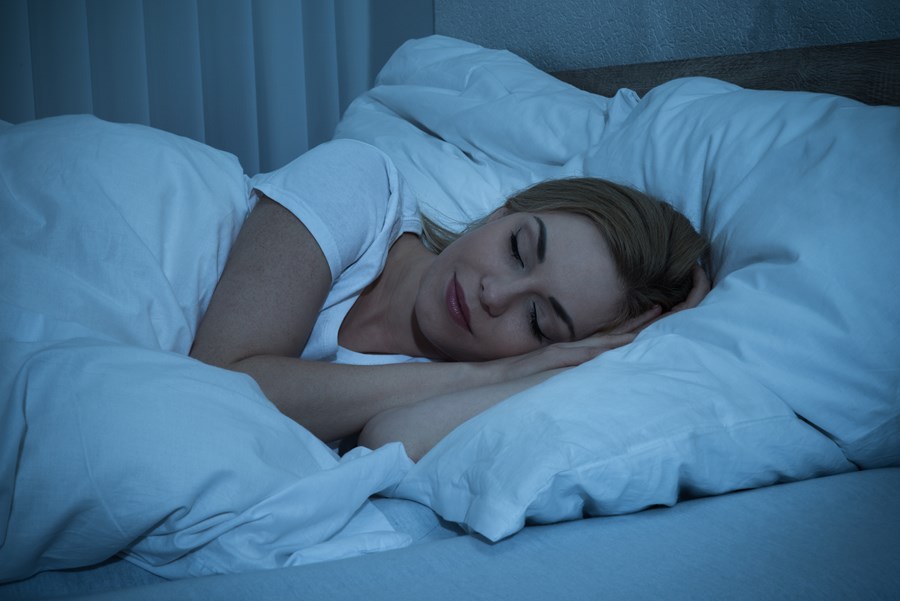
Most adults it is not necessary eight hours of sleep. A growing body of evidence and evolutionary research suggests that optimal sleep for many healthy adults lies closer to seven o’clockwith health risks increasing to less or more than that — in a pattern in U.
Harvard evolutionary biologist Daniel E. Lieberman claims the “8 hour” rule is Industrial Age “nonsense,” noting that people without access to modern electricity typically sleep six to seven hours without naps, and large group studies show the lowest risk of mortality around seven o’clocknot eight. Lieberman detailed this research in his book and in a 2023 podcast interview The Diary of a CEO.
Also read:
Take your business to the next level with the country’s top entrepreneurs!
- Live long and healthy: lessons from one of the world’s leading longevity experts
- Global wellness trends that are already changing Brazil
- Protein gelatin: see 5 recipes that are going viral on the networks
What Lieberman defends
Lieberman claims that the idea that “natural” humans sleep eight hours has no basis. Field data with communities without electricity show routines of six to seven hours per night, which goes against the cultural prescription of eight hours as a goal.
He also interprets the modern eight o’clock dogma as a legacy of the Industrial Revolutionrather than a biological necessity — pointing to epidemiological curves in which the risk reaches its lowest point around seven o’clockforming a “U” pattern, with greater risk for both too little and too much sleep.
Popular summaries of his position emphasize that seven hours often have better health outcomes than eightwhile reinforcing that there is variation by age and condition — and that the need for sleep it’s not the same for everyone.
How much sleep do you really need?
In an explanation published by , sleep scientist Rebecca Robbins comments on the eight o’clock belief, explains how this parameter emerged and offers practical strategies for improve sleep qualityinstead of fixating on a single number.
More than a third of Americans do not achieve the minimum of seven hoursreinforcing the importance of consistency and sleep hygiene as much as chasing a “magic” number.
THE American Academy of Sleep Medicine and the Sleep Research Society recommend “seven or more hours per night” for adults — explicitly a range that starts at sevennot an eight-hour term.
The guidelines of the Mayo Clinic follow the same line: adults generally need seven hours or morewith individual variations based on age, sleep quality, previous sleep debt, pregnancy, and aging patterns that fragment sleep but do not increase the total need.
The U-shaped risk curve
Several large contemporary data sets show an association in U between sleep duration and adverse outcomes, with the safest point around seven o’clock for general and cardiovascular mortality.
Analytics UK Biobank also identify U-shaped relationships, with elevated risks for both short sleep (less than seven hours) and long sleep (above nine hours), even after adjustments for health and lifestyle factors.
Biomarker studies reinforce the pattern: deviations towards less than seven or more than eight/nine hours are related to markers of biological aging — although diseases that prolong time in bed can confuse causality.
Practical sleep guidelines
Seek sleep between seven and nine o’clockusing seven as a realistic minimum if you wake up well and function normally; increase to closer to nine on sick days, intense workouts, or pregnancy.
Pay attention to the U-shaped pattern:
- Chronic short sleep (less than 7h)
- Habitual long sleep (more than 9am)
- Both are linked to greater risks.
- If you regularly needs more than nine hoursseek medical evaluation to investigate conditions such as depression, sleep apnea or chronic illnesses.
- Prioritize consistency and quality — regular hours, light in the morning, less blue light in the evening, cool, dark environment, and moderation in caffeine and alcohol consumption — rather than obsessively focusing on eight hours.
The “sweet spot” of sleep
The eight-hour rule is a cultural simplificationnot a universal biological requirement. For many adults, seven o’clock approaches the “ideal point” of health, with flexibility according to the stage of life and individual conditions.
Business leaders and people in general should reframe sleep goals based on science-backed intervals and in measurable daytime functioninvesting in practices that improve quality and long-term health without imposing a rigid eight-hour quota.