
How the world’s most boring market became a ‘battlefield’

TOKYO — For two decades, few corners of global finance have been lonelier than the Japanese government bond market.
Under the Bank of Japan’s long-standing regime of keeping borrowing costs near zero, yields on these bonds, known as JGBs, have barely budged. Over the years, the few contrarian investors willing to bet that yields might eventually rise were so hurt that the trade earned the nickname “widow maker.” In the world’s second-largest government bond market, entire days passed without a single benchmark bond being traded.
Those days are over.
Last month, Prime Minister Sanae Takaichi’s pledge to cut taxes raised anxiety about Tokyo’s ability to service its colossal $9 trillion in debt. Yields on 30-year government bonds jumped more than a quarter of a percentage point in a single session, a huge move in a market where daily changes are typically measured in hundredths of a point.
The volatility was so profound that US Treasury Secretary Scott Bessent called his counterparts in Tokyo seeking reassurance to help stabilize global markets rattled by the moves. Yields, a measure of borrowing costs, rose again last week after Takaichi’s party won the election by a landslide, which investors interpreted as an endorsement of his high-spending agenda.
Japan: Takaichi denies concentration of power and promises to accelerate pending proposals
Takaichi stated that the immediate focus will be on approving pending proposals
For the Japanese economy in general, the increase signals a possible worrying decline. If yields continue to rise, some economists and investors warn that Japan risks falling into a “debt trap” — a vicious cycle in which rising interest costs consume so much of the national budget that the government must borrow even more just to pay the interest.
But for the JGBs and their experienced negotiators, the recent moves have generated a return to a level of fervor not seen in decades. After a long period of professional hibernation, a rare class of traders and strategists — most now aged 60 or older — are returning to the spotlight as global investment firms seek to leverage their experience to navigate a truly mobile interest rate environment.
“It’s becoming a ‘battlefield’ again,” said Hiroyuki Kubota, 67, who traded Japanese government bonds 40 years ago and has since written several books on such bonds. “It’s just like old times.”
Kubota began trading the bonds in 1986, shortly after a series of reforms that significantly opened Japanese government debt markets to global investors. At the time, Nomura Securities, Japan’s bubble-era finance leader, held annual multi-day, boozy seminars in Kyoto to pitch government bonds to foreign central bankers. The market was booming.
In the 1980s and 1990s, incomes changed rapidly along with fluctuations in the Japanese economy. Yields on 10-year bonds doubled from 4% in 1989 to 8% in 1990, before falling back to 5% in 1992. Investors rushed to profit from these swings. After the introduction of JGB futures — contracts to buy or sell securities at a future date — in 1985, they quickly became the most traded securities futures in the world.
“It was a party,” said Hiromi Yamaji, 70, CEO of the Japan Exchange Group, recalling the annual meetings in Kyoto in the 1980s. Before taking up his current role at the operator of the Tokyo Stock Exchange, Yamaji spent 36 years at Nomura. JGBs “were a very profitable product,” he said. “Everyone negotiated a lot.”
At the time, traders were being courted by firms such as Goldman Sachs and Salomon Brothers, which were expanding their presence in Tokyo. Top strategists could command compensation packages in the millions of dollars, while American firms sought to attract talent from traditional Japanese banks.
Kubota, the former JGB trader and well-known market observer, created a website in the late 1990s with a chat room that he said attracted market influencers and officials from Japan’s Ministry of Finance. He hosted annual parties on a traditional Japanese boat, where the bond market’s elite discussed trades while sailing down the Sumida River in central Tokyo.
The recent swings in yields “may have come as a shock to those who only know the last 20 years,” Kubota said. “But for those who know the old days, they are not strange at all.”
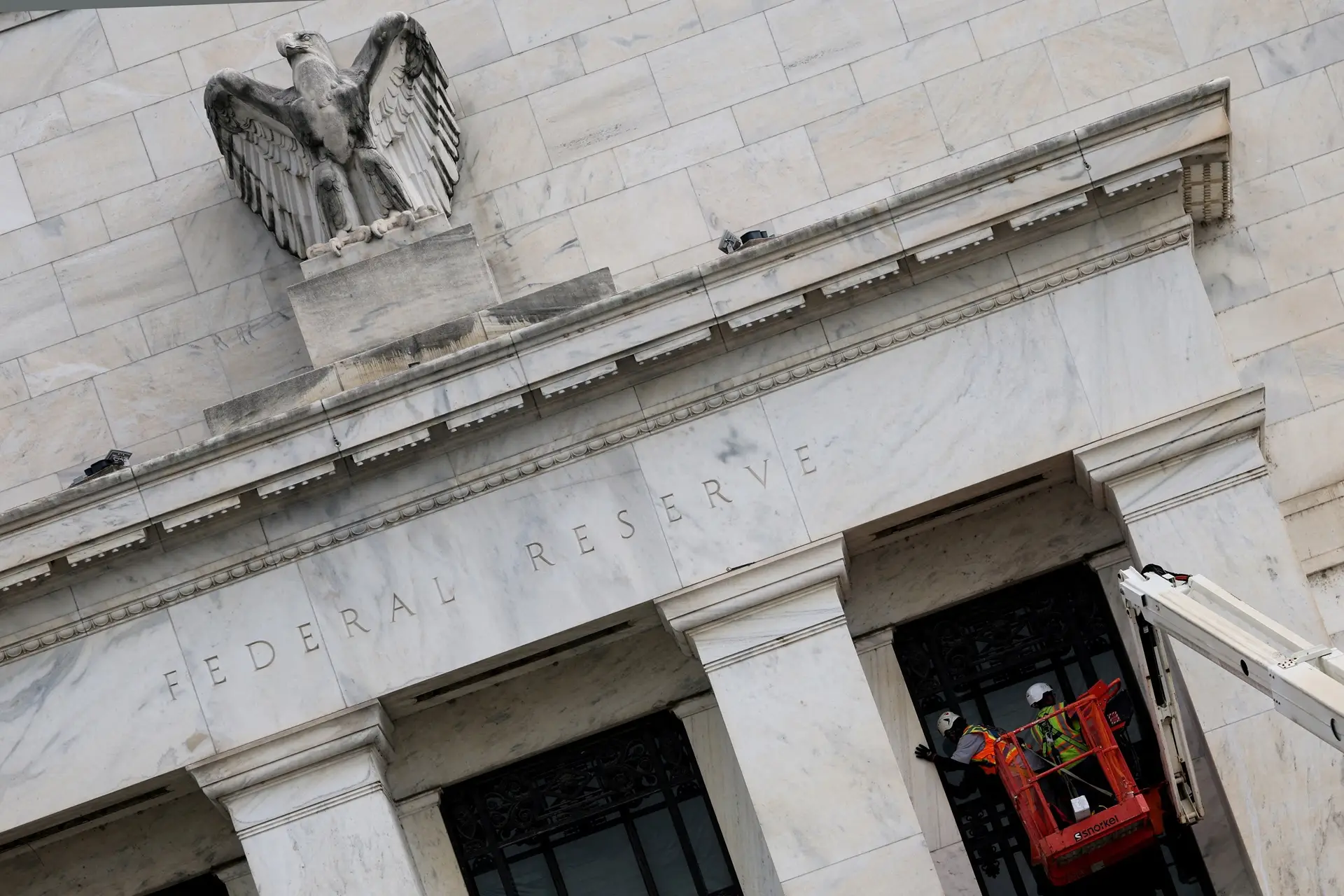
Minutes show Fed divided and pause in cuts for now, but resume throughout the year
Fed members Christopher Waller and Stephen Miran voted against cuts at the meeting
Paralysis began to set in in the Japanese government bond market around the turn of the century.
Following the bursting of the Japanese asset bubble and the 1997 Asian financial crisis, the Bank of Japan in 1999 became the first major central bank in recent memory to reduce interest rates to zero. As the central bank began buying bonds to force rates down, the 10-year bond yield hit a record low of less than 0.5% in 2003.
For two decades, as policymakers kept rates near zero to combat persistent deflation, yields barely budged. In 2016, they fell below zero, meaning investors were essentially paying to hold the bonds.
“For many, many years, it was a very difficult market,” said Yamaji of Japan Exchange Group. “No one was interested in negotiating.” With average daily trading volume plummeting, Japan’s local banks, which were once the most aggressive traders of government bonds, began closing their trading operations. International groups have also reduced their activities.
Many veterans left well-paying foreign firms, including Goldman Sachs and Morgan Stanley. They have either “semi-retired” or moved into less glamorous roles, such as research, at domestic companies, said Yoshiki Kumazawa, director of Morgan McKinley, a recruitment firm in Tokyo.
“We call it ‘juniorization,’” said Kumazawa, who compared the situation to a baseball player who starred for the New York Yankees being sent to a Japanese team.
Yamaji tried to revive the market during the 2010s by introducing new trading methods for bonds, but stagnation persisted until 2024. That’s when a surge in post-pandemic inflation prompted the Bank of Japan to raise interest rates for the first time in 17 years. This caused bond yields to rise.
Those yields soared on Jan. 19, when Takaichi backed a tax suspension measure estimated to cost more than $30 billion annually. The next day, Japan’s 40-year bond yield surpassed 4% for the first time since 2007.
Some see this rise as an alarming sign that Japan will have difficulty financing its debt.
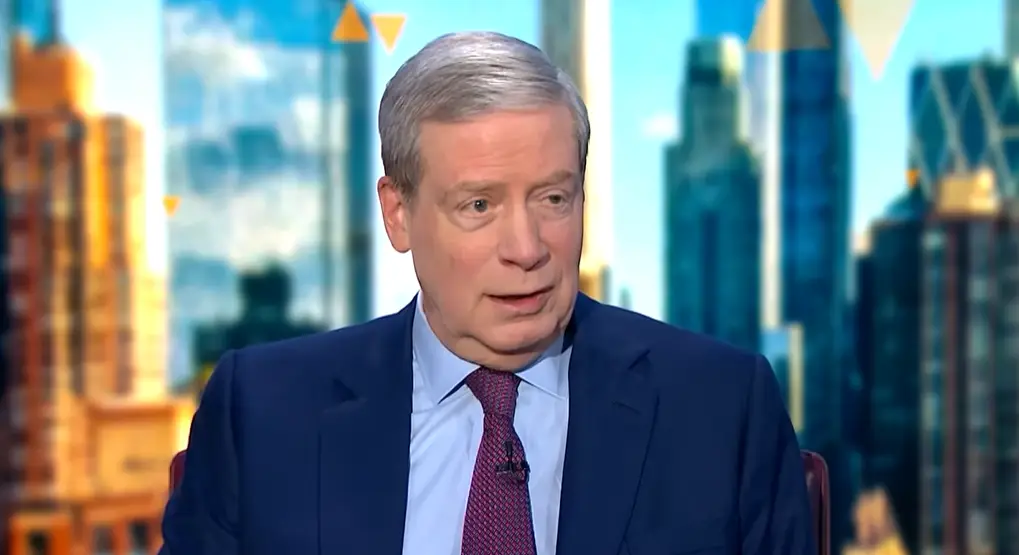
Mega-investor Stan Druckenmiller reveals position in Brazilian stocks ahead of rally
Manager zeroed out Argentina and bought 3.5 million shares of EWZ, which tracks Brazilian shares, before the sharp rise in January
Opportunity?
Kyle Bass, founder of Dallas hedge fund Hayman Capital Management, became known in the 2010s for his staunch bet that Japanese bond yields would soar as government debt reached a crisis point, a bet widely dismissed as the ultimate “widow maker.” He recognizes that the position did not work out at the time.
Now, with yields rising and Japan’s total debt hitting a record $8.77 trillion last year, his thesis is becoming harder to ignore.
“The question is: how are they going to handle all of this?” Bass said. Borrowing costs are rising in several of the world’s largest economies. Japan, however, “is about 10 years ahead of everyone in its financial position,” he said. “I’m scared of the situation they’re in.”
For others, the commotion is an opportunity. Average daily trading volumes for JGB futures have soared in recent years, and the number of open positions in the market has reached record levels, according to Yamaji. Global hedge funds have been hiring the best local talent, according to Kumazawa.
Kubota, the former JGB trader and well-known market watcher, said he is concerned about the effect rising yields will have on Japan’s national budget, but sees the recent volatility more as a “canary in the coal mine” than the start of a full-blown collapse. If nothing else, his annual boat party will probably be even more lively, he said.
“It looks like this year will be even more exciting than the last,” said Kubota. “It’s as if it’s finally becoming clear that the era of mobile interest rates has returned.”