
Increase in poverty in Argentina mainly affects retirees
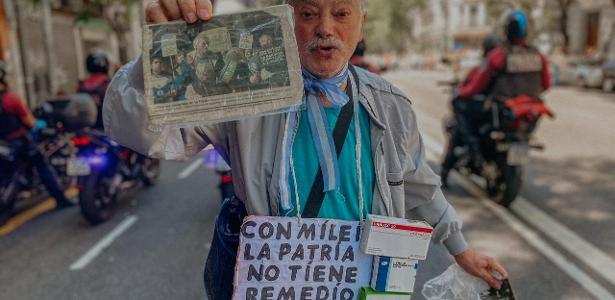
In 2024, hundreds of retirees marched in dozens of protests against Javier Milei’s austerity policies. The country has 6.5 million people in this situation. Six out of every ten receive the minimum pension, set in October at 244 thousand pesos (R$1,300).
According to official data, a person would need 320 thousand pesos (R$ 1,700) in the second half of the year to cover food, clothing and transport costs.
Increase in poverty in Argentina was already expected, even by Milei
Still campaigning and upon assuming the role of president, just over a year ago, Javier Milei proposed a slowdown in inflation, which, in fact, happened. The politician, however, had warned that, initially, there could be an increase in poverty in the country, an adjustment that would be made in other years.
The Argentine president promised the reduction of the State, what he calls “political caste”. And it has been fulfilled. Through a super decree in the first days of government and a bill initially known as “Onibus Law” – Basic Law – because of the length of the text and because it changed several laws at once, the Argentine president began his battle for the zero deficit and its desire to privatize state-owned companies.
Amnesty International also warns of repression
The repression of protests on public roads was also identified by Amnesty International as a policy against human rights. The current government has restricted the right to peaceful assembly and created an anti-street protest protocol, which prohibits demonstrations. The international organization stated that the Milei government made “excessive use of rubber bullets and tear gas, in addition to arbitrary arrests and attacks on journalists.”