
“It is impossible to develop with 15% interest”, says Minister of Agriculture
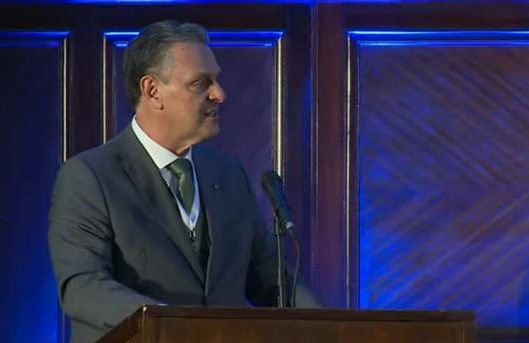
BUENOS AIRES – The Minister of Agriculture, Carlos Fávaro, stated this Friday (7), during the Buenos Aires Forum, that high interest rates in Brazil hinder development and restrict the advancement of credit for agribusiness.
“It is impossible to develop with a basic interest rate of 15% per year. It is a huge challenge”, said Fávaro, commenting on the impact of monetary policy on agricultural financing.
The minister highlighted that, despite the adverse scenario, the government has sought to create more attractive credit conditions for the sector through programs aimed at sustainability and the recovery of degraded areas. He cited Caminho Verde Brasil, which provides for reduced interest rates and long payment terms.
“In the three harvest plans that we presented in this government, the lowest interest rate with available resources was exactly for this credit network. Renovago Brasil has, in the three consecutive years, something around R$7 billion, with interest ranging from 7% per year in the first two years and now 8.5% per year, with ten years for amortization”, he explained.
Fávaro stated that the objective of the program is to stimulate the recovery of 40 million hectares of degraded pastures, allowing food and energy production to double in the country without advancing into forests.
“Instead of looking for areas of cerrado or forest to convert, recover degraded areas. This allows sustainable growth without affecting the main asset, which is the environment, keeping it preserved as it is”, he stated.
The minister also defended the importance of extending green credit to small producers, through the Solo Vivo program, which finances soil recovery on properties of up to 10 hectares.
Fávaro concluded by highlighting that the combination of lower interest rates, technological innovation and sustainability is essential to guarantee the future of Brazilian agribusiness. “With the recovery of degraded areas and the use of new technologies, Brazil can double production and remain an agricultural powerhouse without giving up environmental responsibility”, he concluded.
