
Navy authorizes entry of US ship into Brazil; understand the mission
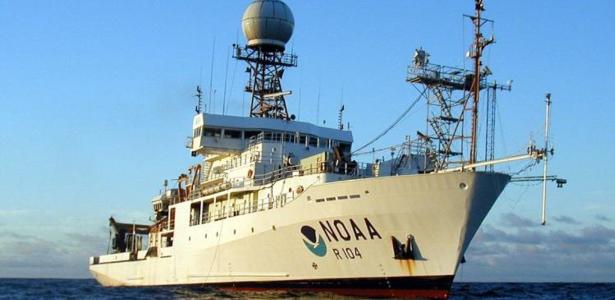
The Ronald H. Brown belongs to NOAA (National Oceanic and Atmospheric Administration). It is the North American agency responsible for oceanic and atmospheric studies. It is the largest scientific vessel in the United States fleet.
Vessel was built in Mississippi and entered into operation in 1997. With its base port in Charleston, South Carolina, it sails across all oceans collecting data on climate, marine currents and meteorological phenomena that impact the planet. Equipped with state-of-the-art laboratories and sensors, the ship serves as a global research platform.
Main technical characteristics
- Length: 274 feet (about 83 m).
- Range: 11,300 nautical miles.
- Autonomy: 60 days.
- Cruising speed: 11 knots.
- Laboratories: five internal modules, totaling almost 4,000 feet²; possibility of up to nine mobile laboratories on deck.
It also brings together cutting-edge scientific sensors. These include a multibeam echo sounder, subbottom profiler, ADCP (acoustic current profiler), acoustic positioning system and Doppler radar.
It has dynamic positioning. The system allows you to maintain your position within a radius of approximately 300 feet even in rough seas, wind and current. This capability is critical for launching and retrieving deep anchorages, operating ROVs, and deploying buoys and sensors.
