
Risk Map: Flávio Bolsonaro’s audio ends “light” phase of the electoral campaign
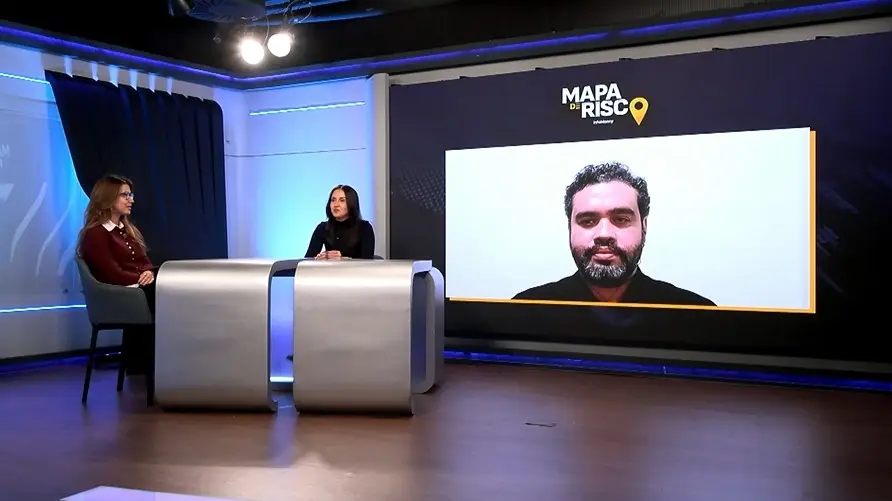
The release of audios involving senator Flávio Bolsonaro (PL-RJ) and former banker Daniel Vorcaro produced the perception that the presidential campaign of former president Jair Bolsonaro’s son has entered a new phase, more defensive, more exposed and less dependent solely on the symbolic strength of his surname.
For political analysts heard on the Mapa de Risco program, from InfoMoneythe episode interrupts the strategy that had allowed the senator to grow in the polls while maintaining a more moderate stance, far from the confrontational tone associated with traditional Bolsonarism.
“So far, since the launch of the candidacy, this is the most serious moment in Senator Flávio Bolsonaro’s performance”, stated XP political analyst, Bárbara Baião.

According to her, the campaign believed that the senator would have internally anticipated any potentially damaging information involving his relationship with Vorcaro and Banco Master. The emergence of audio, however, changed this scenario.
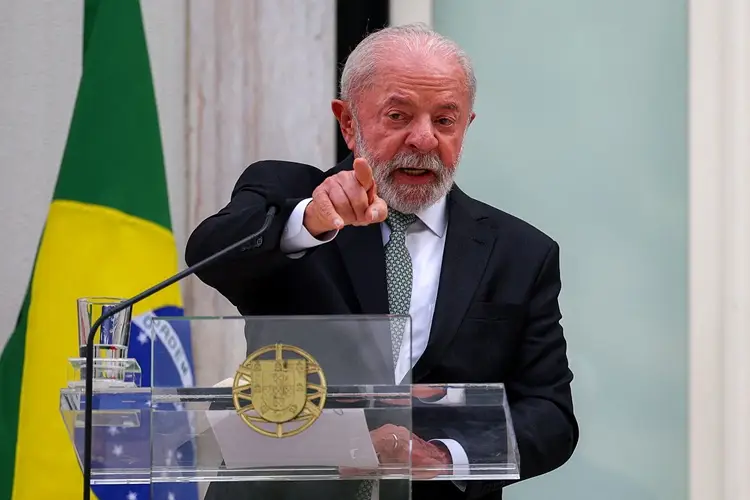
‘His case belongs to the police’, says Lula about audio of Flávio Bolsonaro and Vorcaro
‘I’m not going to comment. It’s a police case, not mine. I’m not a police officer, I’m not the attorney general’, said Lula when asked about the case involving Flávio
“Those around the campaign already admit that this ‘pocketmaster’ narrative should prevail until new developments come,” he said.
The expression began to circulate among members of the government and allies of President Luiz Inácio Lula da Silva (PT) as an attempt to associate the Banco Master scandal directly with the Bolsonarist core.
Campaign loses control of the narrative
Until the episode, Flávio had managed to occupy a space considered strategic within the right: that of a “softer” candidacy, less confrontational and more acceptable to sectors of the business community and the centrist electorate.
The idea was to preserve the political capital of Bolsonarism without fully reproducing the confrontational style of former president Jair Bolsonaro.
In Bárbara Baião’s assessment, this construction is starting to suffer precisely because the campaign is now forced to discuss specific topics and respond directly to accusations.
“We may also be seeing the end of his first successful phase, of building a competitive candidacy without giving too much detail,” he stated.
According to her, the senator will need to speed up the presentation of proposals and build a more purposeful narrative to take the campaign out of the field of corruption.
“He will now have to show more details of this light version and perhaps bring up other campaign themes,” he said.
Center becomes focus of concern
For political analyst Leopoldo Vieira, from IdealPolitik, the main political risk is not in the most loyal Bolsonarista electorate, but in the moderate sectors that were beginning to accept the senator’s candidacy.
“This as a political image defines his campaign mainly among centrist, middle class and undecided voters,” he stated.
According to him, the problem for Flávio is that the link between private financing and the Banco Master scandal makes it difficult to try to separate the personal relationship from the political context.
“In the middle of an election year, the association is immediate,” he said.
Leopoldo also assesses that the episode touches precisely on one of the most historically sensitive flags for Bolsonarism, the anti-corruption discourse.
“This is at the heart of anti-system sentiment and the dispute over the flag of corruption,” he stated.
Polarization still protects candidacy
Despite the wear and tear, analysts do not see, at least at this moment, a real risk of the collapse of Flávio Bolsonaro’s candidacy.
The predominant assessment is that the consolidated polarization continues to function as a protection mechanism for the hard core of Bolsonarism.
“I think that former president Bolsonaro’s electorate is very loyal,” said Leopoldo Vieira.
In practice, this means that the greatest impact tends to occur among commuter voters and segments that could decide a tight election.
“It is a dispute that must be defined within a very small margin, from 1% to 3%”, said the analyst.
In this context, the crisis does not eliminate Flávio’s electoral competitiveness, but it changes the political environment of the campaign and reduces the margin of comfort for a candidacy that, until then, had been growing without needing to explain much about itself.
The Risk Map, the policy program of the InfoMoneyairs every Friday, starting at 5am, on YouTube and your favorite podcast player.