
STF has majority to maintain appointment of relatives to political positions
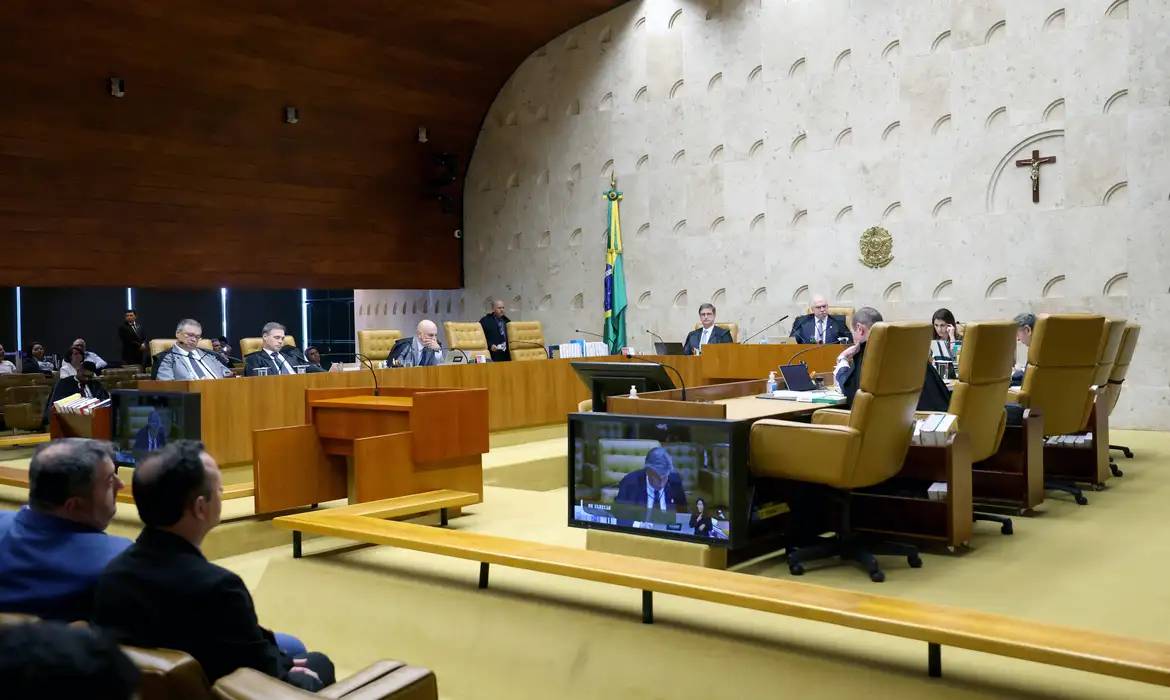
The Federal Supreme Court (STF) formed this Thursday (23) a majority of votes to maintain the Court’s rule that allowed appointments of relatives to political positions.
The Court formed a score of 6 votes to 1 to maintain the understanding that the appointment of relatives to positions of a political nature does not constitute nepotism. Despite the score, the trial was suspended and will resume next Wednesday (29).
Pacheco says that Lula’s decision on a vacancy in the STF will be ‘respected by everyone’
Last week, Pacheco said he felt “honored” and “happy” to be considered for the Supreme Court
Chamber denies appeal, and project that limits individual STF decisions goes to the Senate
Text also restricts access of smaller parties to the Supreme Court
In 2008, the Supreme Court issued a binding ruling to prohibit nepotism. According to the text of the decision, the appointment of a spouse, partner or relative up to the third degree to public positions violates the Constitution.
FREE LIST
10 small caps to invest in
The list of stocks from promising sectors on the Stock Exchange
However, the Court recognized months later that the restriction does not apply to positions of a political nature, such as secretaries of State. The decision allowed governors to appoint relatives to positions in the state administration, for example.
The case returned to the Supreme Court through an appeal to overturn a 2013 law in Tupã (SP), which prohibited the hiring of relatives of the mayor, deputy mayor, secretaries and councilors in municipal management. The rule contradicted the Court’s understanding that validated appointments to political functions.
Votes
When re-judging the issue this Thursday, the case’s rapporteur, minister Luiz Fux, voted to maintain the understanding that the ban on nepotism does not apply to political positions.
For the minister, the head of the Executive has the prerogative to choose his secretaries, as long as the technical qualification criteria and the prohibition of cross-nepotism are observed.
“The message from the Supreme Court is that the rule is possibility, the exception is impossibility. It is not a letter of manumission to appoint anyone”, he stated.
Fux’s vote was followed by ministers Cristiano Zanin, André Mendonça, Nunes Marques, Alexandre de Moraes and Dias Toffoli.
Flávio Dino was the first to disagree with the rapporteur and questioned the possibility of appointing relatives to political positions.
Dino said that “legality and affection don’t mix”. The minister argued that the appointment of relatives does not work in the private sector and only happens in public administration.
“Legalities and affections do not mix. A government meeting cannot be a Sunday lunch. A government meeting cannot be a Christmas dinner. Hey, dad, uncle, brother, pass the pasta. This is essential, beautiful in the family, in the garden, not in the square. In the square, in the public space, we have to understand that it is necessary to have consistency in the rules”, he stated.
Minister Cármen Lúcia did not vote, but expressed her opinion on the topic. The minister said that complying with the constitutional principle of impersonality is a challenge.
“The wife goes to the Court of Auditors to approve or not the accounts of her own husband, who was head of the Executive. This is completely contrary to what we discussed, although it is a political position”, he commented.
The votes of ministers Edson Fachin, Gilmar Mendes and Cármen Lúcia, the last to vote, will be delivered in the next session.